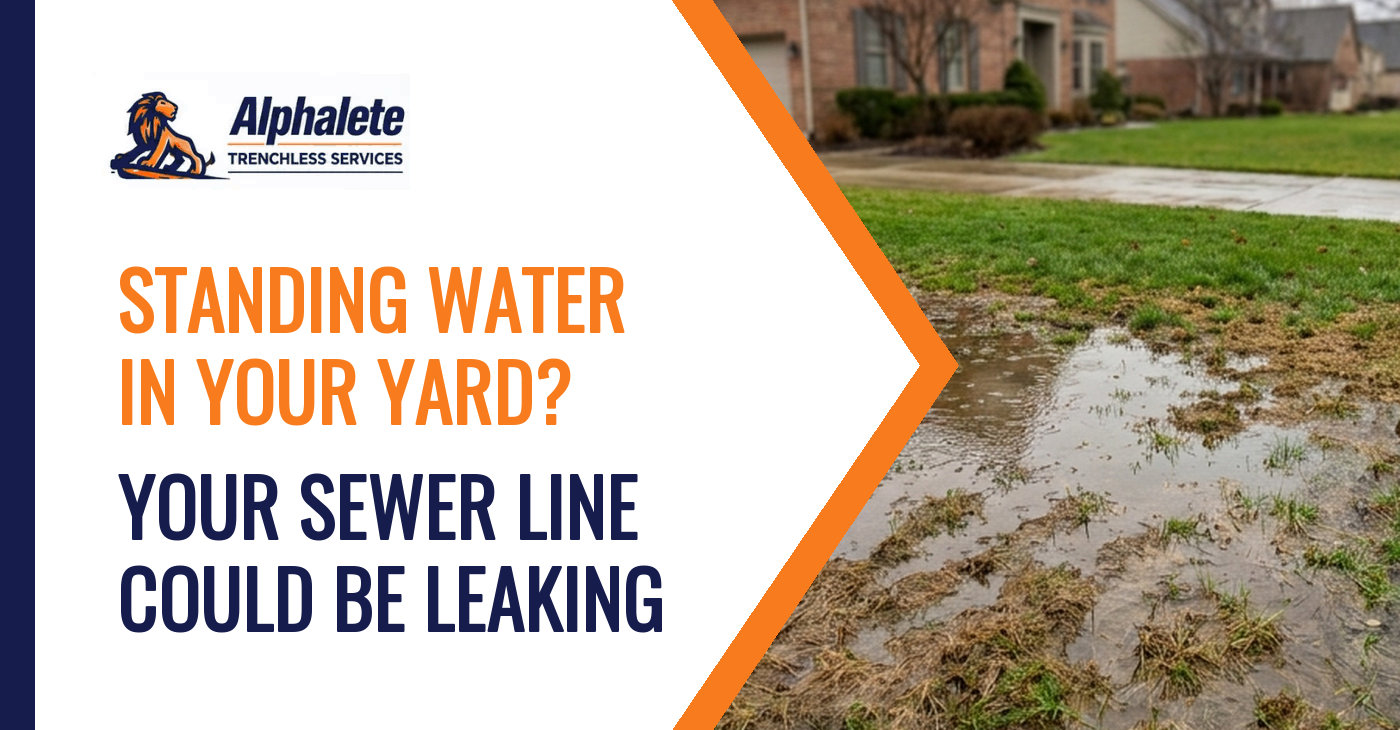
You walk across your yard on a dry Colorado Springs afternoon and one patch squishes under your shoe. It has not rained in days, but that spot stays wet, muddy, and soft. Before you blame the sprinklers, know this: standing water in the yard is one of the most common early signs of a sewer line leak, and it is worth checking out before it gets worse.
This post covers why it happens, how to tell a sewer leak apart from ordinary groundwater, and how modern trenchless repair fixes the pipe without tearing up your lawn. It is part of our larger guide, sewer line trouble in your yard.
If you want a straight answer fast, Alphalete Trenchless can inspect the line with a sewer camera. Call (720) 807-3224 and we will show you exactly what is happening underground.
Why a leaking sewer line pools in your yard
Your main sewer line runs underground from your house to the city connection, right beneath the lawn. When that pipe cracks, separates at a joint, or gets broken open by roots, wastewater escapes into the surrounding soil. It saturates the ground and rises toward the surface, leaving that persistent soggy patch or pool of standing water.
Because the leak is fed every time anyone in the house uses water, the spot never fully dries out. That is the key difference from a puddle left by rain or snowmelt, which drains and disappears.
How to tell a sewer leak from ordinary groundwater
Not every wet spot is a sewer problem. Here is how to read the clues:
- The smell. Clean groundwater has no odor. A sewer leak often carries a sewage or rotten-egg (sulfur) smell of sewer gas.
- The timing. If the spot fills up shortly after you run the washing machine, shower, or flush repeatedly, that points to your own sewer line, not the water table.
- The grass. A stripe or patch of unusually green, lush, fast-growing grass is a classic sewer clue. Wastewater acts as fertilizer, so the lawn thrives directly over the leak.
- It never dries. A spot that stays wet through dry, sunny weather is very likely fed by a pipe, not the weather.
If you are seeing the smell, the timing, or the extra-green grass along with the standing water, treat it as a sewer issue until proven otherwise.
The Colorado Springs factors that make this common
A few local conditions put extra stress on buried sewer lines along the Front Range:
- Expansive clay soils that swell when wet and shrink when dry, working pipe joints loose over time. The Colorado Geological Survey calls swelling soils one of the state’s most significant and costly geologic hazards.
- Freeze and thaw cycles that shift the ground repeatedly through the year and crack aging pipe.
- Mature trees in established neighborhoods. As Colorado Springs Utilities notes, when a pipe cracks, nearby tree roots grow in looking for water, and they pry into the smallest openings.
Do not wait it out
A soggy spot can seem minor, especially if it comes and goes. But the crack, joint failure, or root intrusion behind it does not heal. Left alone, a small leak keeps washing away the soil that supports the pipe, which leads to bigger problems: a sagging (bellied) line, a full backup, or a sunken spot or sinkhole in the yard. Catching it now is almost always the simpler fix.
How we find the leak: a camera inspection
You should never have to dig up the yard just to find out what is wrong. A sewer camera inspection sends a waterproof video camera down the line so we can see the exact problem, whether it is a crack, a separated joint, or root intrusion, and pinpoint where it sits. That gives you a real diagnosis before you decide on any repair.
The fix that protects your lawn
Here is the good news. Repairing the line no longer means excavating a trench across your yard. Trenchless repair rehabilitates the pipe through small access points with little to no digging:
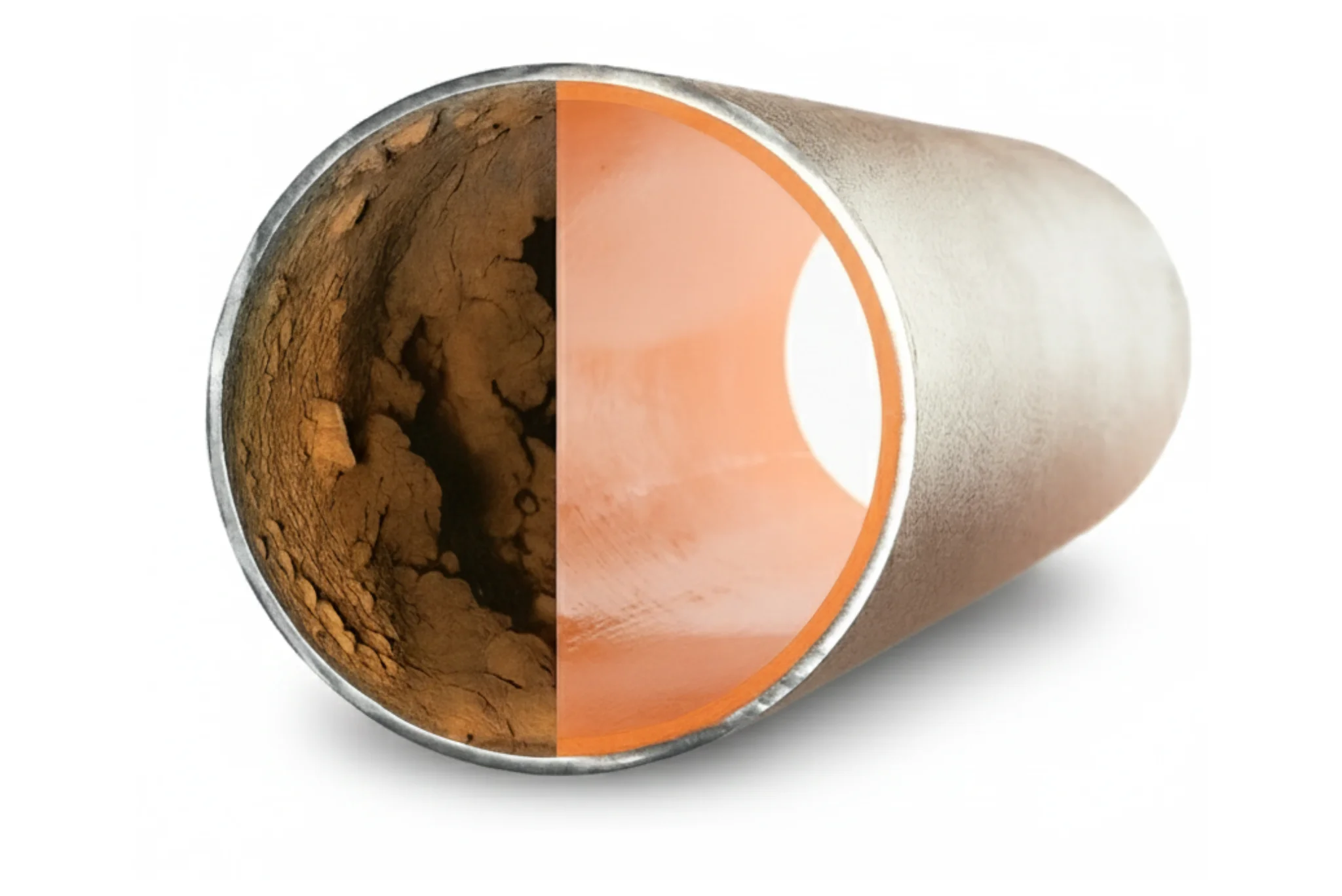
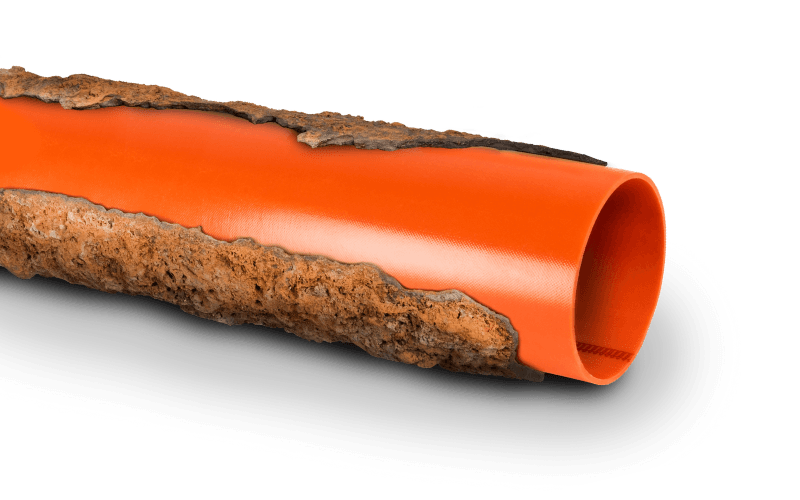
- Pipe lining (CIPP, cured-in-place pipe) cures a new, seamless, jointless pipe inside the old one, so roots and leaks cannot return.
- Pipe bursting pulls a new pipe into place when the old one is too damaged to line.
Either way, your grass, sprinklers, trees, and hardscaping stay largely intact. That matters in Colorado, where a short growing season makes a torn-up lawn slow to recover. Homeowners can see the full process on our trenchless sewer repair in Colorado Springs page. Alphalete backs its trenchless repairs with a 20-year warranty, and a properly installed liner is expected to last 50 years or more.
Seeing standing water in your yard? Call (720) 807-3224 or schedule a sewer camera inspection today, and get a clear answer before it turns into a bigger repair.
Frequently Asked Questions
Why is there standing water in my yard when it has not rained?
The most common cause is a leaking sewer line. Wastewater escaping from a cracked or separated pipe saturates the soil and rises to the surface, keeping that spot soggy no matter the weather. A camera inspection confirms it.
How do I know if standing water is a sewer leak or just groundwater?
Look for a sewage or sulfur smell, water that pools shortly after you use water indoors, and unusually green grass over the spot. Groundwater from rain or snowmelt drains away and has no odor.
Will the soggy spot go away on its own?
It may shrink between uses of water, but the underlying leak does not repair itself. It gets worse over time and can lead to a backup or a sinkhole, so early diagnosis is worth it.
Can you fix the leak without digging up my yard?
Yes. Trenchless pipe lining and pipe bursting repair the line through small access points with little to no digging, so your lawn and landscaping stay largely intact.