Commercial Sewer Line Repair and Pipe Lining in Colorado
Rebuild the Line From Inside, Keep the Business Open
Alphalete Trenchless handles commercial sewer line repair for property managers, building owners and HOA boards across Colorado's Front Range. Most failing commercial lines can be rebuilt from the inside with cured-in-place (CIPP) pipe lining, so parking lots, slab floors and storefronts stay intact while the building stays open. Every project starts with a camera inspection, so the repair plan is based on what is actually inside your pipe.
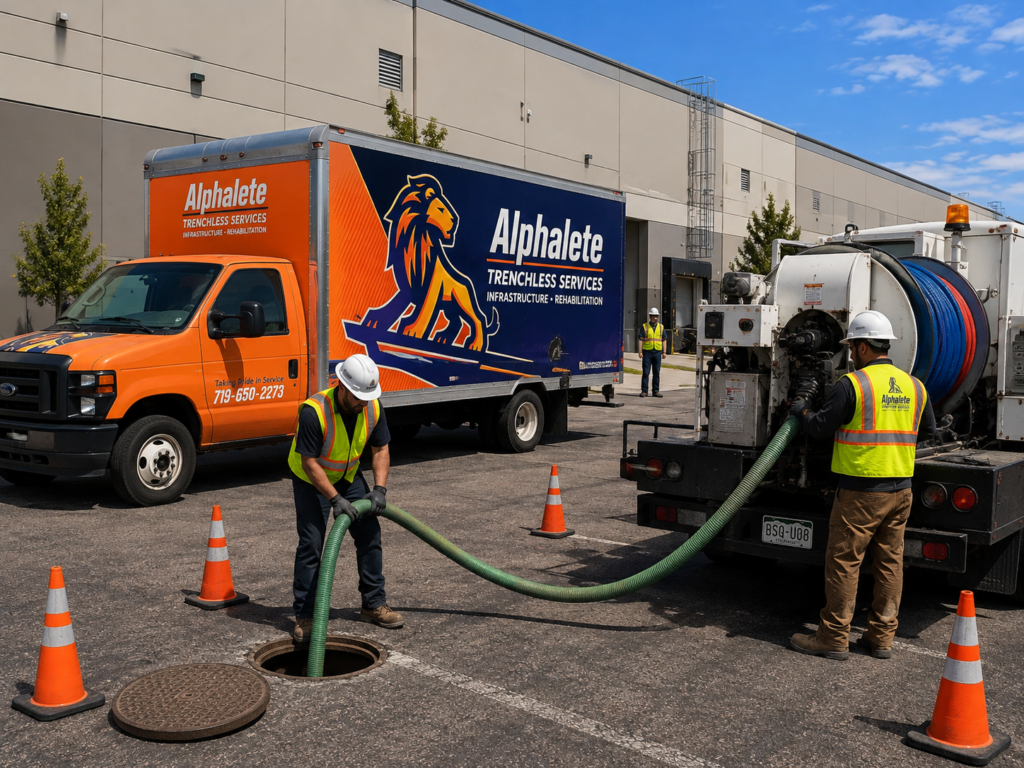

What Commercial Pipe Lining Fixes
Commercial lines carry more flow, more grease and more years of wear than a typical home sewer. These are the problems we see most often on Colorado commercial properties:
- Grease buildup that hardens inside restaurant and food-service lines and keeps coming back after cleaning.
- Corroded or cracked cast iron in older buildings, including scale that narrows the pipe from the inside. See can cast iron pipes be relined.
- Root intrusion at joints in clay and older lateral pipe running under landscaping.
- Leaking or separated joints that let groundwater and stormwater into the line, known as inflow and infiltration.
- Deteriorated vertical stacks and roof drains in multi-story buildings.
- Repeat backups that return after every snaking or jetting visit.
Not every defect is a lining job. A collapsed section or a severe belly (a sag that holds water) may call for pipe bursting or a spot excavation instead. The camera decides, and we explain which option fits each section of your line. Our guide to pipe lining vs. pipe bursting covers the difference.

Commercial Properties We Work On
Restaurants and food service
Grease-heavy lines, work scheduled around service hours. Colorado Springs Utilities asks food service establishments to identify their grease sources and follow its fat, oil and grease best management practices.
Apartments, condos and HOAs
Shared laterals and stacks, resident notice, and video records a board can review. See our HOA sewer line repair guide.
Retail centers
Lines under parking lots, sidewalks and storefront entries.
Office buildings
After-hours and weekend scheduling to keep tenants working.
Hotels and healthcare
Vertical stacks serving occupied floors, phased room by room.
Schools, churches and public buildings
Work planned for breaks and between services.
Light industrial and warehouses
Longer runs under slab floors and loading areas.
How a Commercial Sewer Line Repair Project Works
Camera inspection and line mapping
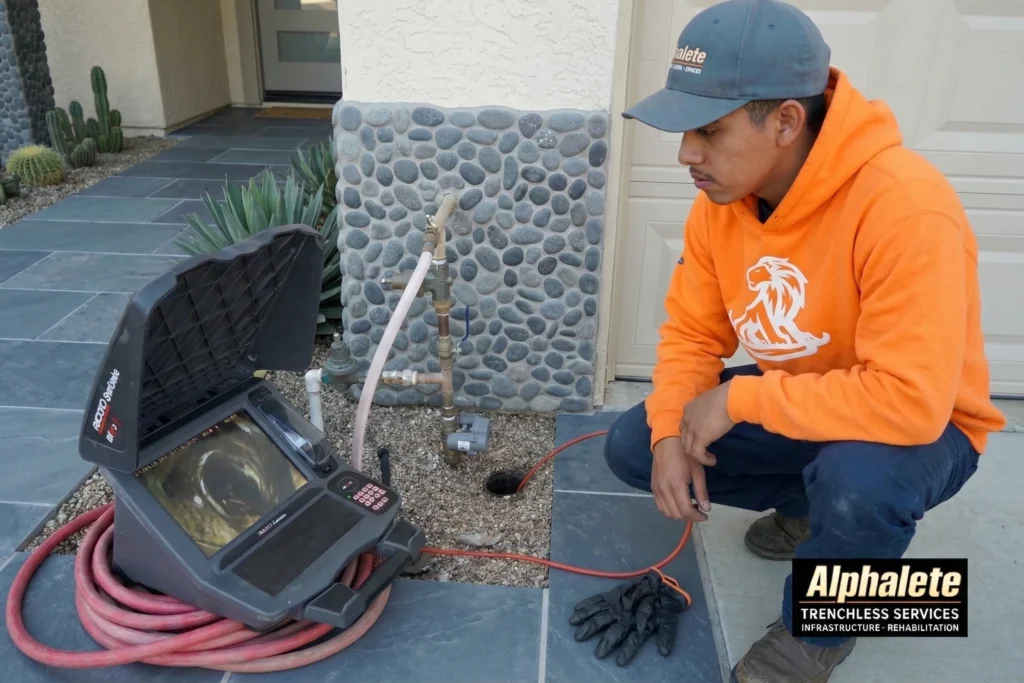
An HD camera goes in through existing cleanouts to record every defect, its depth and its distance. You get the video. Learn more about our sewer camera inspection.
Cleaning the line
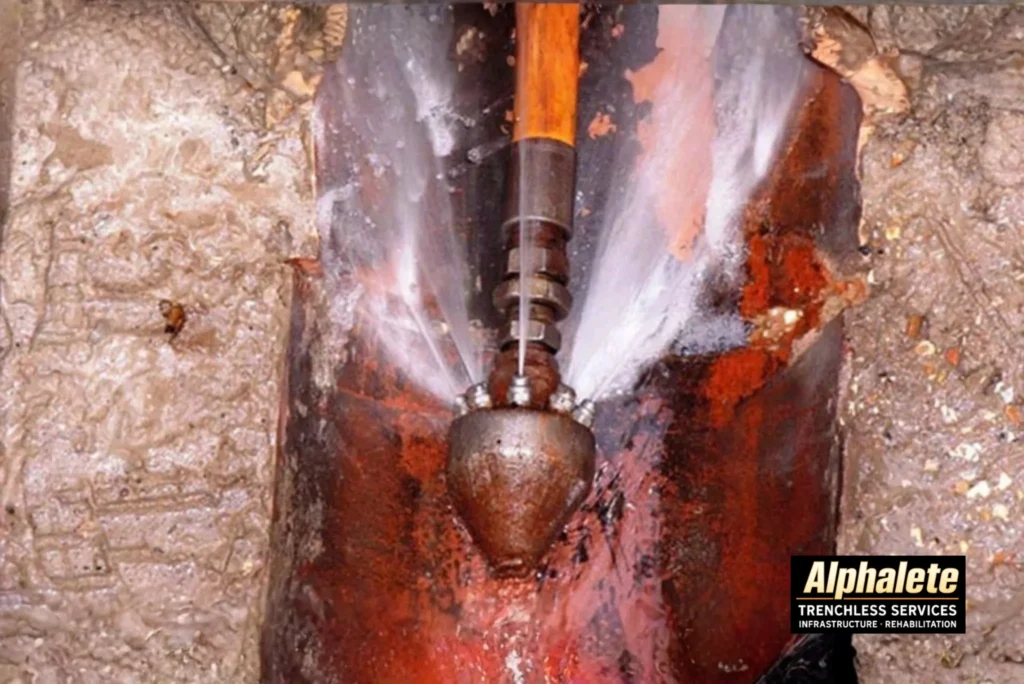
Hydro jetting removes grease, scale and roots so the new liner bonds to a clean pipe wall.
A written repair plan
Each section is matched to lining, bursting or a spot repair. Schedule, access points and any water-use limits are agreed with your property manager before work starts.
Lining and curing
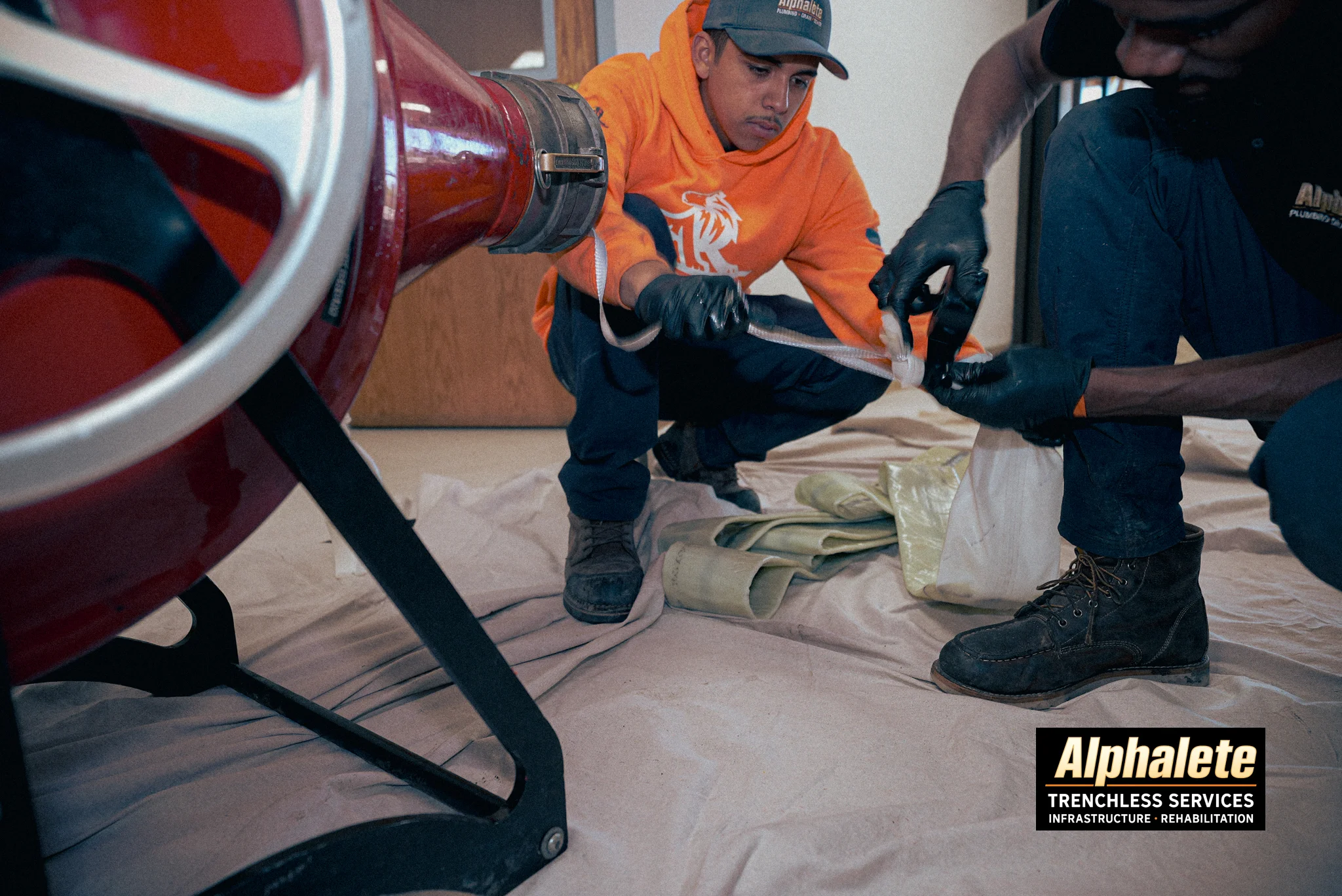
A resin-saturated liner is installed inside the host pipe and cured in place with our HammerHead Bluelight LED system, forming a new jointless pipe within the old one. This is commercial pipe relining without trenching.
Reopening connections
Branch lines that tie into the main are reopened from inside the pipe.
Final camera verification
A second camera pass records the finished line, giving you before and after video for your files, your insurer or your board.
Keeping Tenants and Customers in Service
A sewer problem can shut down a business fast, and the repair should not do the same. We plan the work around your operation:
- Off-hours, overnight or weekend scheduling where the building allows it.
- Work in sections, so only the fixtures tied to one line are affected at a time.
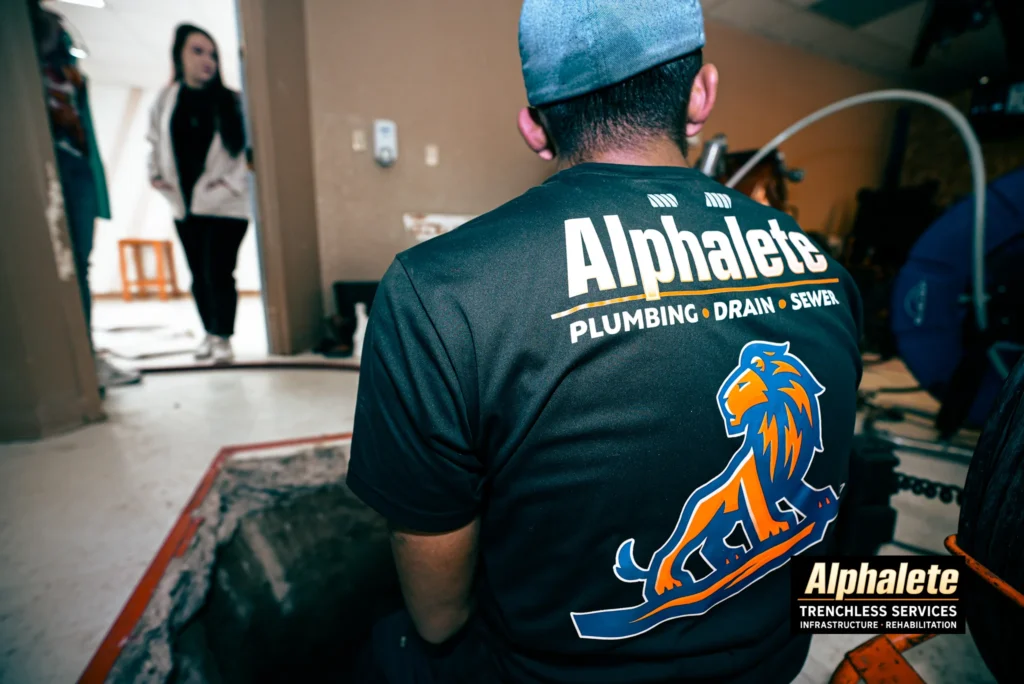
- Access through existing cleanouts instead of new holes in finished floors or pavement.
- Clear notice of the window when the affected line cannot be used while the liner is installed and cured.
If a line is backing up now, we start by finding the cause on camera and restoring flow, then plan the permanent repair.
Pipe Lining vs. Excavation for Commercial Property
| CIPP pipe lining | Open-trench excavation | |
|---|---|---|
| Surface | Parking lots, slabs and landscaping stay in place | Pavement, floors or landscaping are cut open |
| Business access | Entrances and parking usually stay open | Work zones can block entries, stalls and drive lanes |
| Restoration | Little or no surface restoration | Repaving, concrete and landscape repair after the pipe work |
| Best for | Cracked, corroded, root-damaged or leaking pipe that still holds its shape | Collapsed pipe, severe sags or a line that needs rerouting |
Why Commercial Sewer Lines Fail in Colorado
- Swelling soils. The Colorado Geological Survey calls swelling soil a common and sometimes serious problem in Colorado. The same ground movement that cracks foundations shifts buried pipe and opens joints.
- Freeze and thaw. Repeated winter cycles stress pipe near the surface, especially shallow runs under parking lots.
- Aging materials. Older commercial districts still run on cast iron and clay pipe that corrodes, cracks and lets roots in. Read more on cast iron sewer pipe problems.
- Grease. Food-service lines collect fat, oil and grease that hardens and narrows the pipe over time.
Commercial Pipe Lining FAQs
Answers For Property Managers & Owners
Will my business need to close during commercial pipe lining?
What size pipes can you line?
Can you line vertical stacks in multi-story buildings?
Can lining fix a restaurant line full of grease?
Does a liner make the pipe smaller?
What records do we get after the repair?
Ready to Plan Your Commercial Sewer Line Repair?
Start with a camera inspection of the line. You get the video, a clear explanation of what it shows and a written repair plan before any work is scheduled.
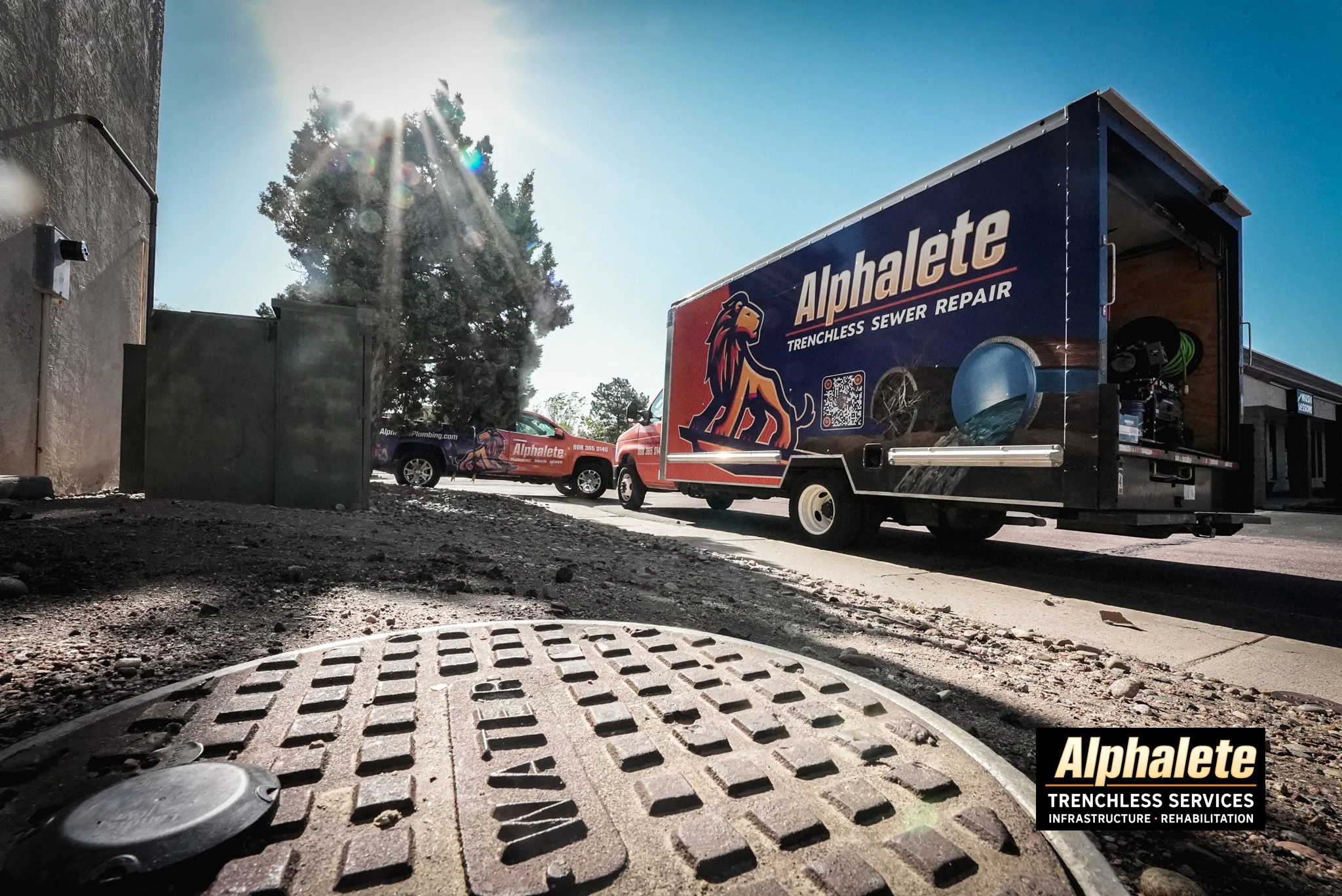
Commercial Sewer Repair Across the Front Range
We handle commercial sewer repair and pipe lining from our Colorado Springs base across the Front Range. Managing a building in Colorado Springs? Our commercial sewer repair guide for property managers walks through planning a project around tenants.