Quick answer: A standard Colorado homeowners insurance policy typically does not cover repairing or replacing a sewer line that fails because of age, corrosion, normal wear, or other gradual deterioration. Your policy may still cover certain damage caused inside the home, depending on how the loss occurred and whether you carry water backup or service line coverage.
Every insurance policy is different. Coverage depends on the specific policy language, endorsements, exclusions, limits, and deductibles. This article provides general educational information and is not insurance or legal advice. Review your policy and speak with a licensed Colorado insurance professional about your situation.
Many homeowners do not examine this part of their policy until sewage has already backed up into the house. Understanding the difference between sewer line repair, water backup damage, and service line coverage can help you ask the right questions before an emergency occurs.
Does a Standard Homeowners Policy Cover Sewer Line Repair?
A standard homeowners policy may not pay to repair or replace the buried sewer lateral when the failure results from aging materials, corrosion, root intrusion, poor maintenance, or gradual ground movement. Insurance is generally designed to respond to covered sudden and accidental events rather than deterioration that develops over time.
The sewer lateral is the section of pipe connecting a home to the public sewer system. In many Colorado communities the homeowner is responsible for this private line, although the exact responsibility boundary can vary by municipality or sanitation district. Our city-by-city guide to sewer line responsibility in Colorado shows what each provider’s rules say. Our guide to Denver sewer line responsibility explains how to identify where public responsibility ends and private responsibility begins.
Even when the homeowner owns the line, ownership does not automatically mean the repair is covered. The cause of the damage and the wording of the policy determine whether an insurer may contribute.
What Sewer Damage Might Homeowners Insurance Cover?
Homeowners insurance may be more likely to cover resulting damage inside the home than the deteriorated sewer pipe that caused it. Coverage can still depend on the cause of the loss and whether the policy includes the necessary endorsement.
Sudden and accidental damage
If a sewer line is damaged by a sudden, identifiable event, such as accidental construction damage, some policies may provide coverage. Responsibility may also depend on who caused the damage. Contact your insurer or licensed agent rather than assuming the event is covered.
Damage to the home and personal property
When sewage backs up into a finished basement or another part of the home, coverage may help with damaged flooring, drywall, built-in features, or personal belongings. Sewer and drain backups are commonly subject to separate coverage requirements.
Cleanup and remediation
If a backup is covered, the applicable endorsement may help pay for water extraction, sanitation, drying, and related remediation, subject to its deductible and coverage limit.
The cost of repairing the failed pipe is a separate coverage question. A policy might cover qualifying interior damage without paying to replace an old or deteriorated sewer lateral.
What Is Water Backup Coverage?
Water backup coverage is usually an optional endorsement that may help when water or sewage backs up through a sewer, drain, or sump system and damages the home. It is different from coverage for repairing the buried sewer line itself.
This endorsement can be especially important for Colorado homes with finished basements. Limits may be lower than the main dwelling limit, so confirm both whether the endorsement is present and how much coverage it provides.
The National Association of Insurance Commissioners lists sewer backup among the coverages available under homeowners insurance, and advises consumers to review the terms and limits of their individual policies.
Questions to ask your insurance agent include:
- Does my policy include water or sewer backup coverage?
- What events trigger the coverage?
- What exclusions apply?
- What are the limit and the deductible?
- Does it cover cleanup, structural damage, and personal property?
What Is Service Line Coverage?
Service line coverage is a separate endorsement that may help pay for certain covered damage to underground utility lines owned by the homeowner. Depending on the policy, this can include the private sewer lateral as well as water, electrical, or other service lines.
Some service line endorsements may include excavation, pipe repair or replacement, and restoration of affected outdoor surfaces. Covered causes, limits, deductibles, pipe-age restrictions, and exclusions vary by insurer. Ask about this endorsement by name and request a written explanation of what it covers.
Water backup coverage and service line coverage are not interchangeable:
- Water backup coverage may help with qualifying damage caused when sewage or water enters the home.
- Service line coverage may help repair a qualifying damaged underground line owned by the homeowner.
A policy may include one without the other.
Why Might a Colorado Sewer Claim Be Denied?
A sewer-related claim may be denied when the cause of loss is excluded by the policy. Common issues may include gradual deterioration, corrosion, deferred maintenance, root intrusion, pre-existing damage, or certain types of earth movement.
Colorado’s expansive soils can swell when wet and shrink as they dry. Over time that movement can stress older clay, cast iron, or other buried sewer lines, contributing to separated joints, offsets, cracks, or bellies. Learn more about expansive clay soil and sewer pipe damage in Colorado.
Whether soil-related damage falls under an exclusion depends on the policy and the facts of the loss. Request the insurer’s coverage decision and explanation in writing.
Documentation can also affect how efficiently a claim is evaluated. Photos, inspection footage, repair estimates, cleanup invoices, and a clear timeline can help establish what happened and where the damage occurred. Documentation does not determine whether a claim will be covered, but it gives the insurer better information to review.
Can a Sewer Camera Inspection Help With a Claim?
A sewer camera inspection can document the visible condition, location, and severity of a sewer line problem. It may show cracks, root intrusion, corrosion, separated joints, buildup, offsets, or collapsed sections that cannot be evaluated from the surface.
This information can help a homeowner understand the problem and provide supporting evidence for an insurer or adjuster. The footage does not determine coverage. The insurance company makes that decision based on the policy language and the documented cause of loss.
An inspection performed before a major failure can also provide a dated record of the line’s condition. Alphalete can provide a digital copy of the inspection footage upon request and explain the findings.
How Does Trenchless Repair Fit Into an Insurance Claim?
When a damaged sewer line qualifies for trenchless repair, the work can often be completed through existing cleanouts or small access points instead of a continuous open trench.
With cured-in-place pipe lining, or CIPP, a resin-saturated liner is installed inside a suitable existing pipe and cured to form a new structural pipe wall. This approach can reduce disturbance to yards, driveways, patios, and landscaping.
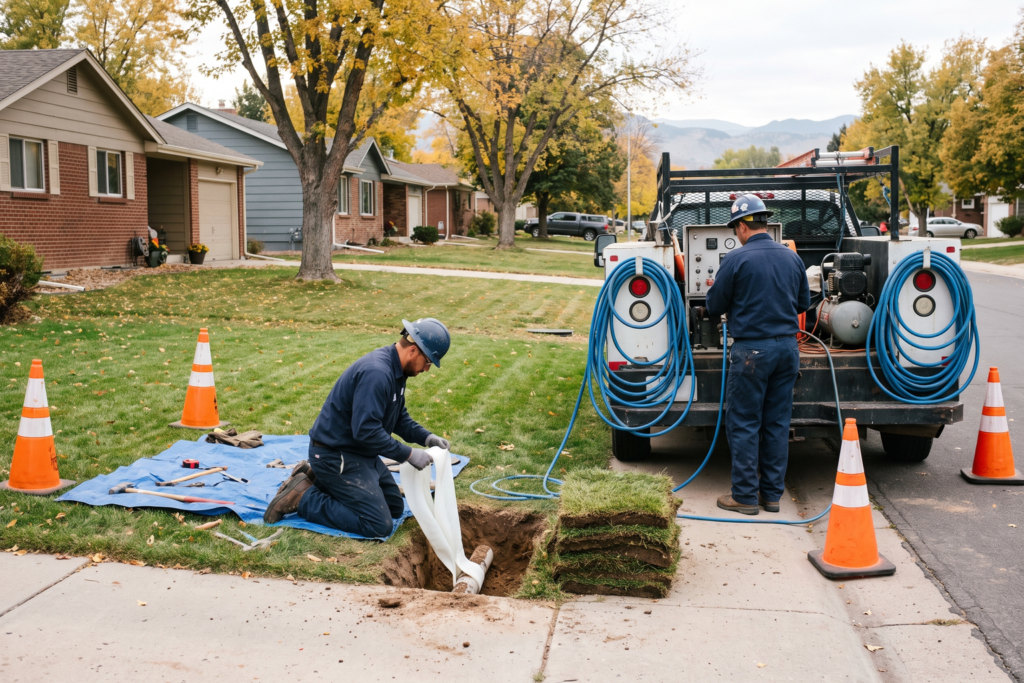
Reduced excavation may also reduce the amount of surface restoration required. Do not assume an insurer will pay for a particular repair method. Ask the insurer whether the proposed work is covered, and whether approval or additional documentation is required before permanent repairs begin.
You can review the full trenchless sewer repair process or learn more about residential trenchless pipelining.
What Should You Do Before Filing a Sewer Claim?
Safety and preventing additional damage come first. If it is safe to do so, document the loss immediately, take reasonable steps to limit further damage, and notify the insurance company promptly.
- Stop using water when necessary. If wastewater is backing up through drains or fixtures, reduce or stop water use until the cause can be identified. Avoid contact with sewage and arrange professional cleanup when needed.
- Photograph and record the damage. If it can be done safely, capture the affected rooms, visible wastewater, damaged materials, and personal property before items are moved or discarded. Do not delay urgent mitigation solely to collect evidence.
- Review your declarations page and endorsements. Look for water backup, sewer backup, sump overflow, and service line coverage. Note the coverage limits, deductibles, exclusions, and reporting requirements.
- Notify your insurer promptly. Ask what immediate steps you should take, what documents are required, and whether the insurer needs to inspect the damage before permanent repairs begin.
- Arrange a sewer camera inspection. Camera footage can help identify the location and visible condition of the pipe problem. Ask for a copy of the footage and a clear explanation of the findings.
- Keep invoices and written records. Save cleanup receipts, inspection records, estimates, correspondence, and invoices. Keep notes of conversations with the insurer, contractor, sanitation district, or municipality.
For consumer information or assistance with a Colorado insurance question, visit the Colorado Division of Insurance.
Sewer Coverage at a Glance
| Coverage | Typically may help with | Typically may not cover |
|---|---|---|
| Standard homeowners policy | Damage caused by certain sudden, covered events | Wear, corrosion, gradual deterioration, and other excluded causes |
| Water backup endorsement | Qualifying sewage or drain backup damage, cleanup, and damaged property | Repairing the deteriorated sewer pipe itself |
| Service line endorsement | Certain covered repairs to homeowner-owned buried service lines, sometimes including excavation and surface restoration | Pre-existing damage and causes excluded by the specific endorsement |
This table is only a general comparison. Policy forms and endorsements vary by insurer.