The trenchless sewer repair process fixes a damaged sewer line from the inside, working through one or two small access points instead of a trench across your yard, and most residential jobs are finished in a day. If a contractor has told you your line needs work and you are trying to picture what that actually looks like on your property, here is the whole sequence, start to finish.
What is the trenchless sewer repair process?
Five stages, in this order: inspect, clean, choose the method, install and cure the new pipe, then verify the result on camera.
A camera goes down the line first so the crew knows the pipe material, where the damage sits, and whether the line can be repaired without digging. The pipe is then scoured clean so the new liner has a bonded surface to form against. The crew installs either a cured-in-place liner or, for lines too far gone to line, a replacement pulled through the old path. Everything is confirmed with a second camera pass before the crew leaves.
If you are still working out what the method is at a high level, start with the plain-language guide to what trenchless sewer repair is and how it works. This article picks up from there and walks the actual job. You can see the full range of trenchless services in Colorado we perform at each of these stages.
Step 1: What happens during the camera inspection?
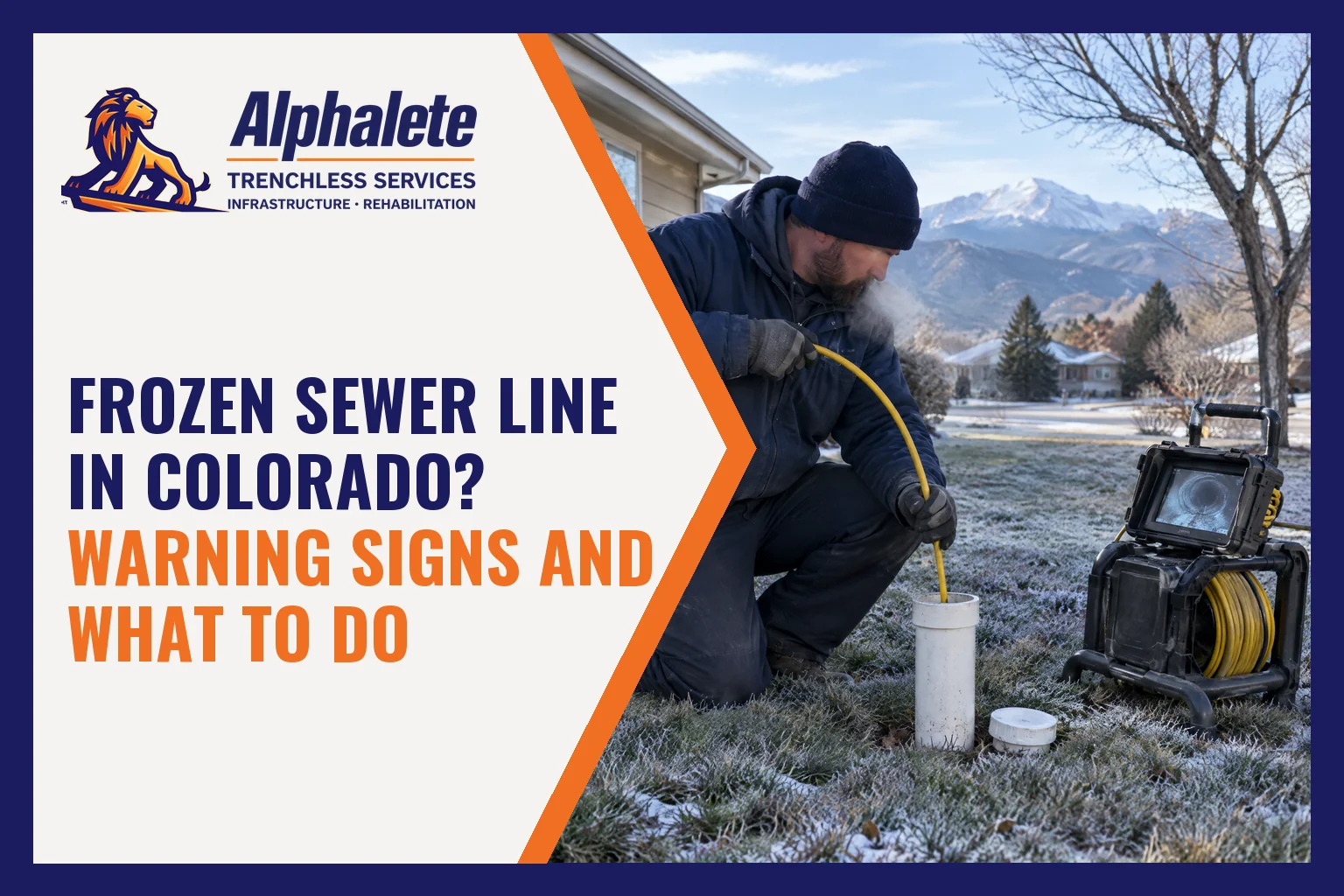
A technician feeds a high-definition camera through your sewer line, usually from an existing cleanout, and records the full run.
The camera comes first for one reason: nothing about the repair can be decided without it. It shows the pipe material, whether you are dealing with clay, cast iron, or PVC. It shows the type of damage, whether that is root intrusion at a joint, a longitudinal crack, corrosion, an offset, or a belly where the pipe has sagged. It locates the problem, including depth, so the work is targeted rather than exploratory. And it confirms whether a usable access point exists.
That last item matters more in Colorado than most homeowners expect. Front Range soils swell when wet and shrink when dry, and combined with freeze-thaw movement through spring and fall, they routinely pull clay joints apart and shift lines out of grade. A cracked pipe still sitting in position is close to an ideal lining candidate. A pipe that has physically moved is a different conversation, and only the camera tells you which one you have.
Ask to see the footage. A sewer camera inspection is the basis of every honest recommendation that follows.
Step 2: Why does the pipe have to be cleaned first?
Because a liner bonds to the pipe wall, and it cannot bond to roots, grease, or scale.
Before anything goes in, the line is cleared with hydro jetting, which uses high-pressure water to cut through root masses and flush out grease, sludge, and mineral buildup. On older cast iron, the crew may also need to descale the walls to get back to a sound surface.
This step gets rushed more often than any other, and it is the one that quietly decides whether a lining job performs for decades or underperforms early. A liner cured over a dirty wall does not adhere evenly. If you are comparing quotes, ask each contractor how they clean and whether they re-camera the line afterward to confirm it came back clean.
Step 3: How is the repair method chosen?
The camera footage decides it, and there are two main paths.
CIPP lining works when enough of the original pipe remains to host a liner. CIPP stands for cured-in-place pipe, which means a resin-saturated liner is inserted into the existing line and hardened in position, forming a new continuous pipe wall inside the old one. It seals cracks and open joints along the whole lined section rather than patching a single spot.
Pipe bursting is used when there is not enough pipe left to line. A bursting head is pulled through the old line, breaking it outward while drawing new pipe into the same path. It still works from small access pits instead of a full trench, but it is a replacement rather than a rehabilitation.
Hybrids are common and often the best outcome: dig or burst one failed section, line the rest of the run. The full breakdown of that decision is in CIPP lining compared with pipe bursting.
Step 4: How does the new pipe get installed and cured?
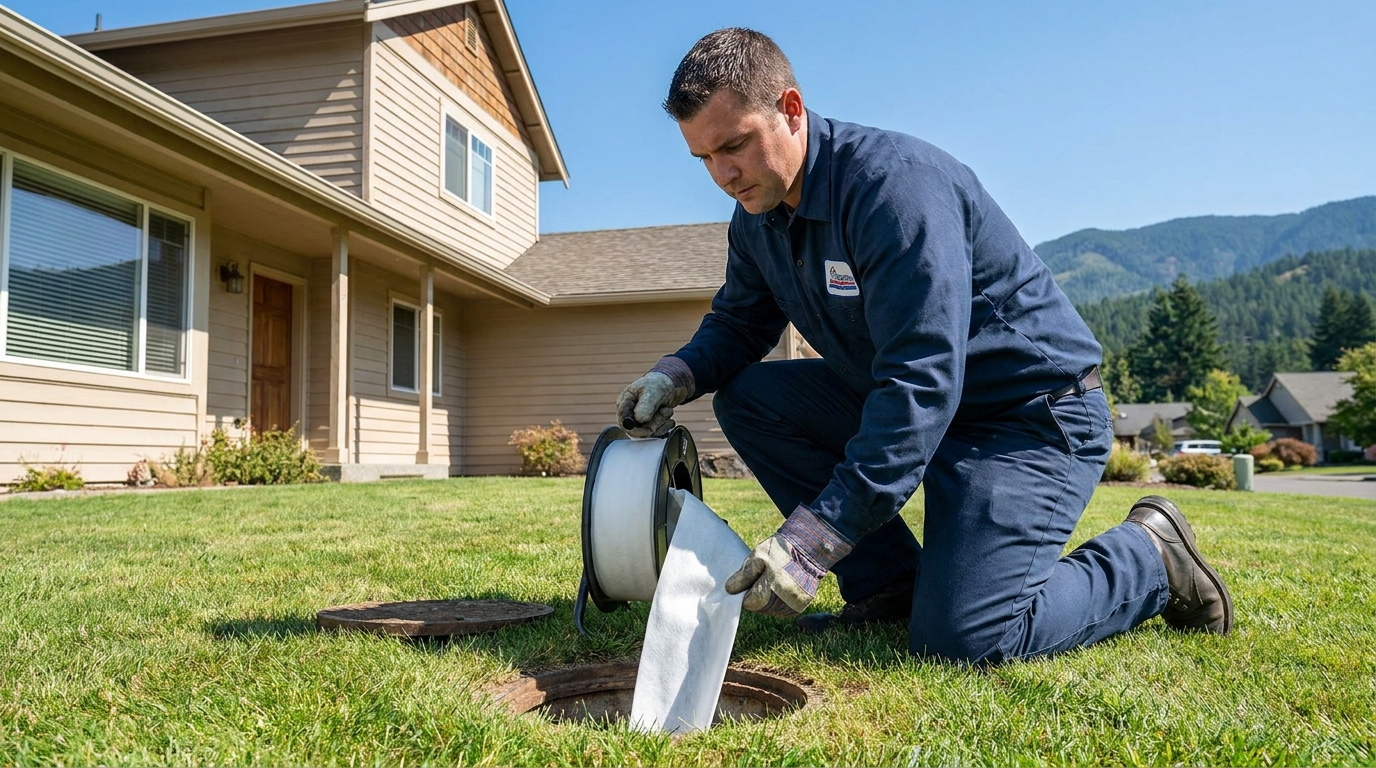
The liner is drawn or inverted into the cleaned pipe, pressed tight against the walls with air or water pressure, then cured until it hardens.
Curing is what turns a soft, resin-soaked sleeve into a structural pipe. Depending on the resin system, the crew cures with ambient conditions, hot water, steam, or ultraviolet light drawn through the liner on a train. Cold ground slows ambient cures, which is why Colorado crews often run heat or UV rather than waiting out a cure in a line four feet down in October.
Once the liner has hardened, branch connections that the liner covered are reopened with a remote cutter, so your kitchen and bathroom lines reconnect to the main. According to NASSCO, the industry body for trenchless rehabilitation, cured-in-place lining is the most widely used pipe rehabilitation method and creates a new pipe within the deteriorated host pipe. Our residential trenchless pipelining service covers this stage start to finish.
Step 5: What happens at the end of the job?
A second camera pass, then cleanup.
The verification run is not a formality. It confirms the liner seated evenly with no wrinkles or gaps, that every branch connection was reopened cleanly, and that flow is moving the way it should. Ask for that footage too, alongside the before video. Together they are your record of what was actually done.
Site cleanup is usually modest, because there is not much to restore. If the crew worked through an existing cleanout, your yard looks the way it did that morning. If an access pit had to be dug, that area gets backfilled and restored. Homeowners in Monument and the surrounding Front Range communities tend to notice this part most, since a short growing season means a trenched lawn takes a full year to look right again.
One note if any digging is involved: Colorado law requires advance notice to Colorado 811 at least two full business days before excavation begins, so buried utilities can be marked. Your contractor should handle this as part of the job.
How long does trenchless sewer repair take?
Most residential jobs are done in a day, with some running into a second day.
What stretches the timeline:
- Length of the run. A 40-foot line from house to main is faster than a 120-foot line.
- Access. No usable cleanout means an access point has to be created first.
- Cleaning difficulty. Heavy root mass or thick scale on cast iron adds hours.
- Cure conditions. Cold ground and cold weather slow curing.
- Scope changes. If the camera finds a collapsed section mid-run, the plan changes.
Inspection and cleaning sometimes happen on a separate visit from installation, so ask whether your quote covers one appointment or two.
Is trenchless right for every sewer line?
No, and any contractor who says otherwise is selling rather than diagnosing.
Lining needs a host pipe. A section that has fully collapsed, separated at a joint, or gone missing has nothing for a liner to form against. Lining also does not correct slope: a bellied pipe that gets lined is a lined bellied pipe, and water still pools in the low spot. Lines that need to be upsized, or that have failed at the connection to the public main, usually need excavation at that point.
That honest balance is worth reading before you approve anything. We covered it in detail in trenchless sewer repair pros and cons, including the five questions worth asking any contractor bidding your job.
If your line does qualify, the process above is what your week looks like. See the full range of no-dig trenchless services we offer across Colorado Springs, Denver, and the Front Range.
Frequently asked questions
How long does trenchless sewer repair take in Colorado?
Most residential jobs in Colorado Springs and Denver are completed within a day once the line has been inspected and cleaned. Length of the run, whether a cleanout already exists, and ground temperature during curing are the three things most likely to push it into a second day. Your contractor should give you a specific window after reviewing your camera footage rather than a general figure.
Do you have to dig up my yard at all?
Usually very little, and often none. The process works through existing access points such as a cleanout. If your home does not have one, a small access pit is dug to create it, which is a fraction of the disturbance a full trench creates. Anyone promising literally zero digging before seeing your line is guessing.
Will trenchless repair work on a collapsed pipe?
Not with lining. A collapsed section has no remaining pipe wall to line against, so it has to be excavated or replaced by pipe bursting. Many Colorado Springs homes end up with a hybrid: the collapsed section is addressed directly, and the rest of the run is lined.
How do I know if my sewer line needs repair in the first place?
Multiple slow drains at once, gurgling toilets, backups that return after snaking, persistent sewer odors, and soggy or unusually green patches in the yard are the common early signals. We break these down in signs you need sewer line repair. A camera inspection is what turns those symptoms into a diagnosis.