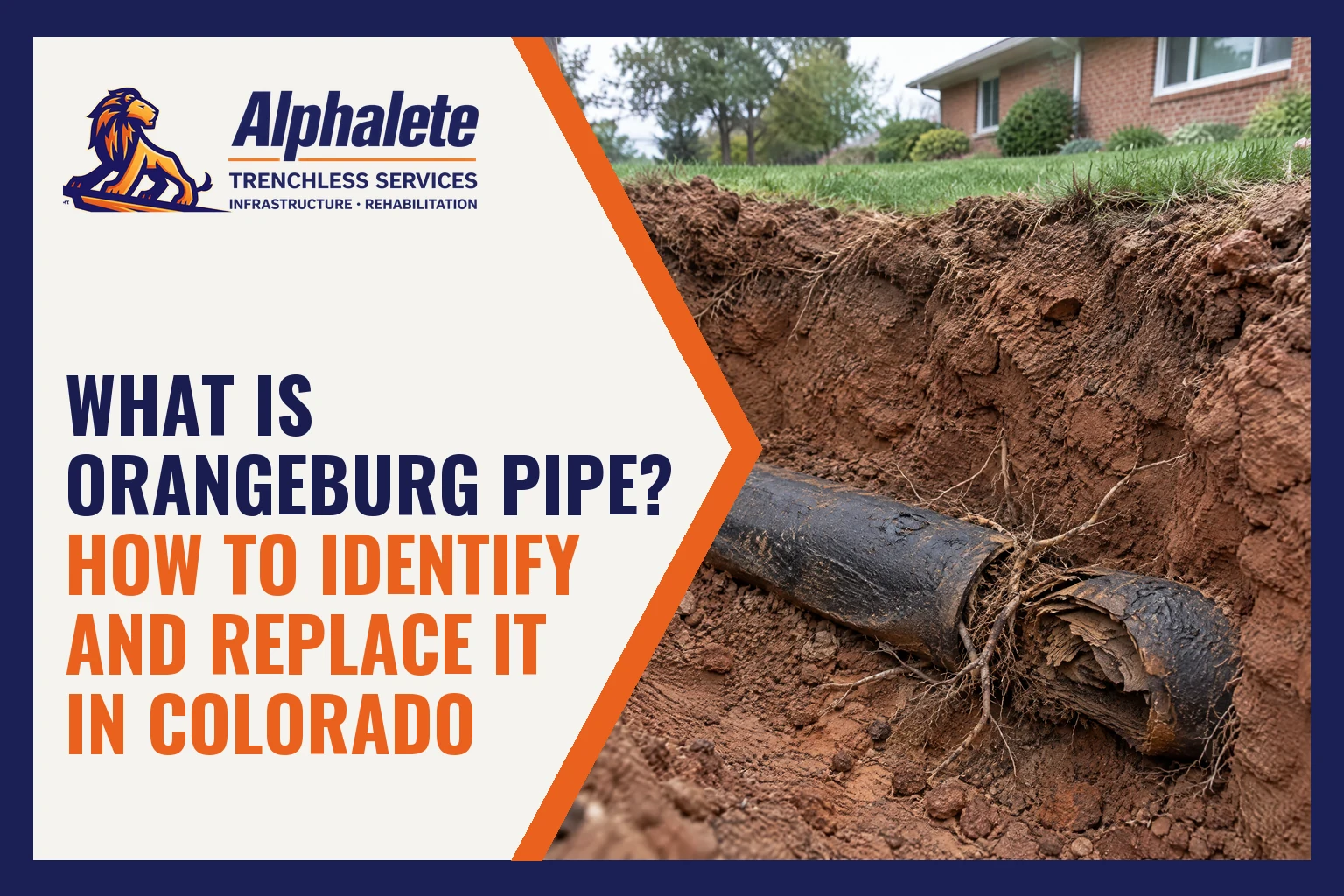
Quick answer: A frozen sewer line can happen in Colorado, but it is much less common than a frozen water line. Sewer lines carry warm wastewater by gravity and sit below the frost depth, so a healthy line rarely freezes. The lines that do freeze almost always had a problem first: a sagging section that holds standing water, a shallow stretch, a crack letting groundwater in, or buildup that slows drainage. If several drains slow down or stop during a cold snap, the ice is the symptom and the damaged pipe is the real problem.
In Colorado Springs, the average first fall freeze is October 2 and the average last spring freeze is May 8, according to National Weather Service Pueblo freeze data. That is roughly seven months of freezing nights, which makes early fall the right time to check a sewer line’s condition.
Can sewer lines freeze if they are buried below the frost line?
Yes, but only when one of two built-in protections fails. The first is depth: service lines are buried below the local frost depth, so the soil around them does not usually freeze solid. The second is flow: wastewater leaves the house warm and drains through quickly, so it never sits still long enough to freeze. A frozen sewer line almost always means that somewhere along the run, the pipe lost its depth, its slope or its full diameter.
What causes a sewer line to freeze?
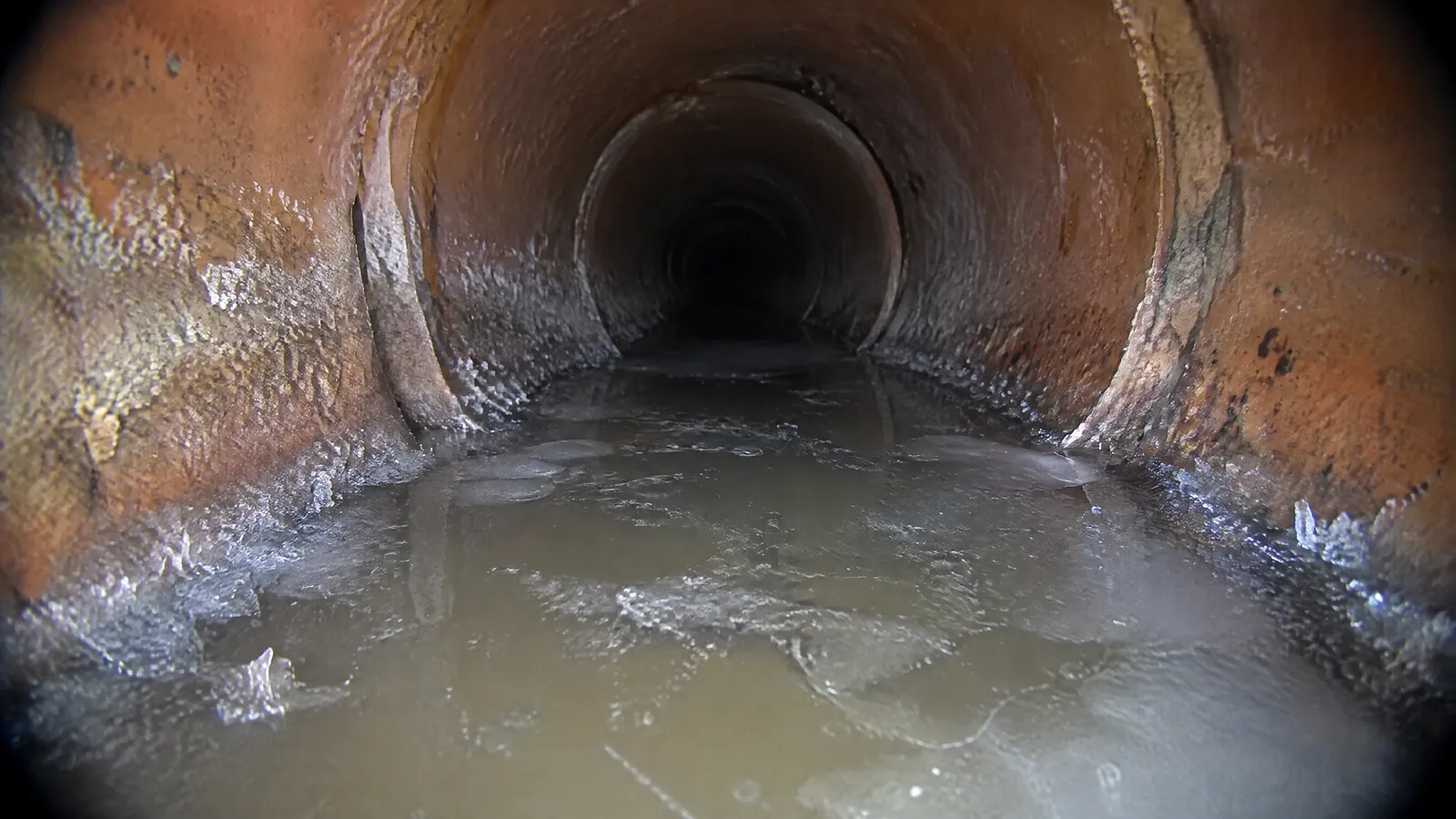
A sagging section holding standing water. When part of the line sags, wastewater pools in the low spot instead of draining. In a long cold stretch, that pool can freeze into an ice plug that blocks the whole line. Sags usually come from soil movement and from aging clay or cast iron pipe that has lost its bedding. See what a bellied sewer line is for how sags form.
A shallow or exposed run. Additions, basement bathroom conversions, detached garages and older unpermitted work can leave a stretch of drain line shallower than the rest, or running through an unheated crawlspace. That stretch is the weak point.
Cracks letting groundwater in. A cracked or offset joint lets cold groundwater seep into the line. That water adds volume the pipe was not built to carry, and it collects in low spots where it can freeze.
A line that already drains slowly. Grease, scale and root mass narrow the pipe opening. A narrowed line holds water longer and freezes sooner, and a root mass also holds moisture inside the pipe.
A vacant or lightly used property. A second home, a rental between tenants or an unused basement bathroom gets almost no warm water moving through it. Without flow, the line is just a cold pipe holding whatever is sitting in it.
What are the signs of a frozen sewer line?
The clearest sign is several drains slowing or stopping at once during or right after a cold stretch. Other signs:
- Toilets or tubs gurgle when another fixture drains, which means air is trapped behind a blockage.
- Water backs up into the lowest drain in the house, usually a basement floor drain or shower.
- The problem started with the cold weather and was not there a week earlier.
- Drainage improves on a warm afternoon and gets worse again overnight. That on-and-off pattern points to ice, not a solid clog.
How can you tell a frozen sewer line from a regular clog?
| Clue | Frozen sewer line | Regular clog | Frost-heave damage |
|---|---|---|---|
| When it starts | During a cold snap | Any time of year | Often after a thaw |
| Drains affected | Several at once | Often one fixture | Several, recurring |
| Daily pattern | Better in afternoon warmth, worse overnight | Constant | Gets worse over seasons |
| Root cause | Standing water, sag, shallow run | Grease, wipes, roots | Soil movement cracking joints |
Frost heave is a related but different problem, covered in how frost heave cracks Colorado sewer lines.
What should you do if your sewer line is frozen?
Stop using water right away. Every flush, shower and load of laundry adds to water that has nowhere to go, and a backup into the house costs far more than a day of inconvenience.
- Do not pour boiling water, chemicals or salt down the drain. None of them reach an ice plug several feet underground. Chemical drain products sit against the pipe wall and are a hazard to anyone who later opens the line, and boiling water can soften PVC joints.
- Do not force it with a rented drain machine. Driving a cable into a frozen, possibly cracked line can turn a blockage into a broken pipe.
- Get the line looked at, not just opened. Once flow is back, a sewer camera inspection shows whether the freeze came from a sag, a crack, roots or heavy buildup. It is the only way to see the pipe’s condition without digging.
How do you keep a sewer line from freezing?
Inspect before the cold sets in. Homes with older clay or cast iron lines, large trees near the sewer run, or a history of backups benefit most from a fall camera inspection. The full pre-winter routine is in preparing a sewer line for a Colorado winter.
Clear buildup and roots. A clean, full-diameter pipe drains fast and does not hold water. Hydro jetting scours grease, scale and roots off the pipe walls. Colorado Springs Utilities says a service line should be professionally cleaned every two years, and more often in older neighborhoods with large trees. The sewer line maintenance checklist covers the rest of the year.
Fix a known slow drain now. A drain that has been a little slow since summer has less capacity than it should. Cold weather is what turns that into a backup, so professional drain cleaning before the season is the cheaper fix.
Repair the structural problem. If the camera shows a sag, cracks or root entry points, thawing the line only lasts until the next cold snap. Residential trenchless pipelining rebuilds the pipe from the inside with a cured-in-place liner. The liner is soaked in resin, installed through existing access points and hardened in place. It seals the cracks and joints where groundwater and roots get in, without digging a trench across frozen ground.
Keep water moving in unused areas. Run water through guest bathrooms, floor drains and utility sinks every couple of weeks to keep traps full and some flow in the branch lines.
Why are Colorado winters hard on sewer lines?
Front Range winters are not one steady cold season. They are months of hard overnight lows followed by mild afternoons. Each swing moves the soil, and moving soil moves the pipe: joints pull apart, cracks widen, and sections settle into sags that hold water. Older Colorado Springs sewer lines made of clay or cast iron are the most exposed. Colorado Springs Utilities places the service line from the home to the main with the property owner, so a freeze in that stretch is the owner’s to resolve.