Sewer lines rarely fail without warning, and the signs of a broken sewer line usually show up well before a full failure. Before a backup floods a basement or a pipe collapses under the yard, the line usually sends smaller signals for weeks or months. Knowing the signs you need sewer line repair, and catching them early, usually means a planned fix. Missing them often means an emergency.
Here are those warning signs, roughly in the order they tend to show up, and what each one is telling you.
The 6 Signs of a Broken Sewer Line
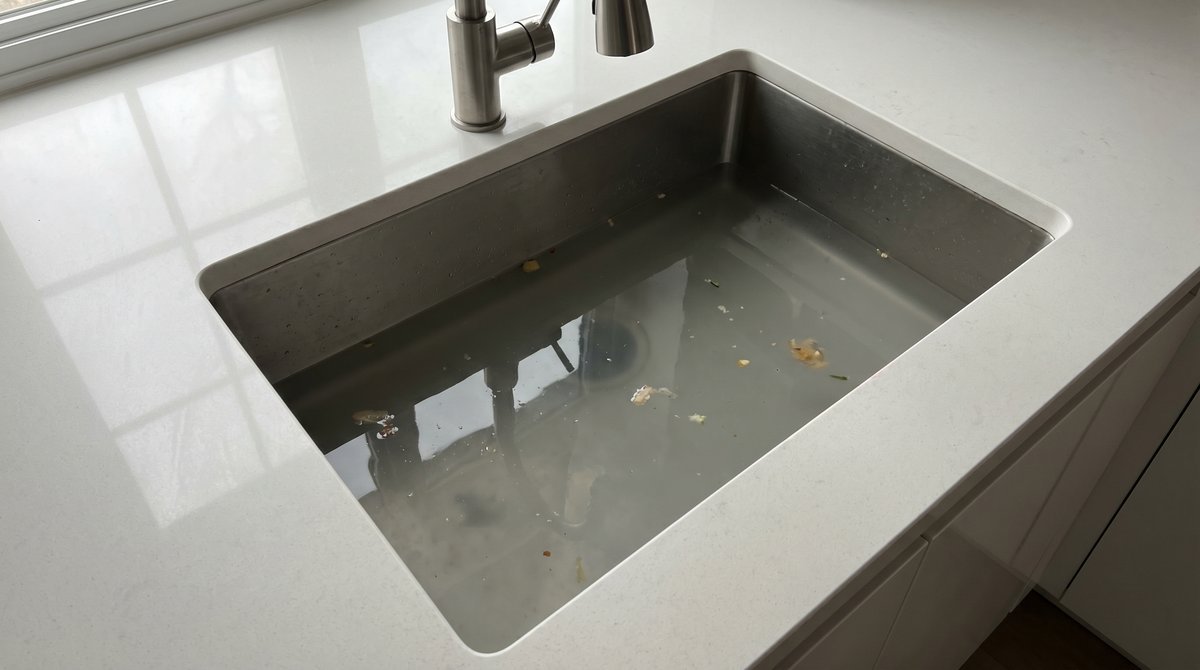
1. Multiple Slow Drains at Once
One slow drain is usually a local clog in that fixture. Multiple drains slowing down at the same time is a different story. When the kitchen sink, tub, and bathroom sink all start draining slowly together, the common point is the main sewer line. That is where the problem usually is.
2. Gurgling Toilets and Drains
Gurgling sounds mean air is moving through the line where it should not be. Often, a partial blockage is forcing air back up through the water in your fixtures. A toilet that gurgles when the washing machine drains, or a tub that bubbles when the toilet flushes, points toward a developing main-line problem.
3. Recurring Backups in the Same Drain
A clog that keeps coming back after snaking is one of the most reliable signs of a damaged pipe rather than a simple blockage. Snaking can punch a temporary path through roots or debris. However, if the pipe has cracks or open joints, the problem rebuilds. We cover this pattern in detail in Tree Roots in Sewer Line? What Homeowners Should Know.
4. Sewer Odors Inside or Outside
A sound sewer line is a sealed system. Persistent sewer smells in the house, the basement, or the yard suggest a crack, an open joint, or a leak letting gases escape. Odors that come and go with water use are especially worth taking seriously.
5. Wet Spots or Unusually Green Grass in the Yard
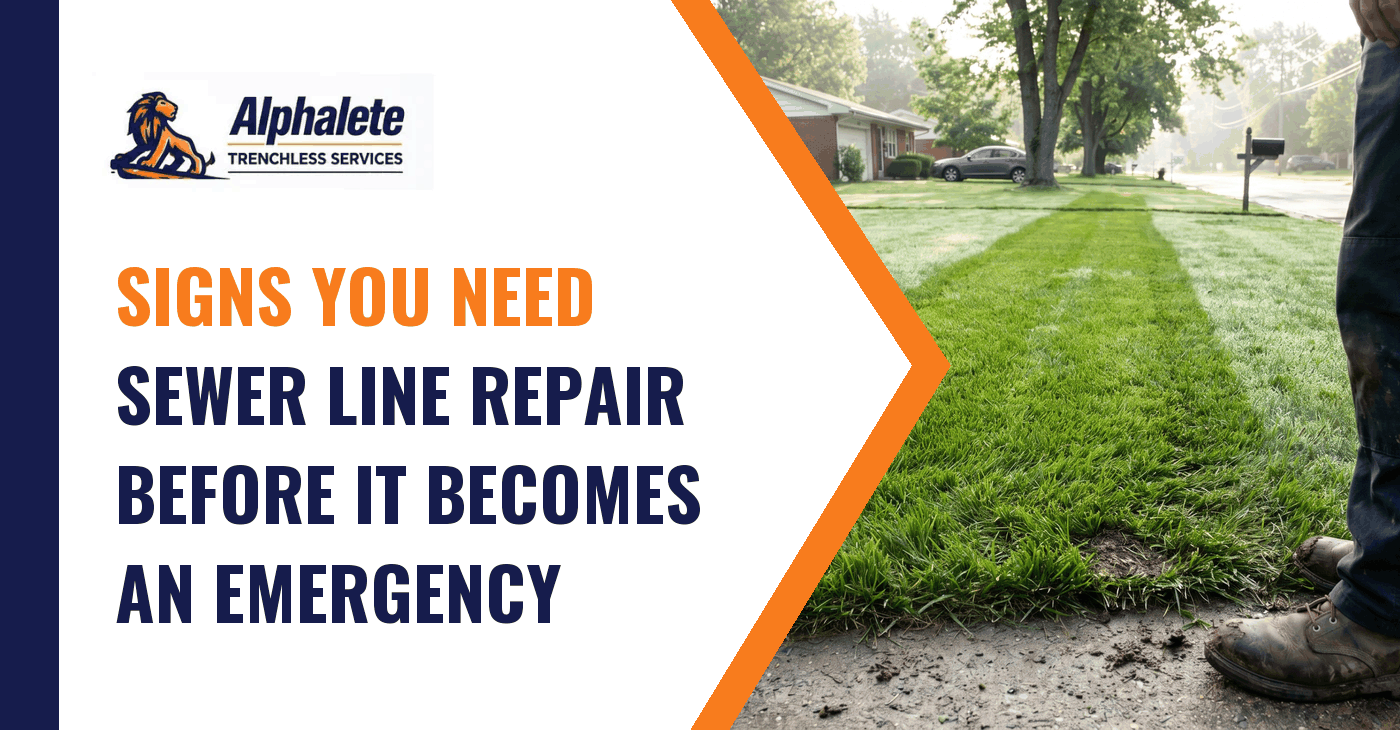
Soggy areas, sunken spots, or a stripe of suspiciously lush grass along the sewer path are classic clues. They can mean wastewater is leaking below ground. The leak feeds the lawn above it, which is why one patch outgrows everything around it.
6. Foundation-Area Dampness or Pest Activity
Long-running leaks can create persistent damp areas near the foundation and attract insects and rodents that follow moisture. Neither proves a sewer problem on its own, but combined with the signs above, they strengthen the case for an inspection.
Why Early Sewer Line Repair Beats Emergency Repair: Know the Signs
A sewer problem caught at the slow-drain stage gives you options. You can schedule an inspection, compare repair methods, and plan the work around your life. Many lines caught early are still good candidates for trenchless sewer repair, which fixes the pipe from the inside without digging up the yard.
Wait until sewage is backing up into the house, and the calculus changes. Damage to flooring and belongings, urgency pricing, and fewer repair choices all come with the emergency version of the same problem. A pipe that deteriorates further may also stop being linable, which can turn a no-dig repair into an excavation. Our comparison of trenchless vs. traditional sewer repair shows what is at stake in that difference.
Spotted the Signs You Need Sewer Line Repair? Do This Next
Do not guess, and do not keep re-snaking the same line. A sewer camera inspection shows exactly what is happening inside the pipe: roots, cracks, offsets, corrosion, bellies, or buildup. From there you will know whether you need a thorough cleaning, a repair, or nothing at all yet.
Service Areas
Trenchless Sewer Repair Service Areas in Colorado
Alphalete restores damaged sewer lines without digging for homeowners across Colorado. See where we provide trenchless sewer repair near you.
Alphalete Trenchless Services provides camera inspections, hydro jetting, and trenchless sewer repair in Colorado Springs, Denver, and surrounding Colorado communities. Schedule a free video inspection or call (719) 787-7746 while the problem is still a warning sign instead of an emergency.
Frequently Asked Questions
How can I tell a normal clog from a sewer line problem?
Location and repetition. A single fixture that clogs once is usually a local problem. Multiple fixtures acting up together point to the main line. So does the same drain backing up repeatedly after it has been cleared. The lowest drains in the house, like a basement floor drain or tub, typically show main-line trouble first.
Do these signs always mean the pipe is damaged?
No. Heavy buildup or a root mass can produce the same symptoms in a structurally sound pipe, and in that case a thorough cleaning such as hydro jetting may be all the line needs. That is exactly why the camera inspection comes first: it separates a dirty pipe from a damaged one.
Is a sewer inspection worth it if the drains seem mostly fine?
If you have noticed even one of the recurring signs above, an inspection is cheap information compared to an emergency. The same goes for older homes with original clay or cast iron lines. It either rules the line out or catches a problem while it is still a planned repair.
Can a problem line still be fixed without digging?
Often, yes. Lines caught before collapse are frequently good candidates for CIPP lining, which repairs the pipe from the inside through existing access points. The longer a damaged line runs, the more that window can narrow.