Every contractor who sells trenchless sewer repair will tell you it is worth it. Fewer will walk you through when it is not, so here is the balanced version.
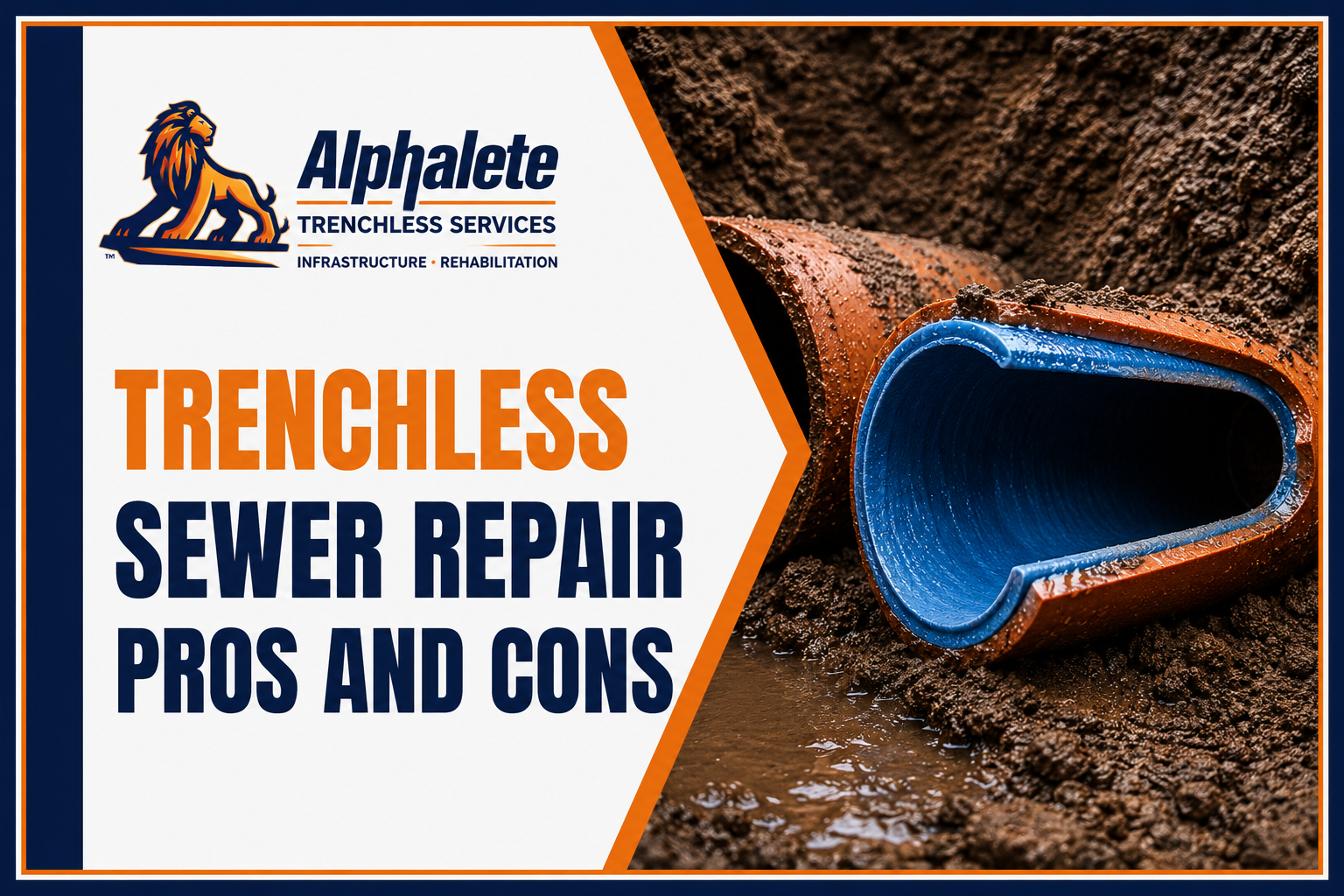
Is trenchless sewer repair worth it? For most homes with a damaged but intact sewer line, yes. No-dig lining protects your yard, driveway, and concrete and usually finishes faster than excavation, but it only works on pipes that are still structurally intact enough to host a liner, and it will not correct a pipe that has collapsed or lost its slope. A camera inspection is what tells you which category your line falls into.
If you are still working out what the method actually is, start with our plain-language guide to what trenchless sewer repair is and how it works. This article assumes you already have a quote in hand and you are trying to decide whether to say yes to it.
What are the real advantages of trenchless sewer repair?
The advantages are mostly about what does not happen to your property.
- Your landscaping stays where it is. Cured-in-place pipe lining works through existing access points such as a cleanout, so there is no long trench cut across the lawn. In Colorado, where the growing season is short and a torn-up lawn takes a full year to look right again, that matters more than it does in milder climates.
- It reaches pipe that is painful to dig up. Sewer lines running under a slab, a driveway, a mature tree, or a retaining wall are the expensive ones to excavate. Lining reaches them through the pipe itself.
- It seals the joints, not just the cracks. Most root intrusion and groundwater infiltration comes in through pipe joints and hairline cracks. A cured liner creates a continuous interior wall across the whole run, which closes those entry points rather than patching one spot.
- Less restoration work afterward. Excavation is really two projects: the repair, then rebuilding the lawn, sprinkler lines, walkway, or driveway the trench went through. Trenchless usually shrinks the second project considerably.
- The method has a long track record. According to NASSCO, the industry body for trenchless rehabilitation, cured-in-place pipe lining has been in common use for over 50 years across pipe diameters from 2 inches up to 120 inches.
- Flow often improves. The liner creates a smooth interior surface, which moves waste better than a corroded cast iron wall or a clay pipe full of root hairs.
What are the common problems with trenchless sewer repair?
This is the part most articles skip. There are five real limitations.
- Not every pipe qualifies. Lining needs a host pipe. If a section has fully collapsed, is missing entirely, or has separated at a joint badly enough that the two ends no longer line up, there is nothing for the liner to form against. Those lines need excavation, at least at the failure point.
- It does not fix slope problems. A belly is a low spot where the pipe has sagged and waste pools instead of draining. Lining a bellied pipe gives you a lined bellied pipe. The water still sits there. Sagging caused by soil movement usually needs the pipe reset, not relined, and that means digging.
- You lose a small amount of diameter. The liner has wall thickness, so the finished interior is slightly narrower than the original pipe. On a standard residential sewer line this is normally not an issue, and the smoother wall often more than compensates. On a line that was already undersized for the house, it is worth asking about.
- Access is required. The process needs a usable entry point. If your home has no accessible cleanout, a small access pit has to be dug to create one. That is far less disruption than trenching the whole run, but it is not zero digging, and anyone promising you literally no excavation before seeing your line is guessing.
- Results depend heavily on the installer. This is the biggest one. Liner quality, how well the pipe was cleaned first, cure time and temperature, and how cleanly branch connections are reopened afterward all determine whether the repair lasts decades or fails early. NASSCO runs an Inspector Training Certification Program specifically for CIPP, and certification has to be renewed every three years. It is a fair question to ask any contractor bidding your job.
When is digging actually the better choice?
Trenchless is not always the answer, and a contractor who says otherwise is selling rather than diagnosing. Excavation, or a method like pipe bursting, is usually the right call when:
- A section of pipe has collapsed or is missing
- The line has significant back-pitch or a belly that needs the grade corrected
- Multiple severe offsets mean the pipe no longer runs true
- The failure sits at the connection to the public main
- The line has to be upsized because the existing diameter is inadequate
For a collapsed or badly deteriorated line, the trenchless alternative to lining is usually pipe bursting, which replaces the pipe rather than relining it. We break down that choice in CIPP versus pipe bursting. In several of these situations the honest answer is a hybrid: dig a short section to correct the structural problem, then line the rest. That is often the outcome that costs the least property disruption overall. Our full breakdown of the pros and cons of trenchless vs. traditional sewer repair walks through how the two approaches stack up on cost and disruption.
Do Colorado conditions change the answer?
They tilt it, in both directions.
Front Range soils are expansive. They swell when wet and shrink when dry, and that cycle puts steady pressure on buried pipe. Add the freeze-thaw swings that Colorado Springs and Denver see through spring and fall, and you get the two classic local failure patterns: joints pulled apart at clay pipe connections, and lines that have shifted out of grade.
That split is useful. Pulled joints and cracks in a pipe that is still in position are close to ideal candidates for lining. Lines that have physically moved out of grade are the ones where the soil has done damage a liner cannot undo. Across Colorado Springs and Denver metro jobs, older neighborhoods produce plenty of both, sometimes in the same run of pipe.
One local detail worth knowing before you get quotes: in Colorado Springs, the sewer service line from your house to the public main is yours to maintain and repair, not the utility’s. Colorado Springs Utilities is explicit that customers are responsible for the service line between their home and the utility’s main. That is why a backup in your yard becomes your bill.
Cast iron adds another wrinkle. If your home predates the switch to PVC, corrosion is likely part of the picture. We cover that specifically in cast iron sewer pipe problems in Colorado Springs.
How do you find out which category your line is in?
You look inside it. There is no way to know whether trenchless sewer repair is worth it for your specific house without knowing the pipe material, where the damage is, whether the line is still in grade, and whether there is usable access.
A sewer camera inspection answers all four. It shows the material, locates the damage and its depth, reveals bellies and offsets, and confirms whether a cleanout exists. Any recommendation made without one is an opinion, not a diagnosis.
If the line does qualify, the repair follows a clear trenchless sewer repair process, and the pipe gets cleaned first, usually with hydro jetting to clear roots, grease, and scale so the liner bonds properly to the host pipe. Skipping or shortcutting that step is one of the more common reasons a lining job underperforms.
Our residential trenchless pipelining service covers the full sequence, and you can check coverage for your city on our Colorado service areas page.
So, is trenchless sewer repair worth it for your home?
It is worth it when the camera shows a pipe that is cracked, root-invaded, or corroded but still in position and in grade, especially when that pipe runs under a driveway, slab, mature tree, or finished landscaping. It is usually not worth forcing when the line has collapsed, bellied, or needs to be upsized. In those cases pipe bursting, a partial dig, or full excavation is the better value. The deciding factor is the condition of your line, not the method itself.
What should you ask before approving a trenchless quote?
Five questions that separate a solid proposal from a vague one:
- Can I see the camera footage of my line?
- Is the whole run being lined, or a section, and where exactly does it start and stop?
- Is my pipe still in grade, or are there bellies you found?
- How will branch connections be reopened after the liner cures?
- What certifications does the installing crew hold?
One more, unrelated to the method: if any part of the job involves digging on your property, utility locates need to happen first. Colorado Springs Utilities instructs property owners to call 811 at least three days before any dig so lines can be marked.
Frequently asked questions
Is trenchless sewer repair worth it for an older Colorado Springs home?
For most older Colorado Springs homes, yes, provided the camera inspection shows the pipe is still in position and holding its shape. Clay and cast iron lines that have cracked or lost joint seals are the classic good candidates. Lines that have sagged out of grade because of soil movement are the ones where lining alone will not solve the problem.
Can trenchless lining fix a collapsed sewer line in Denver?
No. A fully collapsed section has no remaining pipe wall for the liner to form against, so that section has to be excavated or replaced by pipe bursting. Denver homes often end up with a hybrid approach: dig or burst the collapsed section, line the rest of the run.
How long does trenchless sewer repair take on a typical Colorado Springs house?
Most residential lining projects are completed in a day or two once the inspection and cleaning are done. Length of the run, access, and cure conditions all affect the timeline, and your contractor should give you a specific estimate after seeing the footage rather than a general figure.
Does trenchless sewer repair require a permit in Colorado Springs?
Sewer work is generally permitted work, and requirements vary by jurisdiction across the Front Range. Your contractor should be handling permitting and utility locates as part of the job. If a quote does not mention permits at all, ask why.
Will lining my sewer line in Monument stop tree roots from coming back?
It closes the openings roots were using. A cured liner seals the cracks and joints along the lined section, so roots no longer have a way in through that stretch of pipe. Roots can still enter through any unlined portion, which is why the scope of the lining matters and should be spelled out in your proposal.
Service Areas
Trenchless Sewer Repair Service Areas in Colorado
We repair failing sewer lines from the inside for property owners throughout Colorado. Find trenchless sewer repair in your area below.