Quick answer: Colorado Springs sewer lines clog and crack mainly because of four local conditions: expansive clay soil that shifts pipes, freeze-thaw cycles that add ground movement, mature-tree roots that invade through cracks, and aging clay or cast-iron pipes. Together they create the gaps where roots and debris collect, causing recurring clogs.
If your drains keep backing up, the cause often isn’t inside your house. It’s underground, and it’s specific to the Front Range. Here are the four big ones.
1. Expansive clay soil
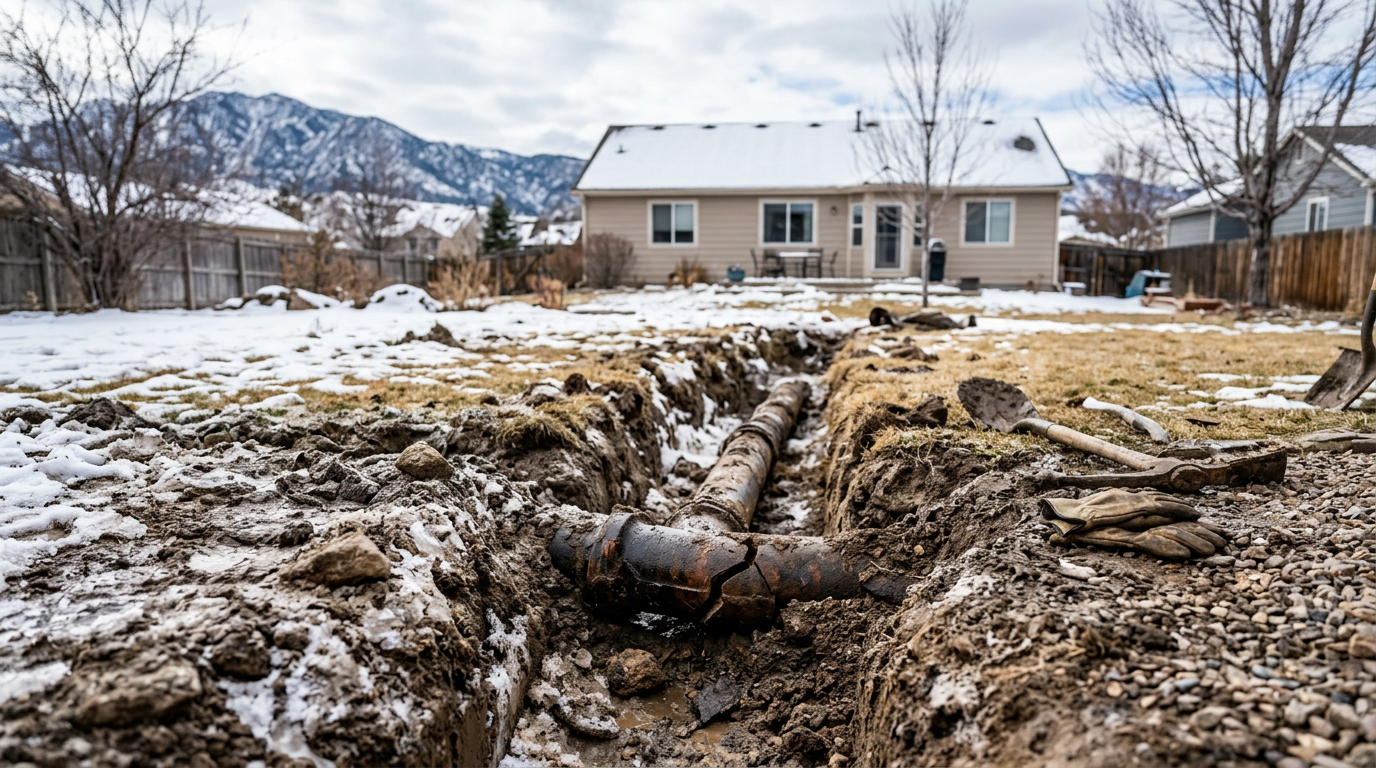
The Colorado Geological Survey identifies swelling soil as the state’s most significant geologic hazard, with damage that includes the disruption of pipelines and sewer lines. Front Range clay swells when it gets wet and shrinks when it dries, and that constant movement shifts, stresses, and eventually cracks buried sewer pipes.
2. Freeze-thaw cycles
Colorado Springs sees frequent swings between freezing nights and warmer days. Each freeze-thaw cycle adds to the ground movement already driven by clay soil, putting repeated stress on aging lines and widening small cracks over time.
3. Mature-tree root intrusion
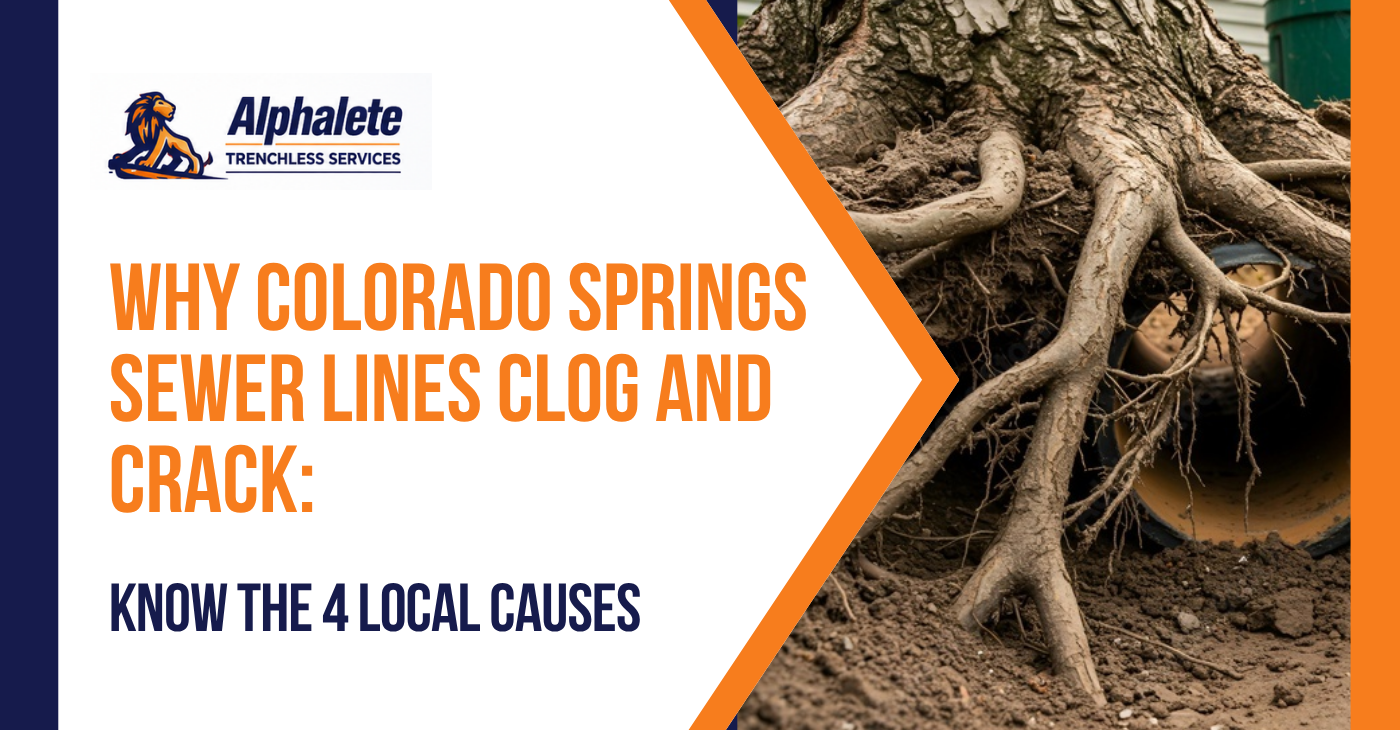
Tree roots are reported to cause more than half of all sewer blockages, especially in older systems with cracked pipes and joints. Importantly, roots don’t create the damage. According to N.C. Cooperative Extension, roots can only exploit cracks or gaps that already exist, drawn in by the moisture inside the pipe. That’s why root problems and soil movement go hand in hand.
For a deeper look at roots specifically, see our guide on tree roots in sewer lines.
4. Aging pipe materials
Many older Colorado Springs homes still have sewer lines made of clay tile or cast iron. These materials corrode and break down over the decades, creating the cracks and loose joints that let roots and debris in. Modern PVC is far more resistant, which is why trenchless lining, which creates a smooth, jointless interior, is such an effective long-term fix.
How these causes lead to clogs, and what fixes them
Soil movement, freeze-thaw, and old materials open cracks and joint gaps. Roots find those gaps and grow inside, trapping grease and debris until the line clogs, again and again.
- For roots and buildup: hydro jetting scrubs the line clean and cuts out roots. See Hydro Jetting in Colorado Springs.
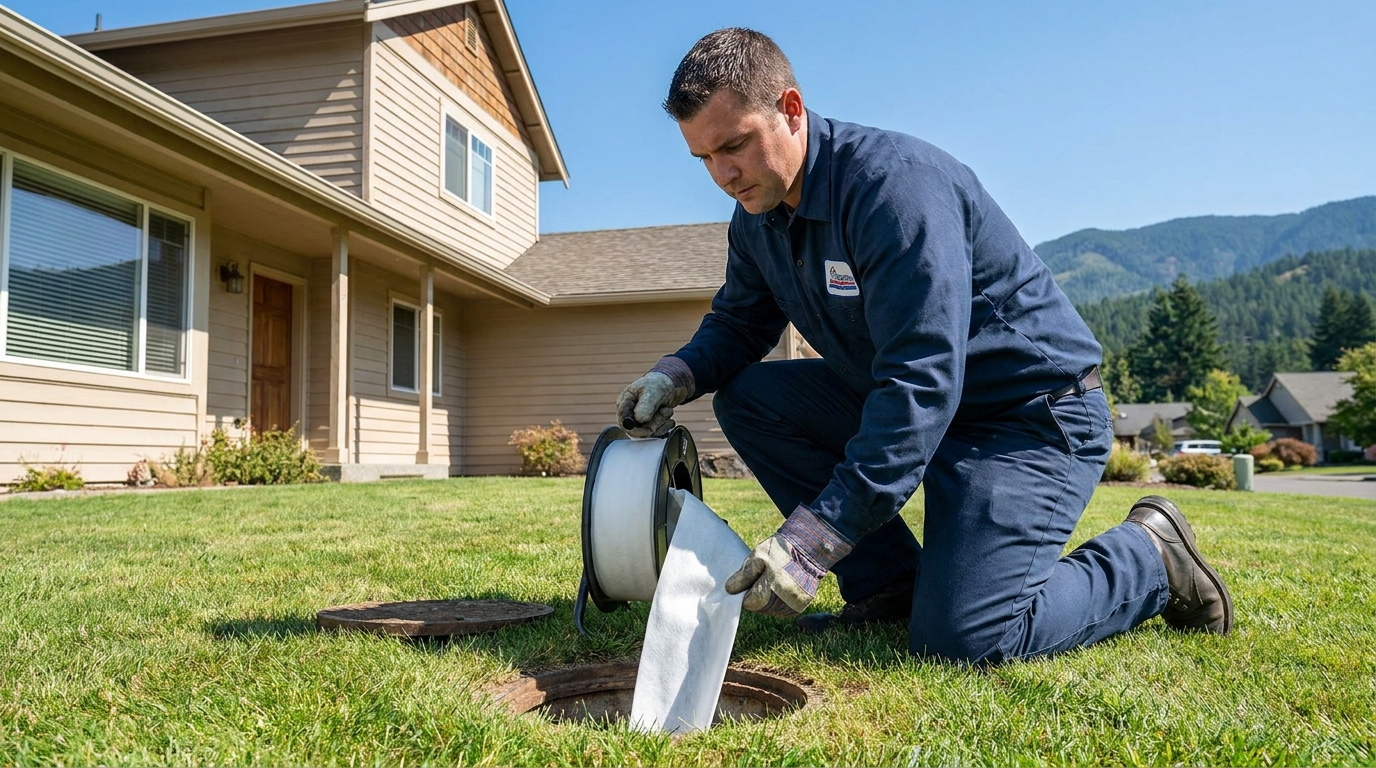
- For a cracked or collapsed pipe: trenchless pipelining seals the gaps permanently without digging up your yard.
- To know which you need: a sewer camera inspection shows the real condition of the line.
Frequently asked questions
Does Colorado's soil really damage sewer pipes?
Yes. The Colorado Geological Survey lists pipeline and sewer-line disruption among the documented effects of the state’s expansive soils.
Do tree roots crack the pipe, or just get inside it?
Mostly the latter. Roots exploit cracks and joints that already exist from soil movement, age, or settling. They don’t typically break a sound pipe.
My home is older, is my sewer line at risk?
If it was built before the 1970s, it may have clay or cast-iron pipe, which is more prone to cracking and root intrusion. A camera inspection is the best way to check.
Will cleaning fix it for good?
Cleaning clears the clog. If the underlying pipe is cracked, roots will return until the gap is sealed, which is where trenchless lining comes in.
Find out what's happening under your yard
Service Areas
Trenchless Sewer Repair Service Areas in Colorado
Alphalete restores damaged sewer lines without digging for homeowners across Colorado. See where we provide trenchless sewer repair near you.
Recurring clogs are a symptom, not the problem. Call (719) 787-7746 or book a free camera inspection to see the real condition of your line.