Quick answer: The most common backed up sewer line symptoms are multiple slow or gurgling drains at once, water rising in a tub or toilet when you use another fixture, sewage odors, and soggy spots in the yard. One slow drain is usually a local clog. Several at once points to your main line.
If your kitchen sink, shower, and toilet all started draining slowly around the same time, that is not a coincidence. Those are classic backed up sewer line symptoms, and they usually mean the problem is not in any single fixture. It is in the main sewer line that carries waste from your whole house out to the city sewer or septic system.
Here in the Denver metro and across the Front Range, early summer is a common time for these whole-house backups to show up. Knowing how to read the early warning signs can save you from a flooded basement during your first big summer cookout.
What’s the difference between a single clog and a sewer backup?
A single clogged drain is a local problem. The clog sits in that one fixture’s branch line, so only that sink or tub drains slowly. You can often clear it with a plunger or a drain snake.
A sewer backup is a whole-system problem. Because every drain in your home eventually feeds into one main line, a blockage there affects everything upstream of it. That is why the telltale sign is several fixtures acting up together, especially the lowest ones in the house like a basement floor drain or first-floor toilet.
What are the most common backed up sewer line symptoms?
Watch for these warning signs. The more boxes you check, the more likely the issue is your main line, not a single fixture.
| Sign | What you’ll notice | Why it happens |
|---|---|---|
| Multiple slow drains | Sinks, tubs, and toilets all sluggish at once | Blockage in the shared main line |
| Gurgling sounds | Toilet bubbles when you run the sink or washer | Air trapped by a partial blockage |
| Cross-fixture backups | Flushing the toilet pushes water up into the tub | Wastewater has nowhere to go but back up |
| Sewage odor | A rotten-egg or sewage smell indoors or near the cleanout | Trapped gases escaping a blocked line |
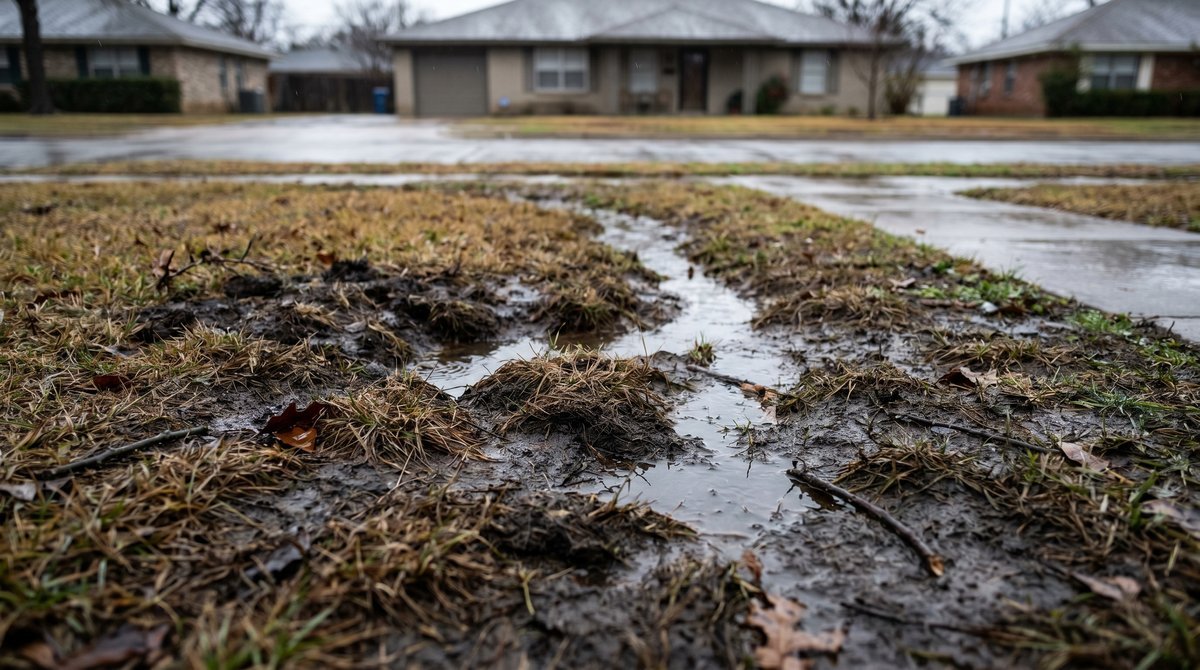
| Soggy yard or sinkholes | Wet patches or sunken soil along the sewer path | A cracked line leaking underground |
| Water at the lowest drain | Basement floor drain backs up first | Gravity sends the overflow to the lowest point |
If you see two or more of these together, treat it as a main line issue, not a one-off clog.
Why do whole-house sewer backups happen in a Colorado summer?
A few seasonal factors make early summer a high-risk window along the Front Range:
- Tree root intrusion. Roots actively seek out water and nutrients and grow toward sewer lines through the warm months. They enter through small joints and cracks, then expand and trap debris. Root intrusion is one of the most common causes of main line blockages in older neighborhoods, and it is worth understanding how tree roots get into a sewer line.
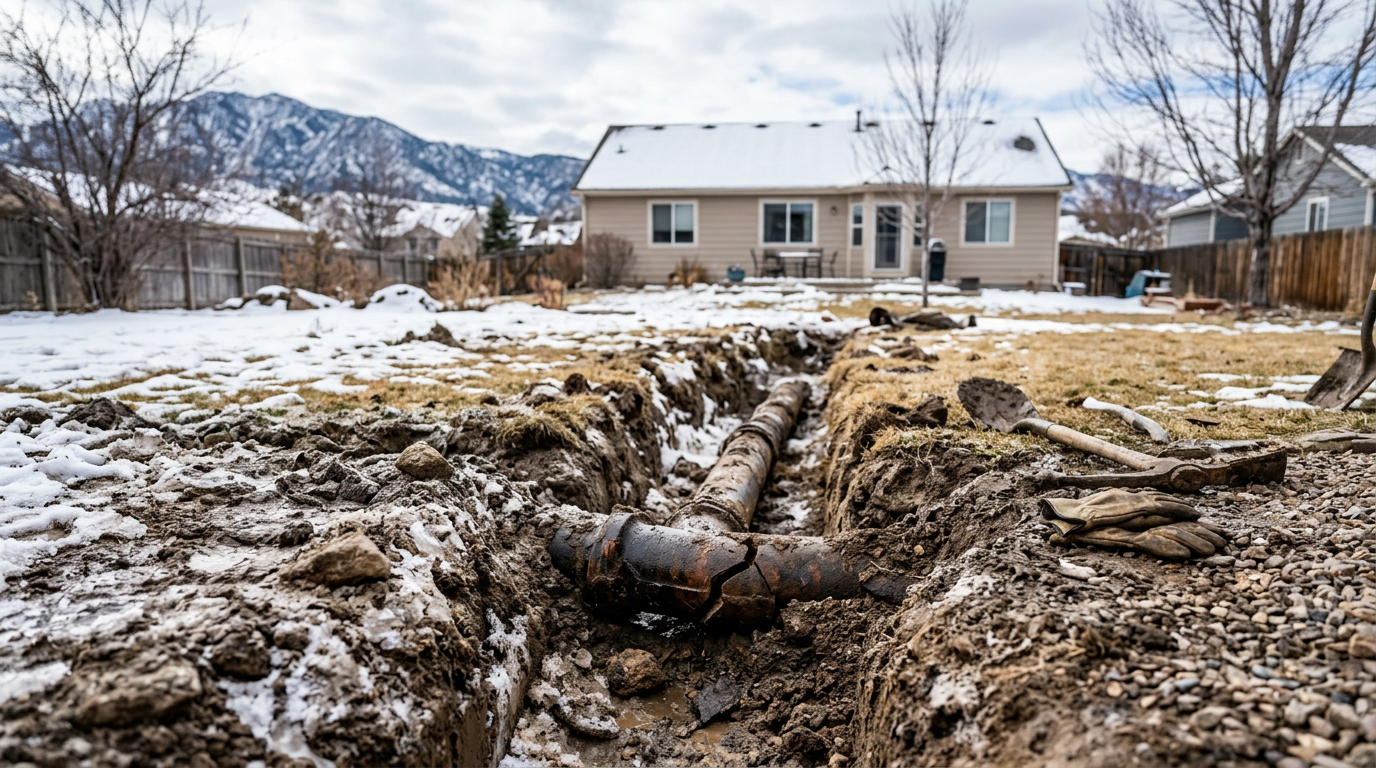
- Dry-soil clay movement. Colorado’s expansive clay soils shrink as they dry out in summer heat. That shifting can crack or misalign older clay and cast-iron sewer pipes, narrowing the line and catching waste.
- Heavier household use. Summer hosting, more guests, and more cooking put extra grease and load on a line that may already be partly blocked.
How do you know if your sewer is backed up versus a normal clog?
The simplest test is to count how many fixtures are affected. If only one drain is slow, you probably have a local clog you can handle yourself. If two or more are slow, gurgling, or backing up at the same time, the main line is almost certainly involved. When in doubt, watch the lowest drain in the house. If it bubbles or backs up when you run water elsewhere, that confirms a main line problem.
What should you do about backed up sewer line symptoms?
- Stop adding water. Hold off on flushing, running the dishwasher, or doing laundry. Every gallon you add has nowhere to go and can cause an overflow.
- Check the lowest fixtures first. A backing-up basement floor drain or first-floor toilet is a strong sign the main line is involved.
- Locate your cleanout. If your home has an accessible sewer cleanout and it is overflowing, that confirms a main line blockage.
- Call for a camera inspection. A sewer camera inspection is the only way to see exactly what and where the problem is. It tells you whether you are dealing with roots, grease, or a cracked pipe before anyone digs.
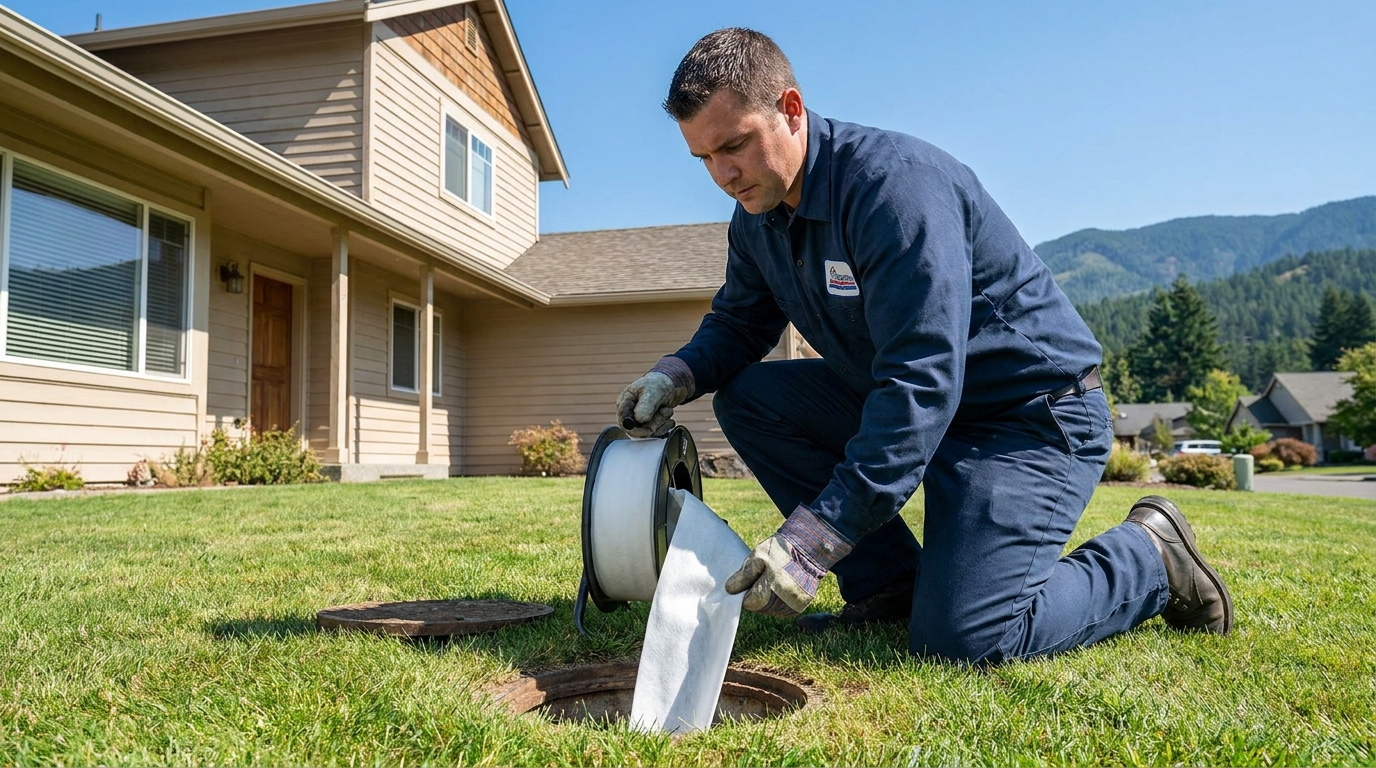
A camera inspection also rules out guesswork. Some backups clear with professional hydro jetting, which scours roots and grease from the pipe walls. Others, like a cracked or collapsed line, need trenchless sewer repair that fixes the pipe without digging, so your yard stays intact. For homeowners, that work is handled through residential trenchless pipelining.
Can you fix a sewer backup yourself?
You can try a plunger or a hand snake on a single slow fixture. But when multiple drains are involved, store-bought chemical cleaners and short snakes rarely reach a main line blockage, and harsh chemicals can damage older pipes. A whole-house backup is a signal to bring in a pro who can inspect the line, clear it safely, and tell you whether it will come back.
Act on backed up sewer line symptoms before the basement floods
If your drains are showing these symptoms, listen early. Alphalete Trenchless, Colorado’s leader in trenchless pipelining, can pinpoint the problem and fix it with minimal digging across Denver and the Front Range.
Book your free camera inspection to find out exactly what is going on in your line, before your next summer gathering.
Frequently asked questions
What are the first backed up sewer line symptoms to watch for?
Gurgling toilets, slow drains in several rooms, sewage smells, and water rising at the lowest drain. A soggy spot in the yard can point to a cracked line.
How do you know if your sewer is backed up versus just a clogged drain?
One slow drain is usually a local clog. Several slow or gurgling drains at once, especially the lowest ones, almost always mean the main sewer line.
Is a backed-up sewer line an emergency?
It can become one fast. A full blockage can flood your lowest level. If drains are actively backing up, stop using water and call for an inspection.
Will the backup come back after I clear it?
If roots or a cracked pipe caused it, yes, unless the cause is fixed. A camera inspection shows whether a cleaning will hold or the line needs repair.
Does homeowners insurance cover sewer backups?
Often only if you carry a specific sewer backup endorsement. Coverage varies, so check your policy. Either way, catching the problem early keeps cleanup costs down.
Service Areas
Trenchless Sewer Repair Service Areas in Colorado
Alphalete restores damaged sewer lines without digging for homeowners across Colorado. See where we provide trenchless sewer repair near you.