Trenchless sewer repair is not a single technique, and the pipe lining vs. pipe bursting decision is usually the first one you face. The two methods you will hear about most are CIPP pipe lining and pipe bursting, and the choice matters. Both avoid digging a trench across your property, but they work very differently and fit different situations.
Here is the CIPP vs. pipe bursting comparison: how each method works and how contractors decide between them. If you are new to the topic, our pillar guide on what trenchless sewer repair is and how it works is a good starting point.
What Is CIPP Pipe Lining?
CIPP stands for cured-in-place pipe. The existing sewer line stays where it is and gets a new pipe built inside it.
The process starts with a sewer camera inspection to confirm the line is a candidate. The crew then cleans the pipe, typically with hydro jetting, so the liner can bond properly. Next, the crew installs a resin-saturated liner inside the existing pipe and cures it in place. The liner hardens into a new structural pipe that seals cracks, open joints, and root entry points.
Many contractors call CIPP sewer line lining or rehabilitation, because it restores the pipe you already have rather than replacing it.
What Is Pipe Bursting?
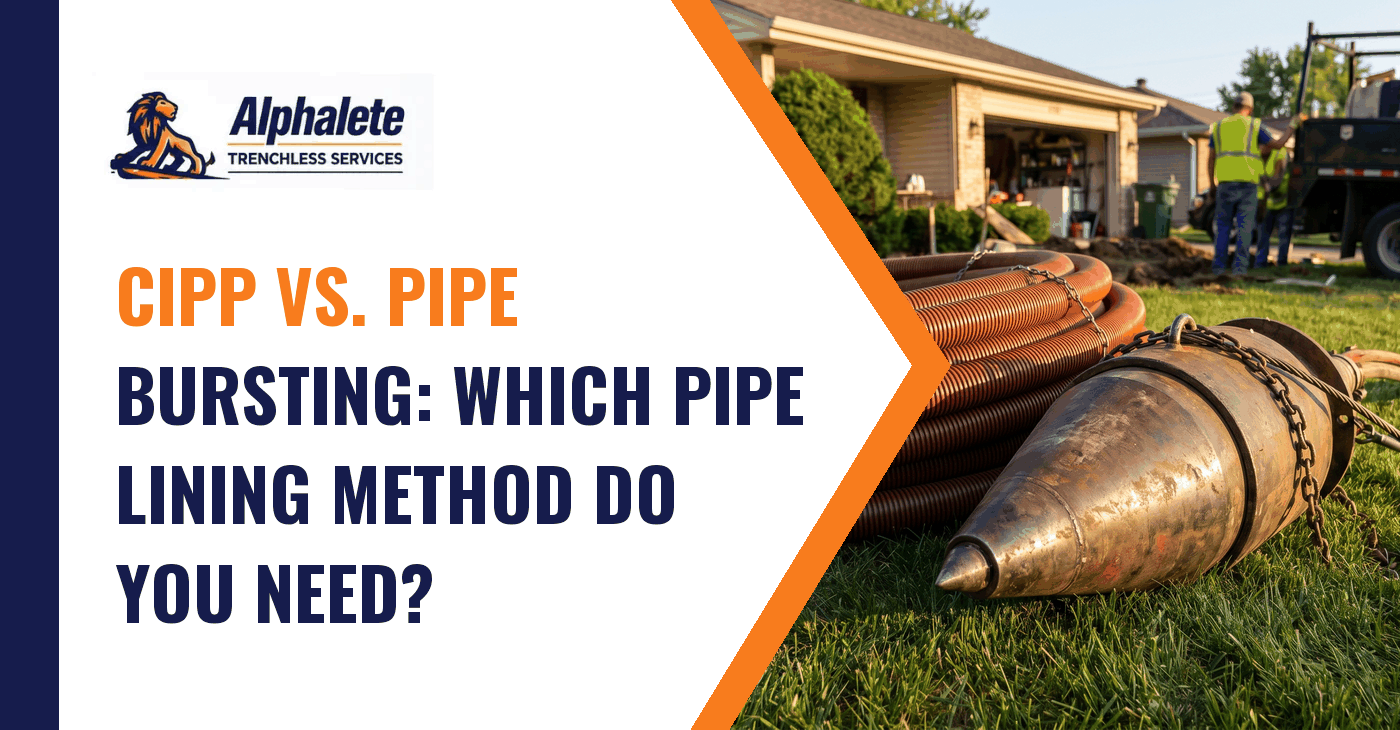
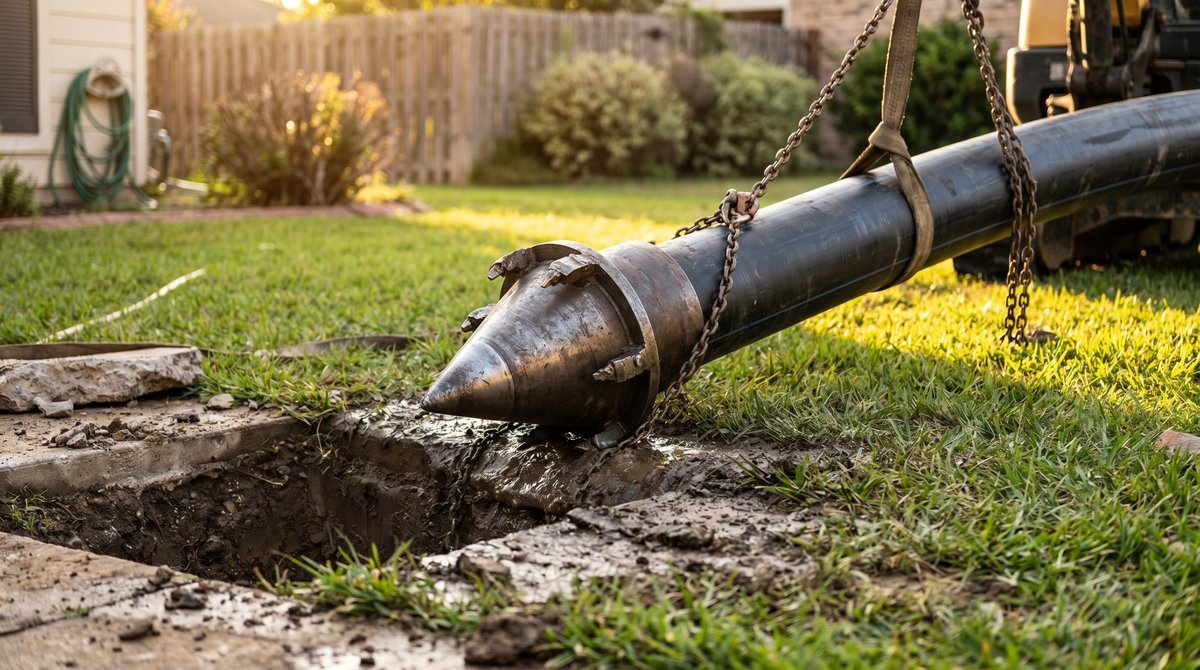
Pipe bursting is trenchless replacement rather than rehabilitation. The crew pulls a cone-shaped bursting head through the old pipe. The head fractures the old line outward into the surrounding soil and pulls a brand-new pipe into the space behind it.
Pipe bursting usually requires small access pits at each end of the run, but not a continuous trench. When it is done, the old pipe is gone in any functional sense and a new pipe has taken its path.
Pipe Lining vs. Pipe Bursting: The Key Differences
- Rehabilitation vs. replacement. CIPP creates a new structural liner inside the old pipe. Pipe bursting breaks the old pipe apart and replaces it entirely.
- Condition requirements. CIPP needs a pipe that still holds its shape well enough to host a liner. Pipe bursting can handle lines too damaged to line, since the process destroys the old pipe anyway.
- Access. CIPP typically works through existing access points such as cleanouts. Pipe bursting generally needs entry and exit pits dug at the ends of the run.
- Diameter. A CIPP liner slightly reduces the interior diameter of the line, which rarely matters for residential flow. Pipe bursting can maintain or even upsize the pipe diameter.
- Surrounding utilities. Because bursting displaces soil outward, crews have to evaluate nearby utilities and structures first. Lining stays inside the existing pipe and does not disturb the soil around it.
Which Method Fits Which Situation?
When CIPP Lining Is the Fit
- The pipe has cracks, open joints, corrosion, or root intrusion but still holds its general shape
- You want the least possible disturbance to the yard, driveway, and landscaping
- The line can be accessed through existing openings
When Pipe Bursting Tends to Come Up
- The pipe is too deteriorated or deformed to accept a liner
- The line needs a larger diameter than it currently has
- The line needs full replacement but excavating the entire run is impractical
And in some cases, neither trenchless method is right. Severe bellies or a need to correct the slope of the line can still call for targeted excavation. Our comparison of trenchless vs. traditional dig sewer repair covers when digging still wins.
The Camera Decides, Not the Brochure
You cannot pick the right method from the surface. The deciding factors are all underground: pipe shape, material condition, root intrusion, and access. That is why every Alphalete project starts with an HD camera inspection. Access matters more on some properties than others. On rocky, sloped mountain lots, working from small pits or an existing cleanout instead of a full-length trench makes the biggest difference, which is why both options are explained on our Woodland Park sewer line repair page.
Alphalete Trenchless Services specializes in CIPP trenchless pipe lining for homes and businesses across Colorado Springs, Denver, and surrounding communities. After the inspection, we explain what the camera found and whether your line is a good candidate for lining. We also lay out the right repair path, including when a different method would serve you better.
Service Areas
Trenchless Sewer Repair Service Areas in Colorado
Alphalete provides trenchless sewer line repair across Colorado’s Front Range and nearby communities. Check local availability below.
Schedule a free video inspection or call (719) 787-7746 to find out which trenchless method your sewer line actually needs.
Frequently Asked Questions
Is pipe bursting more disruptive than CIPP lining?
Generally somewhat more. Bursting needs access pits at the ends of the run, and it displaces soil as it pulls the new pipe through. Both are far less disruptive than open-trench excavation. However, lining usually has the smallest footprint of all because it works through existing openings.
Can a pipe that was lined be lined again later?
Lining seals the failure points that caused trouble in the first place. As a result, the repaired section delivers long-term service. Your contractor can verify liner condition with a camera inspection at any time, the same way we evaluated the original pipe.
What if my pipe has a belly or a slope problem?
Neither lining nor bursting fixes grade. A liner follows the existing path of the pipe, and bursting pulls the new pipe along the same route. If the camera finds a significant belly or slope issue, we can excavate just that section. Trenchless repair then handles the rest of the line.
Which method costs less?
It depends on the length, depth, access, and condition of your specific line, which is why estimates follow inspections. The bigger cost difference is usually between either trenchless method and full excavation, where surface restoration adds a second project on top of the plumbing.