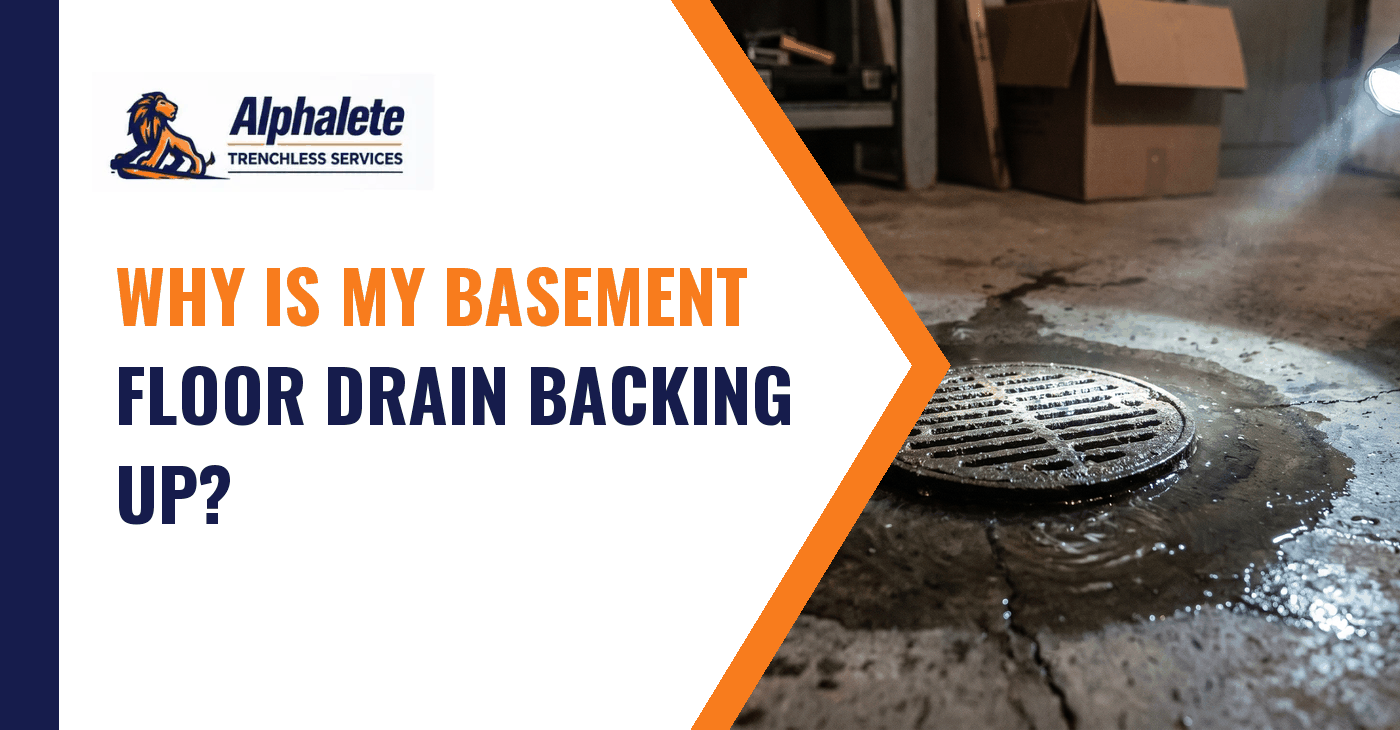
Quick answer: A basement floor drain backing up almost always means a clog in your main sewer line. Because the basement sits at the lowest point of your plumbing, wastewater that can’t flow out backs up there first. It is one of the clearest signs of a main line blockage, not a local clog.
Few plumbing problems are as alarming as dirty water rising out of the basement floor drain. If your basement floor drain is backing up, the cause is usually not the drain itself. It is a blockage further down the line, and the basement is simply where gravity sends the overflow first.
In the Denver metro and across the Front Range, this often happens in summer, when tree roots, shifting clay, and heavy storms put extra stress on sewer lines. Here is what is really going on.
Why is the basement floor drain backing up first?
Every fixture in your home drains downhill into one main sewer line. The basement floor drain sits at the lowest point of that system. So when the main line is blocked, wastewater has nowhere to go and rises out of the lowest opening it can find, which is almost always that basement drain.
That is why a backing-up floor drain is such a reliable signal. It is one of the most serious backed up sewer line symptoms because it means the blockage is downstream of nearly everything in your house.
What causes a basement floor drain to start backing up?
Cause
What’s happening
How serious
Main sewer line clog
Grease, debris, or waste blocking the line
High
Tree root intrusion
Roots growing into and trapping debris in the line
High, tends to return
Cracked or collapsed pipe
Damage restricting or stopping flow
Severe
City sewer backup
A blockage in the municipal main backing into your line
Varies
Heavy rain overload
Storm water overwhelming an already weak line
Seasonal
If only the basement drain backs up while everything upstairs works, the blockage is likely between the basement and the city connection. However, if upstairs fixtures are slow too, the whole main line is affected.
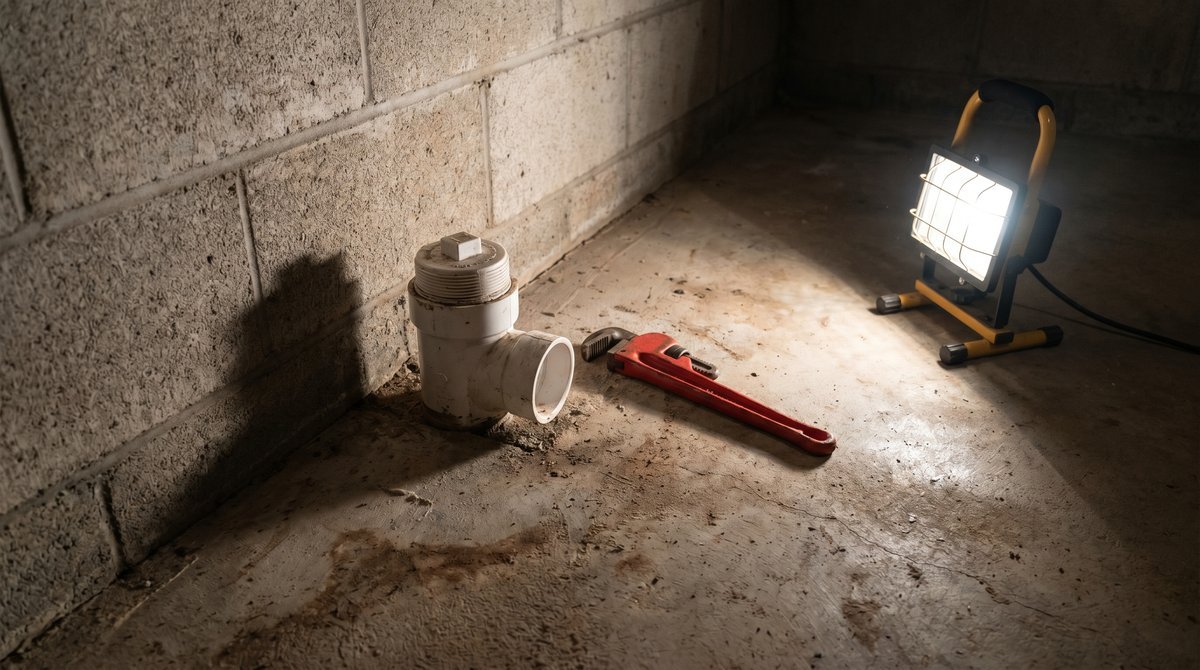
The cleanout is where a pro can access the main line directly.
Is sewage coming up the basement drain an emergency?
Yes, treat it as one. In fact, wastewater backing into your home is a health hazard, and it can damage flooring, drywall, and belongings fast. Stop using water immediately so you are not adding to the backup, and get the line inspected right away.
Why does this happen more in a Colorado summer?
Tree root intrusion. Roots grow aggressively in the warm months and push into sewer lines through small cracks and joints, a leading cause of recurring main line clogs in older neighborhoods.
Summer storms. Front Range thunderstorms can dump heavy rain quickly, and that surge can overwhelm a line that is already partly blocked.
Dry, shifting clay. Colorado’s expansive clay shrinks in summer heat and can crack or misalign older pipes, narrowing the line.
What should you do if your basement floor drain is backing up?
Stop running water. No flushing, laundry, or dishwasher. Every gallon makes the backup worse.
Keep the area clear. Move belongings away from the drain and avoid contact with the wastewater.
Don’t rely on chemical cleaners. They won’t reach a main line clog and can damage pipes.
Get a camera inspection. A sewer camera inspection locates the exact blockage and shows whether it is roots, grease, or a broken pipe.
A basement floor drain backing up is a clear call for help. Fortunately, Alphalete Trenchless, Colorado’s leader in trenchless pipelining, can find the blockage fast and fix it with minimal digging across Denver and the Front Range.
Why is my basement floor drain backing up when I flush the toilet?
Because both feed into the same main line. When that line is blocked, flushing sends water that can’t flow out, so it rises through the lowest opening, your basement floor drain.
Is a basement drain backup always a main line problem?
Most of the time, yes. The basement drain is the lowest point in your system, so a backup there typically means the blockage is in the main line, not a single fixture.
Can heavy rain cause my basement drain to back up?
It can. A storm surge may overwhelm a line that is already partly blocked or push water back from an overloaded city sewer.
What should I not do during a backup?
Don’t run any water, don’t use chemical drain cleaners, and don’t touch the wastewater. Stop adding to the problem and call for an inspection.