Trenchless Sewer Repair Services in Colorado
NO-DIG PIPE REPAIR FOR HOMES, BUSINESSES, AND COMMERCIAL PROPERTIES
Alphalete Trenchless repairs and replaces damaged sewer and drain lines across Colorado’s Front Range without digging up the whole yard. Most jobs are handled through one or two small access points, using cured-in-place lining, high-pressure cleaning, and camera diagnostics. Below you will find what each service does, how to tell which one your situation calls for, and when trenchless is honestly the wrong answer.
- Residential and commercial trenchless solutions
- Minimal digging and less property disruption
- CIPP pipe lining and sewer pipe rehabilitation
Request Your Free Quote
Tell us what is going on and we will call you right back.
Got it, there!
Thanks for reaching out. A licensed Alphalete tech will call you shortly. Prefer to talk now? Call (719) 787-7746.
TRUST YOUR PIPES TO TRENCHLESS PROS
Alphalete Trenchless provides professional sewer inspection, drain cleaning, and trenchless pipe repair services for residential and commercial properties across Colorado. Our team uses modern equipment and proven no-dig methods to identify pipe problems and restore damaged sewer lines with less excavation and property disruption.
Advanced Trenchless Pipelining Solutions
Residential Trenchless Sewer Repair
A cured liner rebuilds the pipe from the inside, so the lawn, patio, and mature trees stay where they are.
Learn More
Commercial Trenchless Pipe Lining
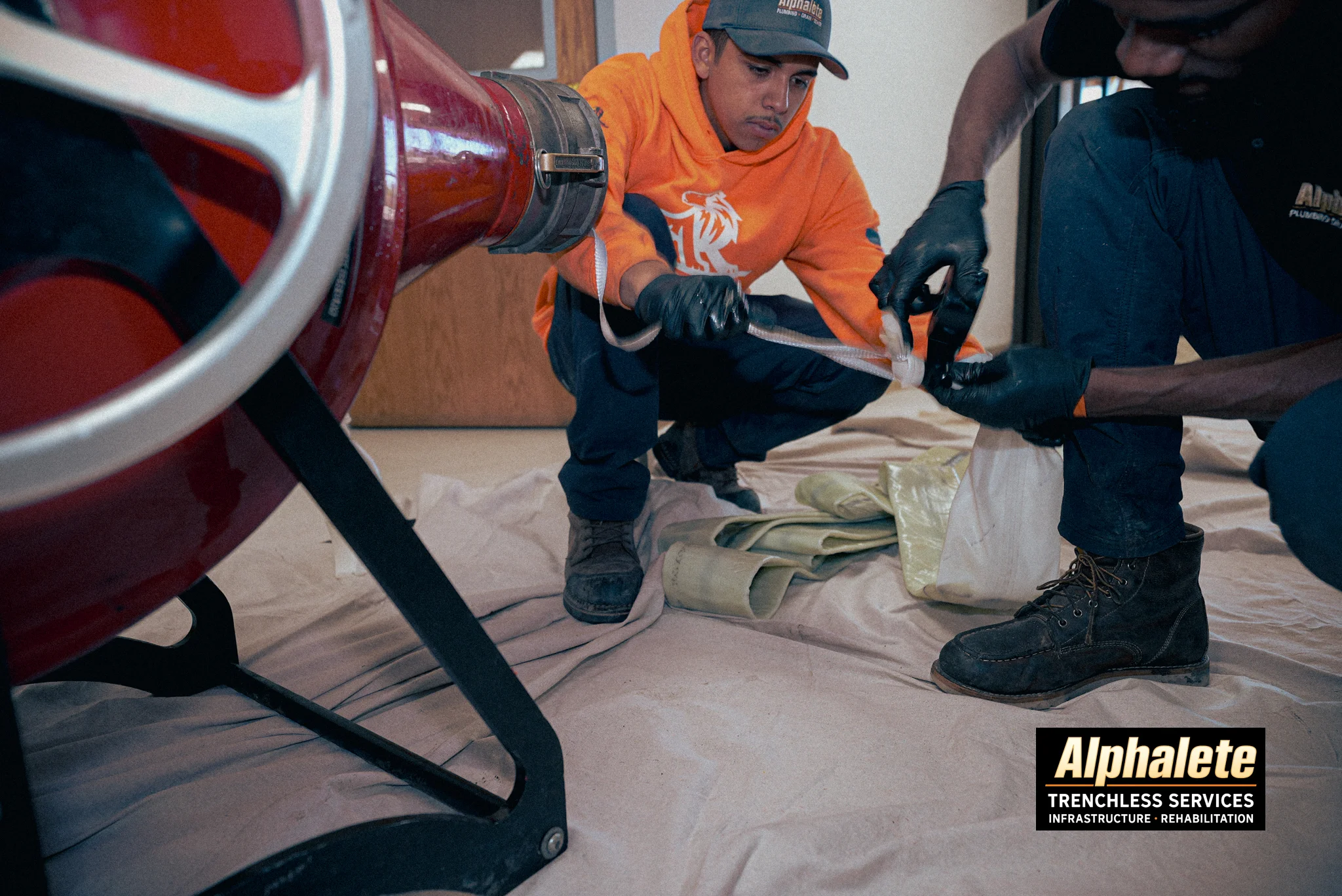
Keep a restaurant, clinic, or multi-tenant building open while an aging line is rebuilt in place, staged around your hours.
Learn More
Professional Drain Cleaning
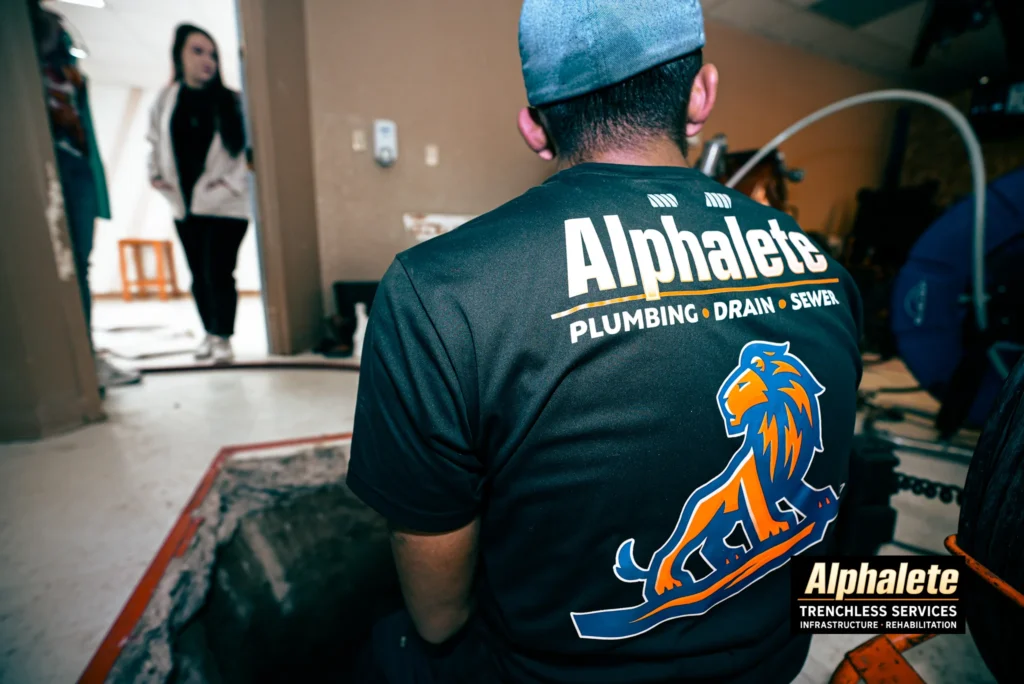
Best when one fixture is sluggish and the rest of the property is fine. We clear the line and confirm what caused it.
Learn More
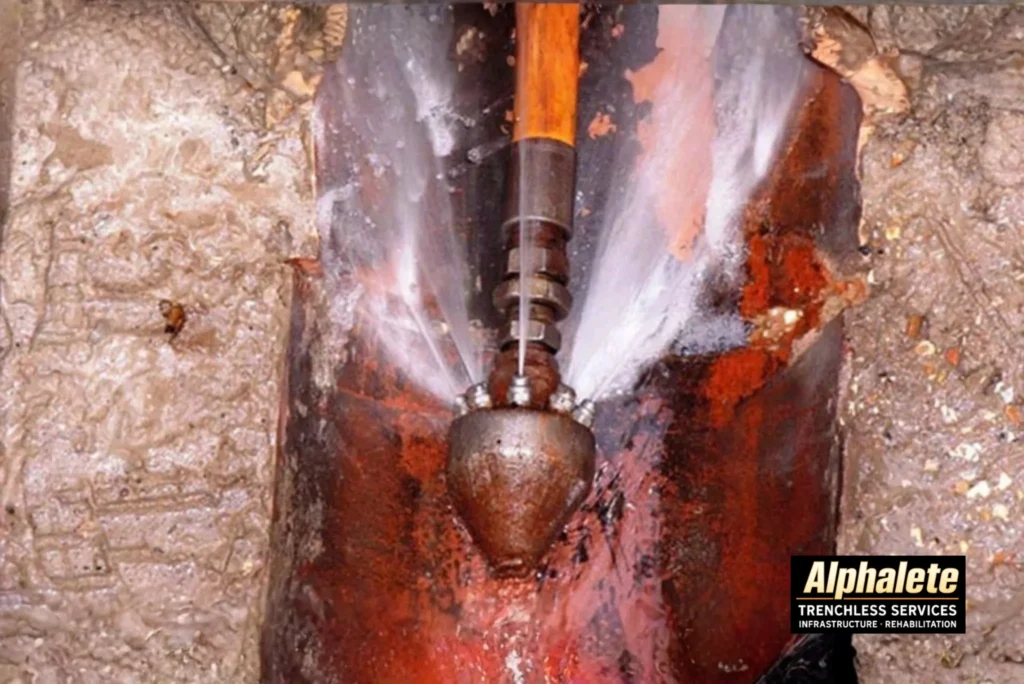
Professional Hydro Jetting
Often the step before lining. Water at pressure scours the pipe wall back to a bare surface so a liner can bond properly.
Learn More
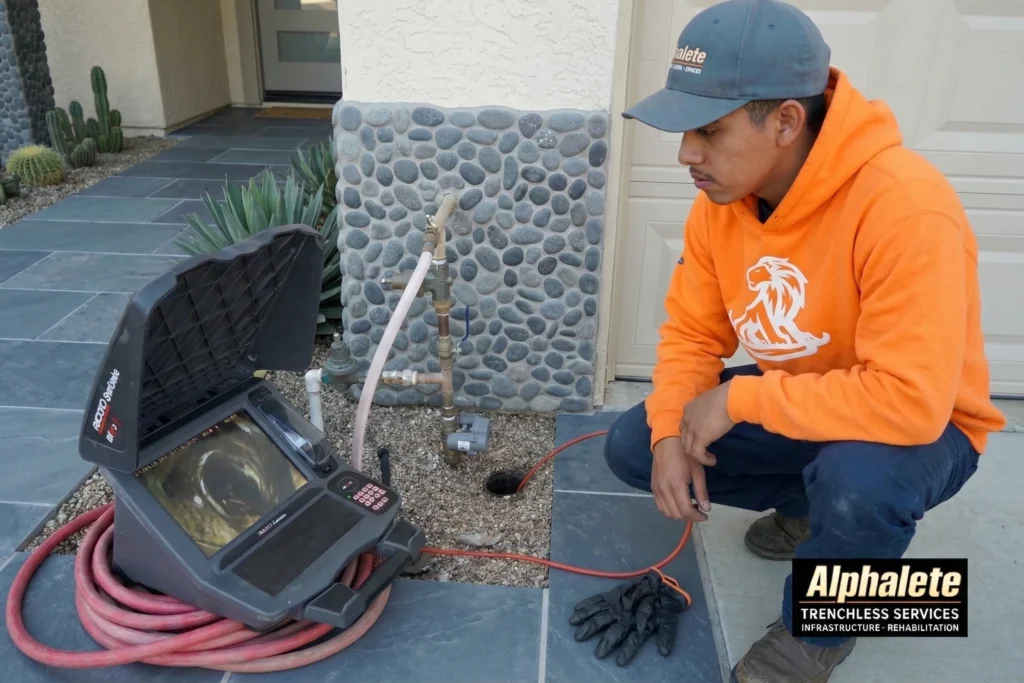
Sewer Camera Inspection
The honest starting point. Nobody should quote a repair on a line they have not actually seen from the inside.
Learn MoreWhich Service Do You Need?

Most people arrive here with a symptom, not a diagnosis. Start with what you are actually seeing.
One Slow Drain
A single fixture drains slowly while the rest are fine. Start with drain cleaning.
Every Drain Is Sluggish
All drains are slow, or the basement floor drain backs up. Start with a camera inspection.
Clogs Keep Coming Back
Blockages return weeks after being cleared. Start with hydro jetting.
Smells Or Soggy Ground
Sewage smell in the yard, wet patches, or unusually green grass over the line.
Damage Already Found
A camera has found cracks, root intrusion, or corrosion in a home line.
Backups In A Business
Recurring backups in a restaurant, apartment building, or facility.
When you are unsure, the inspection comes first. Nobody should be quoting a lining job on a line they have not seen from the inside.
How Trenchless Pipe Repair Works
The sequence is much the same on nearly every job.
1. Locate And Inspect
A camera finds the damage, measures how far it sits from the access point, and confirms the pipe still holds its shape.
2. Clean The Host Pipe
Roots, scale, and grease are cut back so the liner can bond to bare pipe wall. This is usually where jetting comes in.
3. Prepare The Liner
A felt or fiberglass tube is cut to length and saturated with resin.
4. Install And Cure
The liner is positioned, inflated against the old pipe wall, and cured until it hardens into a new pipe inside the old one.
5. Reinstate And Verify
Branch connections are reopened and a final camera pass confirms the finished line.
The old pipe stays in the ground and becomes the mould. That is why the lawn, driveway, and mature trees usually stay intact. See our step-by-step walkthrough of the trenchless process.
CIPP Lining Or Pipe Bursting?
CIPP Lining
CIPP stands for cured-in-place pipe. A resin-soaked liner hardens inside the existing pipe, creating a jointless new wall. It needs a host pipe that is still structurally intact.
Pipe Bursting
A bursting head is pulled through the old line, fracturing it outward while drawing new pipe in behind it. It suits lines that are already collapsed or need to be upsized.
Choosing between them comes down to the condition of the host pipe and whether the line needs to change diameter. We break down the tradeoffs in CIPP versus pipe bursting, and compare both against digging in trenchless versus traditional sewer repair.
When Trenchless Is Not The Right Choice
Worth saying plainly, because not every company will.
- The pipe has collapsed. Lining needs something to line. Once a section has caved in, there is no host left to work with.
- Severe offsets or separated joints. If sections have shifted badly out of alignment, a liner cannot bridge the gap reliably.
- A significant belly in the line. Lining follows the existing shape, so a sag stays a sag. Standing water and repeat backups will continue.
- The line needs rerouting or resizing. A liner slightly reduces internal diameter and follows the existing path.
- Access is genuinely easier from above. Occasionally a small targeted dig is the simpler, less disruptive repair.
If an inspection points to any of these, we will say so rather than sell you a liner that will not hold up. See cracked versus collapsed pipe.
Residential And Commercial Work
The physics is identical. The constraints are not.
Residential
The priorities are the landscaping, the driveway, and getting the household back to normal quickly. Access is usually a cleanout or a small pit near the foundation.
Commercial
Scheduling dominates. Restaurants, medical offices, and multi-tenant buildings often cannot close, so work is staged around operating hours. Lines are larger and carry heavier grease loads.
What Colorado Does To Sewer Lines
Front Range conditions are hard on buried pipe in specific ways. Expansive clay soils swell when wet and shrink when dry, and that seasonal movement works joints apart over time, which we cover in how expansive clay soil damages sewer pipes. Freeze and thaw cycles add another round of stress each year.
Older neighborhoods across Denver and Colorado Springs still run clay and cast iron laterals, and mature cottonwoods and elms send roots straight toward the moisture at a leaking joint.
None of that shows up until something backs up. That is why a camera inspection is worth doing before buying a home with mature trees and an older line, and why the early warning signs are worth investigating rather than repeatedly clearing. You can see everywhere we work on our service areas page.
Frequently Asked Questions
Do I need to be home during the work?
Will my lawn or driveway be dug up?
How do I know the repair actually worked?
Is hydro jetting safe for older pipe?
Do you handle commercial and municipal work?
Trenchless Sewer Repair Services Across Colorado
Alphalete Trenchless provides residential and commercial trenchless sewer services throughout Colorado Springs, Denver, and surrounding Front Range communities.
- Elizabeth
- Franktown
- Larkspur
- Monument
- Palmer Lake
- Security-Widefield
- Woodland Park
- Cañon City
- Castle Rock
- Colorado Springs
- Denver
- Fountain
- Littleton
- Lone Tree
- Parker
- Pueblo
- Buffalo Creek
- Calhan
- Coal Creek
- Cripple Creek
- Manitou Springs
- Matheson
- Peyton
- Simla
- Victor
- Boone
- Elbert
- Kiowa
- Lake George
- Louviers
- Pine
- Ramah
- Rockvale
- Yoder
- Black Forest
- Cascade
- Florence
- Florissant
- Green Mountain Falls
- Guffey
- Penrose
- Sedalia
- USAF Academy
- Wetmore