Colorado’s expansive clay soil is one of the main reasons sewer lines crack and shift along the Front Range, and monsoon season is when the damage tends to show up. Our soil swells when it gets wet and shrinks when it dries, and that constant push-and-pull works on buried pipe until joints separate and cracks open. When the first big monsoon storm saturates that same ground, water finds those openings and the line starts to back up. Understanding the soil is the key to understanding why so many Colorado sewer problems appear right after it rains.
What is expansive soil, and why is it worse in Colorado?
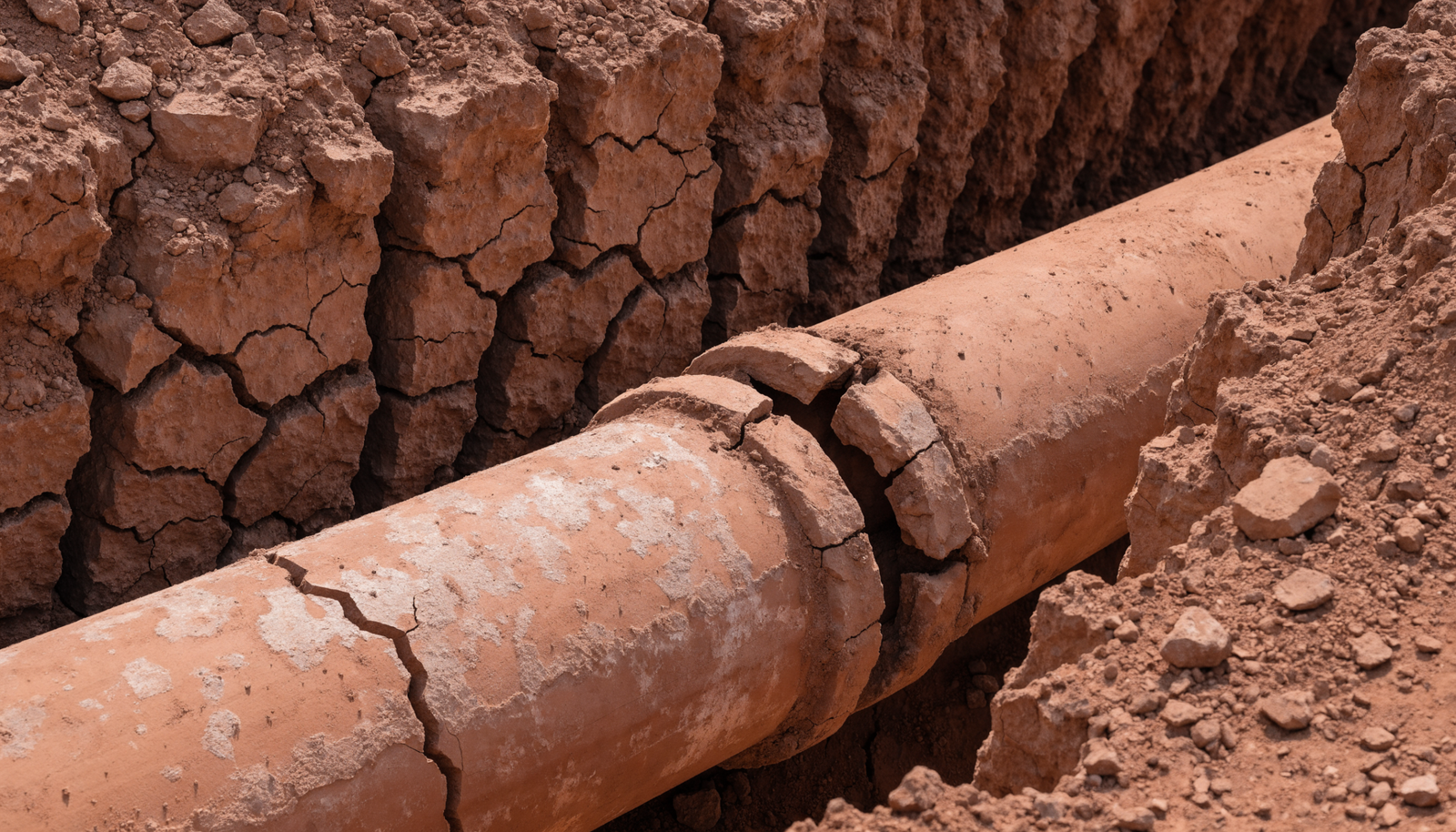
Expansive or swelling soil contains clay minerals that absorb water and expand, then shrink as they dry. The Colorado Geological Survey calls it the state’s most significant geologic hazard, noting that soil can expand 10 percent or more when wet and exert thousands of pounds of pressure per square foot on anything buried in it, including foundations, slabs, and pipes. The Survey specifically lists “disruption of pipelines and sewer lines” among the damage it causes.
Colorado’s semi-arid climate makes this worse, not better. Because our soil goes through big seasonal swings from bone-dry to storm-soaked, it expands and contracts more often than soil in wetter states. The Front Range Urban Corridor, from Fort Collins down through Colorado Springs and Pueblo, sits on exactly these swelling clay and claystone formations.
How does soil movement actually crack a sewer line?
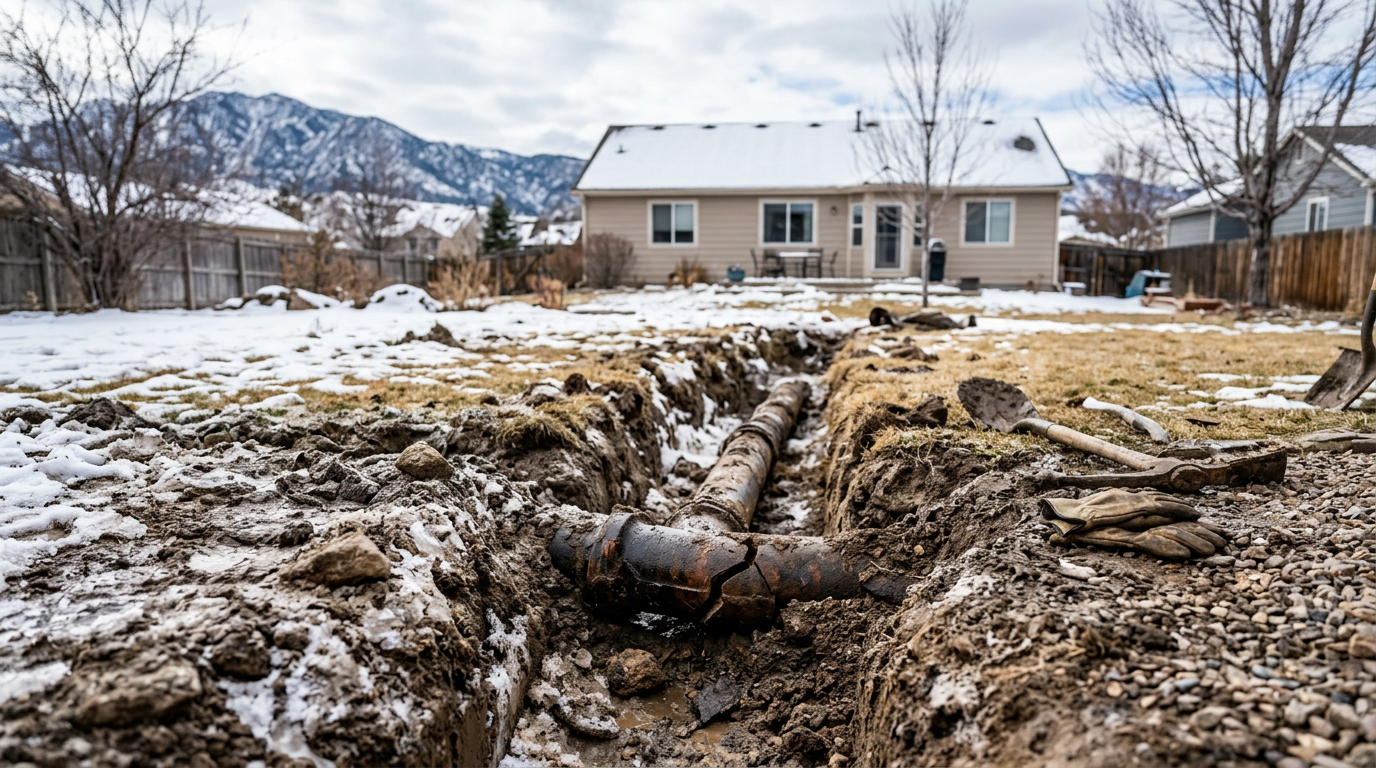
Buried sewer pipe is meant to sit at a steady slope and hold its shape. When the clay around it swells after rain and shrinks in drought, it pushes and pulls on the pipe unevenly. Over time that movement can:
- Pull apart pipe joints, opening gaps where water and roots get in.
- Crack rigid older pipe like clay and cast iron.
- Shift a section out of alignment or create a low spot where waste collects.
None of this happens overnight. It builds over years of wet-dry cycles, which is why older lines in established neighborhoods are the most affected.
Why does the damage show up during monsoon season?
Because the storm is the moment the ground swells fastest and water is available to get into the pipe. Colorado’s monsoon runs from roughly July into September, with the most active stretch mid-July through August, per the National Weather Service. After a hot, dry early summer, the soil is shrunken and cracked. The first heavy storms swell it quickly and send water into any joint or crack the movement has opened, so a line that seemed fine in June backs up in July.
What’s the fix for a soil-cracked sewer line?
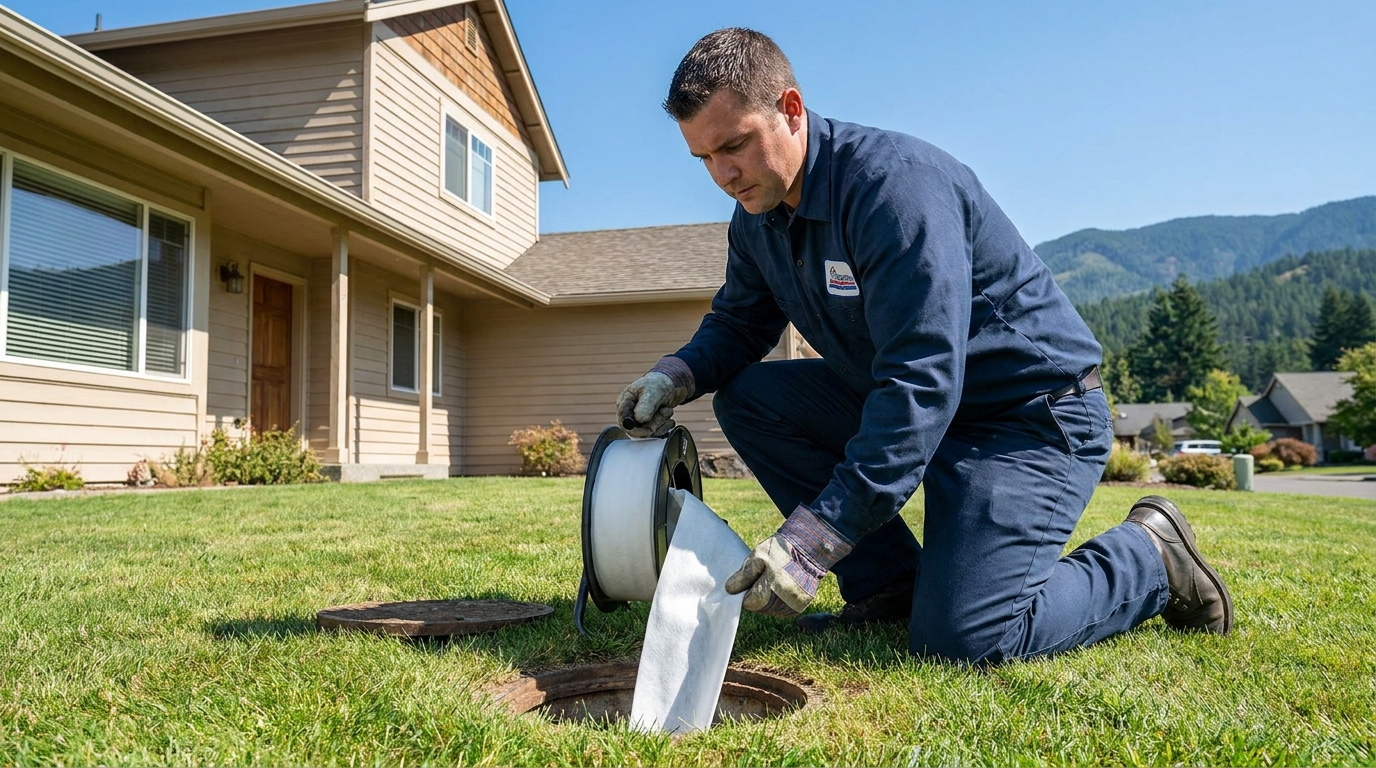
The repair depends on how much structure the pipe has left, which is why it starts with a sewer camera inspection. If the line is cracked or has separated joints but is still a good candidate, trenchless CIPP lining cures a new liner inside the existing pipe, sealing the cracks and joints from the inside with minimal digging. Because the liner is seamless, it also resists the root intrusion that follows soil cracks. For a fully collapsed or badly misaligned line, some excavation may still be needed, which is exactly what the inspection determines. This is the same inside-out approach explained in what is trenchless sewer repair, and it is common for homes across Castle Rock and Monument, where swelling soils are well documented.
Frequently asked questions
Does expansive soil really crack sewer pipes in Colorado Springs?
Yes. The Front Range sits on swelling clay that expands when wet and shrinks when dry, and that repeated movement can crack pipe and separate joints. The Colorado Geological Survey lists sewer line disruption as one of its effects.
Why do soil problems seem worse after monsoon storms?
After a dry early summer the shrunken soil swells fast when heavy rain arrives, pushing on buried pipe and sending water into any gap the movement opened. That is why cracks often reveal themselves as rain backups.
Can trenchless lining fix a pipe damaged by soil movement in Castle Rock?
Often yes, if the pipe still has enough structure. A CIPP liner seals cracks and separated joints from the inside. A camera inspection confirms whether lining or another repair is the right fit.
Are newer homes safe from expansive-soil sewer damage?
Newer construction is often better engineered for swelling soils, but the pipe underground still sits in the same clay. Movement can affect any line over time, which is why inspections matter for older and newer homes alike.
Service Areas
Trenchless Sewer Repair Service Areas in Colorado
Alphalete provides trenchless sewer line repair across Colorado’s Front Range and nearby communities. Check local availability below.
How do I know if my sewer problem is soil-related or something else?
A camera inspection shows the difference. It reveals whether the trouble is cracked or separated pipe from soil movement, root intrusion, a belly, or a simple clog, so the repair targets the real cause.