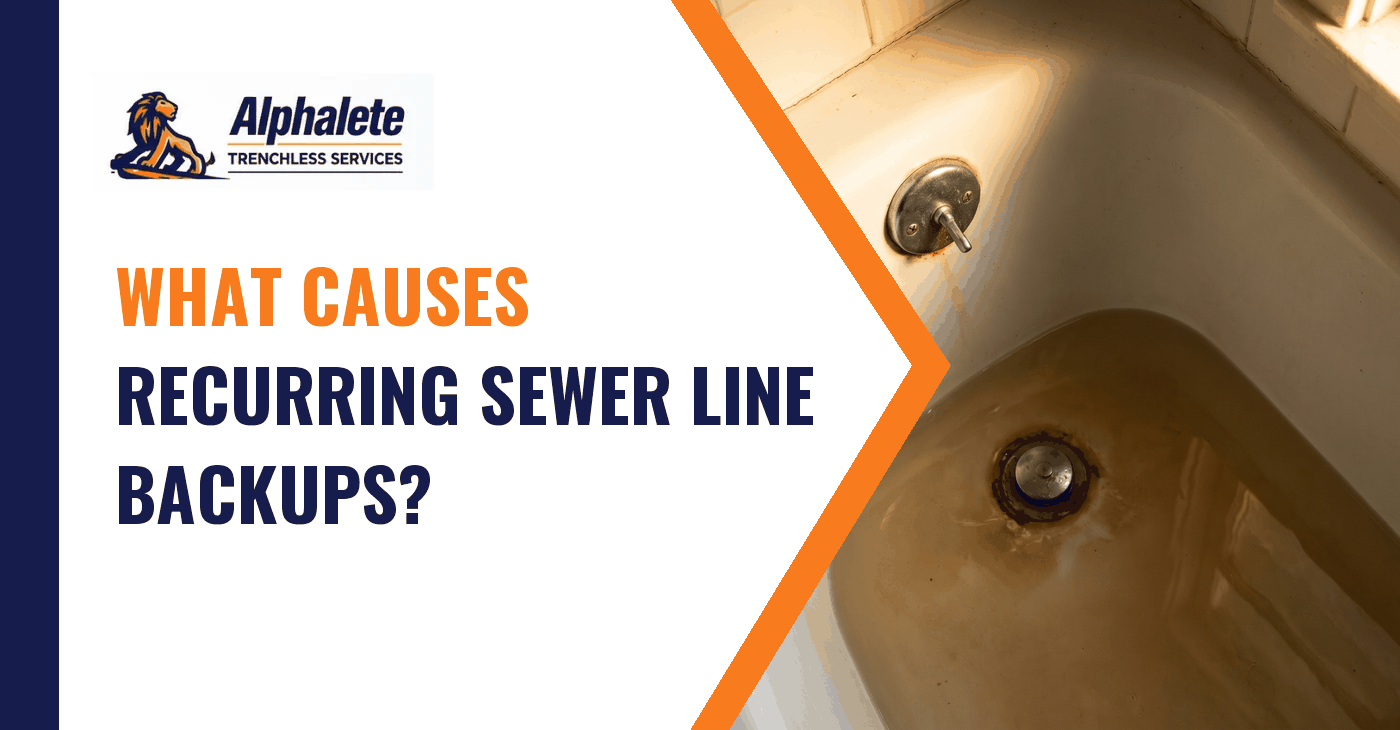
A sewer backup once is a problem. When your sewer line keeps backing up, it is a signal that something is wrong inside the pipe – something a drain snake doesn’t fix.
Here’s what causes recurring sewer line backups, and what actually resolves them.
Why Snaking Doesn’t Always Fix It
A drain snake punches a hole through a blockage. If the blockage is soft – grease, toilet paper, debris – the snake clears it and the drain runs. But the snake doesn’t address what caused the blockage to form, and it doesn’t clean the pipe walls. Within weeks or months, the same spot backs up again.
Recurring backups almost always have a structural or persistent underlying cause.
Why Your Sewer Line Keeps Backing Up: The Most Common Causes
Tree Root Intrusion
Roots are the leading cause of recurring sewer backups in Colorado Springs. Roots enter through pipe joints or cracks, grow inside the pipe, and catch debris. A snake cuts through the root mass temporarily – but roots grow back quickly, often within months. The only way to stop recurring root-caused backups is to seal the root entry point with trenchless pipe lining after the roots are cleared with hydro jetting.
Grease Buildup
Kitchen drain lines accumulate grease on the pipe walls over years. When the buildup is heavy enough, it narrows the pipe to the point where normal use causes backups. A snake pushes through the grease but doesn’t clean the walls. Hydro jetting scours the walls clean with high-pressure water – a far more thorough solution.
Cracked or Damaged Pipe
A pipe with a crack, offset joint, or fractured section catches debris at that spot regardless of how often it’s cleared. The structural problem creates a recurring collection point. Identifying and repairing the damage stops the cycle. A camera inspection shows exactly where the damage is.
Pipe Belly (Sag)
A belly is a low spot in the pipe run where the ground has settled beneath it. Instead of sloping steadily downhill, the pipe dips – and waste collects there. No amount of snaking removes a belly. It’s a structural issue that requires either re-grading the pipe or lining through it.
Insufficient Pipe Diameter for Current Use
Older homes may have undersized drain lines that worked fine for original use patterns but struggle with modern household demand. If no structural damage is present and backups happen under normal use, pipe size may be a factor.
How to Actually Fix Recurring Sewer Backups
Step 1: Camera Inspection
Don’t guess. A sewer camera inspection identifies the specific cause of your recurring backup – roots, crack location, belly, grease – and at what point in the line. This determines the right repair.
Per NASSCO standards, camera inspection is the accepted diagnostic method for sewer line assessment. It removes guesswork from repair decisions.
Step 2: Hydro Jetting
High-pressure water cleaning removes root mass, grease buildup, debris, and scale from pipe walls. It prepares the line for lining if that’s the next step, and it’s a more complete clean than snaking alone.
Step 3: Pipe Lining (If Structurally Needed)
If the camera shows structural damage – cracks, root entry points, offset joints – trenchless pipe lining seals the damage from the inside. No excavation. No digging. The liner creates a new pipe surface inside the old one.
Frequently Asked Questions
How do I know if tree roots are causing my recurring backups?
A camera inspection shows root intrusion directly. If your home has large trees – cottonwoods, maples, elms – within 20 feet of your sewer line, root intrusion is a strong possibility.
Can I prevent recurring backups without professional help?
Prevention helps – keeping grease out of drains, using drain screens, not flushing non-waste items. But if the cause is structural (roots, cracks, belly), prevention doesn’t fix the underlying problem. Professional diagnosis and repair does.
How long does trenchless pipe lining last?
Cured-in-place pipe lining has a 50-year structural design life. It permanently seals root entry points and resists future corrosion.
Service Areas
Trenchless Sewer Repair Service Areas in Colorado
Alphalete provides trenchless sewer line repair across Colorado's Front Range and nearby communities. Check local availability below.
What if my pipe is too damaged for lining?
Pipe bursting or excavation and replacement are options for pipes too deteriorated for lining. A camera inspection determines what’s viable.
Tired of the same drain backing up? Get a camera inspection and fix it for good. Call Alphalete Trenchless Pipelining at (719) 787-7746.