If your Colorado Springs home was built before the early 1980s, its main sewer line is very likely cast iron, and cast iron corrodes from the inside out as it ages. The most common signs of failing cast iron pipes are recurring backups, several slow drains at once, a sewer smell you cannot track down, discolored water, and, when the line runs underground, a soggy or sunken patch in the yard. The good news for homeowners: a corroded cast iron line can often be rehabilitated with trenchless CIPP lining, no full excavation required.
This guide explains why cast iron fails, what the warning signs mean, the local Colorado Springs conditions that speed it up, and the repair options once you know what you are dealing with.
Why so many older Colorado Springs homes have cast iron pipes
Cast iron was the standard sewer and drain material for most of the 20th century. Builders largely moved to PVC in the late 1970s and early 1980s, so homes built before then usually have original cast iron drains. Cast iron is strong, but it does not last forever. Home inspectors generally cite a service life in the range of 50 to 100 years, and corrosion can begin decades earlier depending on soil, water, and use. Many Colorado Springs homes with original cast iron are now well into that window, which is why problems are surfacing in older neighborhoods now.
The tricky part is that most of the pipe is hidden underground or behind walls, so it corrodes quietly. You often do not learn there is a problem until a backup, a smell, or a wet spot appears.
How cast iron pipes actually fail
Cast iron rarely fails from one dramatic break. It wears down through a few overlapping processes:
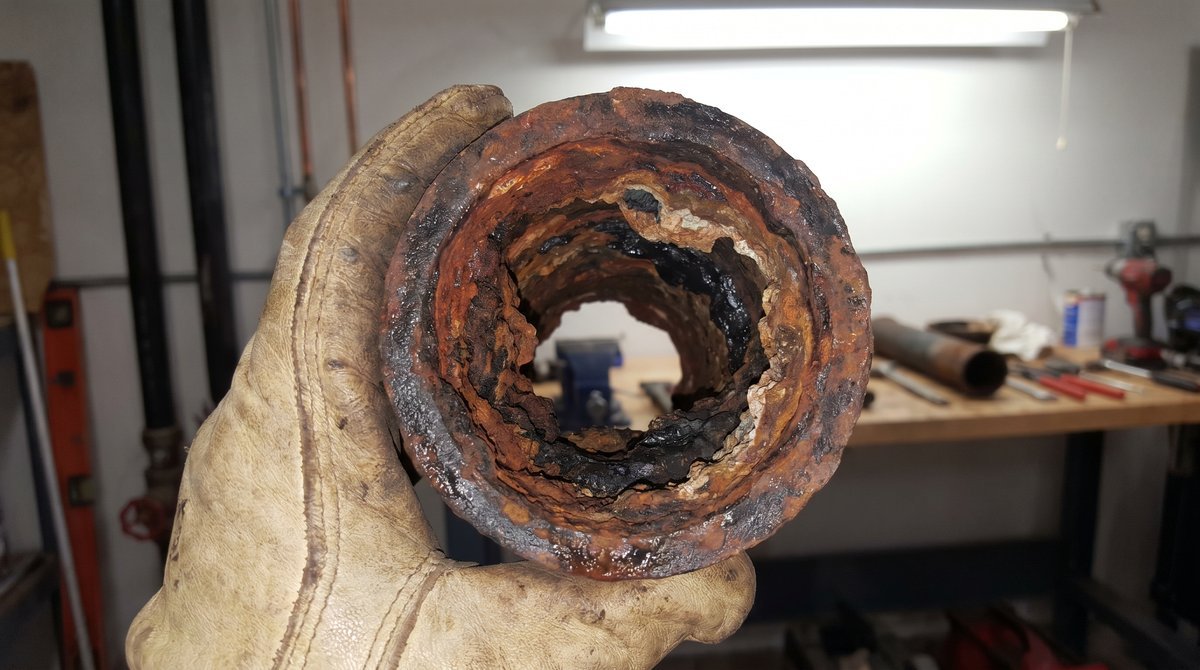
- Internal corrosion. Waste moving through the pipe produces hydrogen sulfide, the gas ATSDR describes as “sewer gas”. That gas can convert to sulfuric acid inside the line and eat away at the metal, thinning the pipe walls from within.
- External corrosion from the soil. Colorado’s soils work against buried iron too. The Colorado Geological Survey lists expansive, moisture-active soils as one of the state’s most significant geologic hazards, and acidic, damp ground corrodes cast iron from the outside.
- Scale buildup and channeling. As the interior rusts, it roughens and narrows, catching debris that should flow through. The bottom of the pipe often erodes first, a pattern called channeling, which leads to recurring clogs.
- Root intrusion. Once corrosion opens a crack or joint, roots move in. Colorado Springs Utilities notes that roots grow toward the water inside pipes and pry into the smallest openings, which is common in older neighborhoods with mature trees.
- Sagging and misalignment. Cast iron is heavy, and ground movement can pull a weakened line out of slope, creating low spots that pool waste.
The most common signs of cast iron sewer pipe problems
Any one of these is a reason to have the line inspected. We cover them in depth in signs your cast iron sewer pipes are failing:
- Several drains slow at the same time, not just one fixture
- Clogs and backups that keep returning after cleaning
- A sewage or rotten-egg odor indoors or near the foundation
- Rust-colored or discolored water from drains
- Water stains, damp spots, or mold at the base of walls or under cabinets
- A soggy, sunken, or unusually green patch of yard over the line’s path
The Colorado Springs conditions that speed cast iron failure
Local ground conditions matter here. Front Range expansive clay soils swell when wet and shrink when dry, and state hazard data notes that roughly half of Colorado’s soil has a high or very high shrink-swell potential. That repeated movement stresses aging, brittle cast iron joints. Add freeze-thaw cycles and the large, water-seeking tree roots common in established Colorado Springs neighborhoods, and an already-corroding line fails faster than homeowners expect. You can read more about why Colorado Springs sewer lines clog and crack.
How to know for sure: a camera inspection
You cannot judge a buried pipe from the outside, and you should not dig to find out. A sewer camera inspection sends a waterproof video camera down the line so we can see the true condition of the cast iron, whether it is surface rust, deep channeling, cracks, roots, or a collapse, and pinpoint where it is. That inspection is what determines your repair options.
One important warning while you wait: go easy on chemical drain cleaners and heavy snaking. Caustic drain cleaners sit in a slow line and accelerate corrosion of already-thin cast iron, and an aggressive cable can punch through a soft, corroded wall. If you are snaking the same drain every few months, that is a sign the pipe itself is failing, not just clogging.
Your repair options: line it or replace it
Once the camera shows the real condition, there are two broad paths, and the choice depends on how much sound pipe remains.
Trenchless CIPP lining. Cured-in-place pipe lining inserts a resin-saturated liner into the existing pipe and cures it in place. According to the trenchless industry association NASSCO, the CIPP process creates a new, seamless structural pipe inside the deteriorated host pipe and can rehabilitate all types of pipe materials. For corroded but still-intact cast iron, lining is often the ideal fix, since it seals cracks, blocks roots, and smooths flow without excavation. We explain this fully in can cast iron pipes be relined?
Replacement or pipe bursting. If the camera shows a collapsed, severely misaligned, or completely channeled line, there may not be enough host pipe left to line. In that case the section is replaced, often with pipe bursting, which pulls new pipe through the old path from small access pits. See how the two methods compare in CIPP lining vs. pipe bursting.
Whether a line can be repaired, relined, or needs replacement is a case-by-case decision based on the camera findings, and Alphalete walks you through it before any work begins. Our residential trenchless pipelining service handles cast iron rehabilitation start to finish.
Why trenchless is a strong fit for cast iron in Colorado
Older cast iron often runs under slabs, driveways, and mature landscaping. Traditional replacement means jackhammering the slab or trenching the yard. Trenchless methods work through small access points instead, which protects your home’s floors and your landscaping, and that matters even more given Colorado’s short growing season, where a torn-up lawn is slow to recover. For a plain-language overview, start with what trenchless sewer repair is and how it works.
What to do if you suspect cast iron problems
- Ease off chemical drain cleaners and repeat snaking, which accelerate damage to corroded cast iron.
- Note the pattern. Multiple slow drains, recurring backups, or a persistent sewer smell point to the main line, not one fixture.
- Do not dig. Colorado Springs Utilities reminds homeowners to call 811 before any excavation so utility lines are marked.
- Get a camera inspection to see the real condition and your options.
Frequently Asked Questions
How do I know if my Colorado Springs home has cast iron sewer pipes?
If the home was built before the early 1980s, it most likely has original cast iron drains. You can often spot cast iron in a basement or crawl space as a heavy, dark pipe with a bulge where sections join. The only way to confirm the buried portion’s condition is a sewer camera inspection.
How long do cast iron sewer pipes last?
Home inspectors generally cite a service life of roughly 50 to 100 years, though corrosion can begin decades earlier depending on soil, water chemistry, and use. Many original Colorado Springs cast iron lines are now within the window where problems appear.
Can a corroded cast iron pipe be fixed without digging?
Often, yes. If enough of the host pipe remains, trenchless CIPP lining rehabilitates it from the inside without excavation. If the line has collapsed or is severely broken, replacement or pipe bursting may be needed instead. A camera inspection decides.
Is it bad to snake or use drain cleaner on cast iron pipes?
It can be. Caustic drain cleaners accelerate corrosion of thinning cast iron, and aggressive snaking can break through a soft, corroded wall. If you are clearing the same drain repeatedly, the pipe itself is likely failing and should be inspected.
Service Areas
Trenchless Sewer Repair Service Areas in Colorado
Alphalete provides trenchless sewer line repair across Colorado's Front Range and nearby communities. Check local availability below.
Why is cast iron a bigger problem in older Colorado Springs neighborhoods?
Established neighborhoods pair decades-old cast iron with two local stressors: expansive Front Range soils that shift with moisture and strain aging joints, and large tree roots that invade any corroded crack.
Older Colorado Springs home showing these signs? A sewer camera inspection tells you the true condition of your cast iron line. Call Alphalete Trenchless Pipelining at (719) 787-7746 or learn about trenchless sewer repair in Colorado Springs.