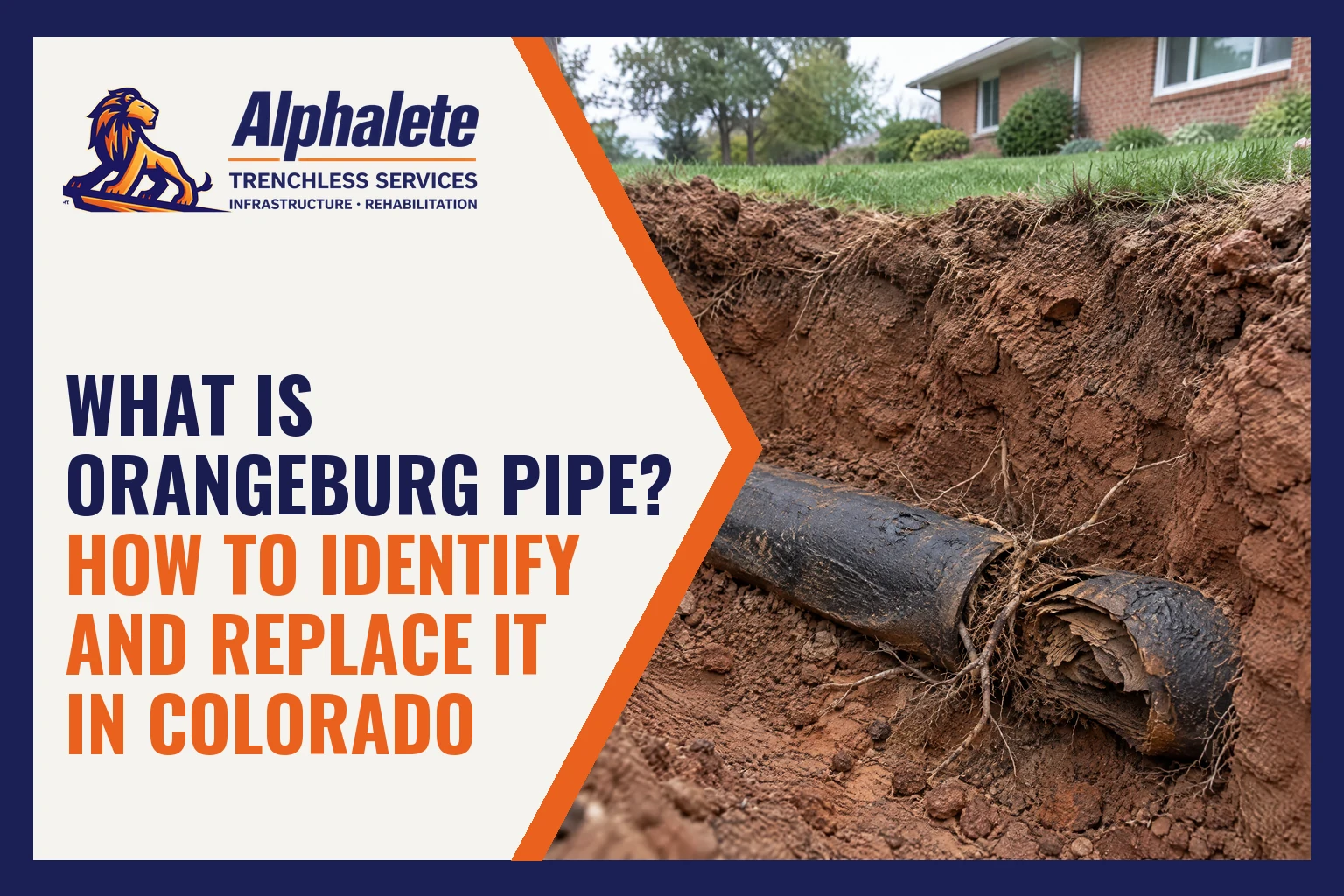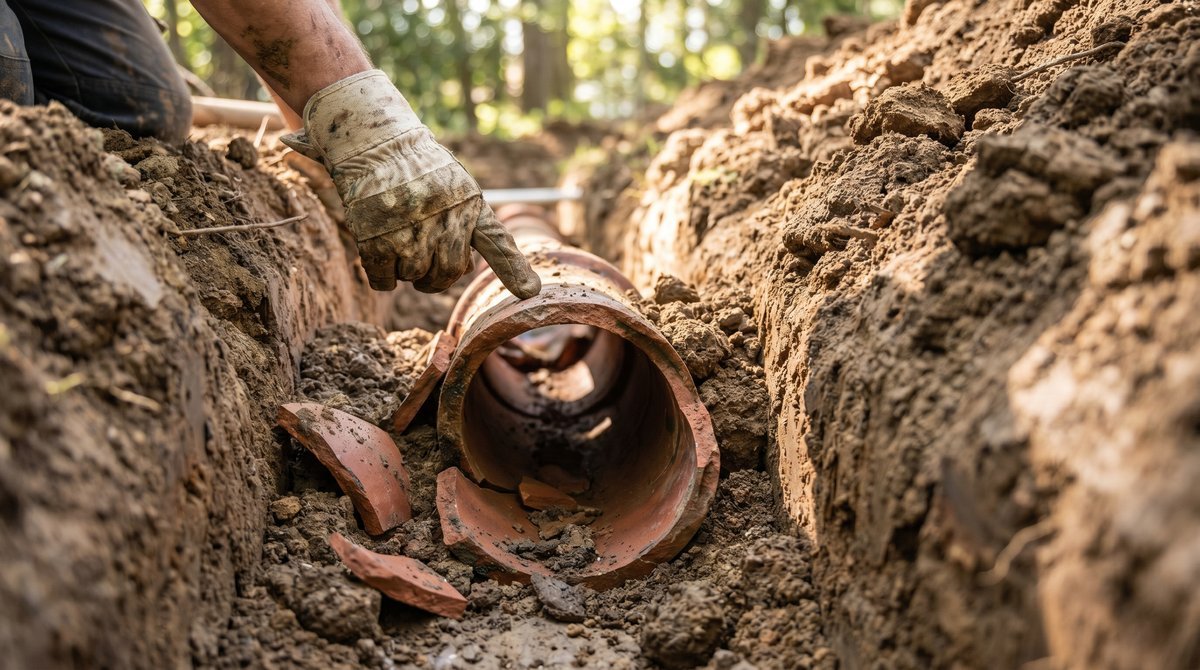
A large percentage of Colorado Springs homes were built between 1950 and 1980. If your home is in that range, your sewer line is probably made of clay or cast iron – and it may be approaching the end of its useful life. Clay and cast iron pipe failure is one of the most common reasons older homes here need sewer repair.
Clay Sewer Pipes: What They Are and Why They Are Vulnerable
Clay pipe was the dominant sewer material through the 1960s and into the early 1970s. It is durable under stable conditions – but it is brittle, and it is highly susceptible to the specific conditions Colorado Springs presents.
Freeze/Thaw Cycles
The Front Range’s repeated freeze/thaw cycles put clay pipe under significant stress. As soil freezes and expands around the pipe, it applies lateral pressure. Over decades, clay pipe joints loosen, sections separate, and cracks form.
Expansive Clay Soil
Colorado’s clay-heavy soil expands when wet and contracts when dry. This soil movement is one of the primary causes of pipe belly and joint offset in Colorado Springs sewer systems.
Tree Root Intrusion
Clay pipe joints are not sealed – sections are simply fitted together. Roots find these gaps and grow in, then expand and crack the pipe from within.
Age and Brittleness
Clay pipe has a functional lifespan of roughly 50 to 60 years under average conditions. Many Colorado Springs installations are now 60 to 70 years old and are brittle enough to fracture from normal ground movement.
Cast Iron Sewer Pipes: What They Are and Why They Fail
Cast iron pipe was common from the 1940s through the 1970s. It is stronger than clay but has its own failure modes.
Corrosion and Interior Scaling
The inside of cast iron pipe develops a thick layer of scale, rust, and corrosion over time. This progressively narrows the interior diameter and creates irregular surfaces where grease and debris accumulate faster.
Hydrogen Sulfide Attack
Sewer gas contains hydrogen sulfide. When this reacts with moisture inside the pipe, it creates sulfuric acid – which corrodes cast iron from the inside and can thin the pipe wall significantly over decades.
Warning Signs of Clay and Cast Iron Pipe Failure
- Persistent slow drains across multiple fixtures
- Recurring sewer backups despite regular snaking
- Gurgling sounds from drains or toilets
- Sewer odors inside or outside the home
- Unusually green or lush patches of grass over the sewer line
- Soft or sunken areas in the yard above the sewer run
What Can Be Done?
First, a sewer camera inspection shows what is actually happening inside the pipe. For clay and cast iron pipes with cracks, root intrusion, joint problems, or scaling – where the pipe still has sufficient structural integrity – trenchless pipe lining installs a new pipe inside the existing one. When a pipe has deteriorated beyond what lining can address, pipe bursting or excavation may be necessary. Per NASSCO standards, pipe condition assessment from camera inspection determines which method is appropriate.
Frequently Asked Questions
How do I know if my home has clay or cast iron sewer pipe?
Age is a good indicator – homes built before 1970 are very likely to have clay or cast iron sewer lines. A camera inspection confirms the pipe material.
Does old pipe material mean I need to replace my entire sewer line?
Not automatically. The pipe may be old but still in serviceable condition. A camera inspection shows the actual condition, which determines what if anything needs to be done.
Have an older home in Colorado Springs? A sewer camera inspection tells you exactly what you are working with. Call Alphalete Trenchless Pipelining at (719) 787-7746.
Service Areas
Trenchless Sewer Repair Service Areas in Colorado
Alphalete restores damaged sewer lines without digging for homeowners across Colorado. See where we provide trenchless sewer repair near you.