Hydro Jetting Services in Denver
Powerful Sewer and Drain Cleaning for Stubborn Buildup
Denver homes and businesses put a lot of stress on their sewer lines. In older neighborhoods like the Highlands, Washington Park, Baker, and Park Hill, cast-iron and clay pipes have been moving waste beneath the streets for a century. In that time, scale, grease, sludge, and root hairs have had plenty of opportunity to settle into the walls of those lines. A drain that keeps slowing down is often a sign that the pipe is still dirty inside, even after a cable machine has punched a hole through the clog.
That is where hydro jetting comes in. Instead of poking through a blockage, hydro jetting scrubs the full inside diameter of the pipe with high-pressure water. For Denver property owners dealing with repeat backups, slow floor drains, or gurgling in the main line, it is the cleaning method most likely to restore the pipe to something close to its original capacity. Alphalete Trenchless Services performs hydro jetting across the Denver metro with equipment sized for both residential sewer lines and commercial kitchen waste lines.
Go Beyond a Quick Drain Fix
Clear the Line, Not Just Part of the Blockage
A standard snake or auger will usually punch a path through the middle of a clog and get water moving again. For a lot of Denver homeowners, that is where the trouble starts back up. The grease ring from last winter is still coating the pipe. The fine roots that slipped in at a joint near the parkway trees are still there. Within weeks, the line catches debris in the same spot and the backup returns.
Hydro jetting takes a different approach. The nozzle sends water out in a fan pattern that rides along the inside wall of the pipe, breaking loose the soft buildup and flushing it downstream toward the city main. On Denver service laterals running under older alleys, that kind of wall-to-wall cleaning makes a real difference. Once the pipe is actually clean, a follow-up camera inspection can show whether the line is in good shape or whether a spot repair or liner is worth discussing. Either way, you are making decisions based on a clean pipe, not a guess.
How Hydro Jetting Works — The Alphalete Way
Inspect the Sewer or Drain Line
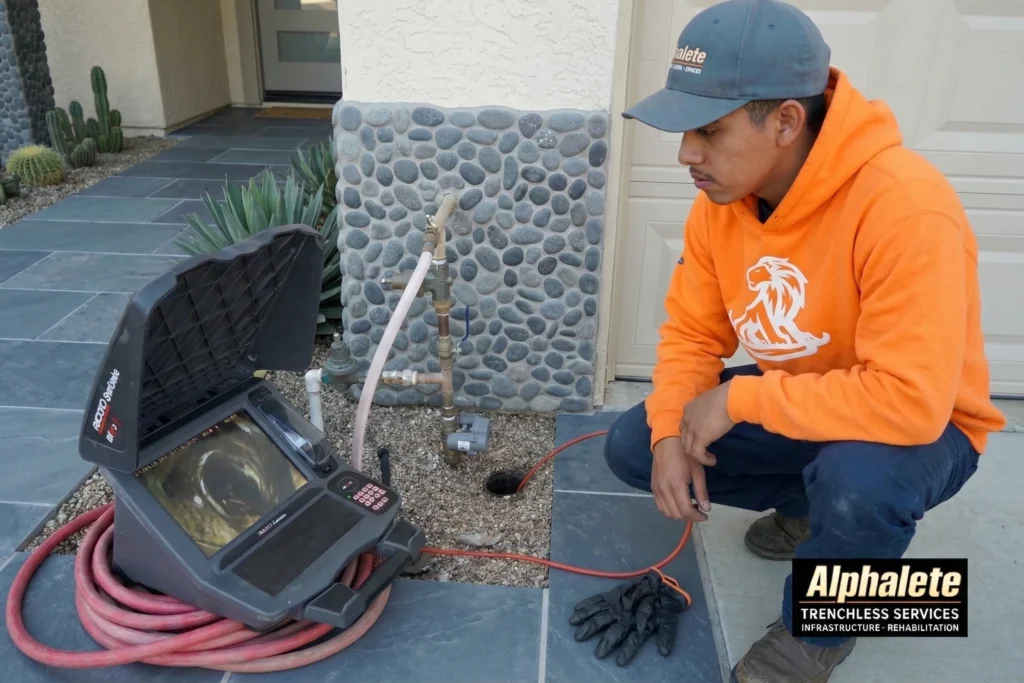
We start with a camera inspection so we know what the inside of the pipe actually looks like. That tells us what is causing the blockage, how far down the problem sits, and whether hydro jetting is the right call for the condition of the line.
Clean With High-Pressure Water
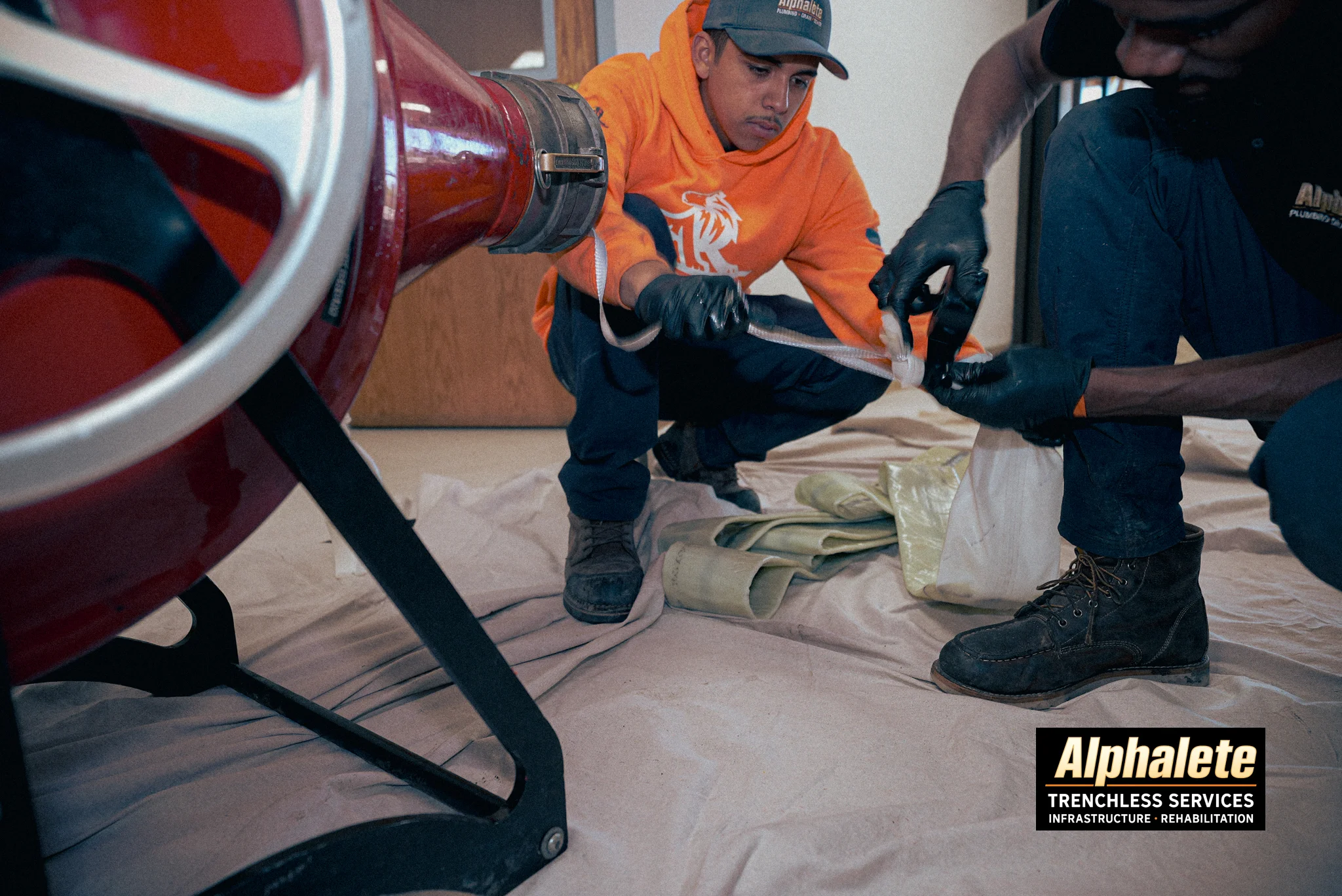
Once we confirm the line can handle it, we feed a jetting hose into the pipe and work it through the affected section. The nozzle delivers high-pressure water in multiple directions, cutting grease, scale, paper buildup, and fine roots away from the pipe wall.
Flush Out Loose Material
The same pressure that breaks the buildup loose is what carries it out of the line. Debris is pushed downstream toward the city main, leaving the service lateral clear instead of just re-routed around.
Confirm Better Drainage
We finish with another camera pass to confirm the pipe walls are clean and water is moving freely. You get to see the before and after on screen, and we talk through anything the camera flags for the future.
The Power of Hydro Jetting
Cleans Deep Inside the Pipe
Hydro jetting reaches surfaces a cable can only scrape past, scrubbing the full inside wall of the pipe instead of drilling a narrow channel through the clog.
Helps Remove Thick Grease and Sludge
Grease and food sludge that coat kitchen and main lines soften and release under high-pressure water, getting flushed downstream instead of rebuilding in weeks.
Clears Many Repeat Sewer Problems
Drains that back up every few months are often fighting the same leftover buildup. A proper jetting removes that underlying layer so the clog has nothing to catch on.
Improves Long-Term Drain Flow
A clean pipe moves water the way it was designed to. Fixtures drain faster, toilets flush more completely, and the whole system tends to stay quieter.
Hydro Jetting Services in Denver
Denver is a mixed environment for sewer lines. In LoDo, RiNo, South Broadway, and along Colfax, restaurants and small commercial kitchens push heavy grease loads through their waste lines every service. Those lines need scheduled jetting to keep hoods, three-compartment sinks, and floor drains from backing up during a dinner rush. On the residential side, the bungalows and Denver Squares in Wash Park, Platt Park, Berkeley, and Sloan’s Lake sit under decades of mature tree canopy. Elms, cottonwoods, and silver maples send fine roots toward any moisture they can find, and aging clay service laterals give them an easy entry point at every joint.
If you own a home or a building in Denver and you are dealing with repeat backups, slow floor drains in a finished basement, or a sewer smell that will not go away, hydro jetting is often the next step after a standard cable cleaning. Alphalete Trenchless Services works across the city and can pair jetting with a camera inspection so you see exactly what the pipe looks like after the cleaning is done.
Nearby Areas We Also Serve
- Denver — 80202, 80203, 80204, 80205, 80206
- Denver — 80209, 80210, 80211, 80212, 80218
- Denver — 80220, 80221
- Glendale, Aurora, Englewood, Wheat Ridge, Edgewater, Commerce City
Frequently Asked Questions
What is the difference between hydro jetting and standard drain cleaning?
Standard drain cleaning usually means a cable machine with a cutting head that punches through the clog. Hydro jetting uses high-pressure water to scrub the full inside wall of the pipe. For a lot of Denver homes on older clay or cast-iron service lines, that distinction matters, because the cable can open a hole but leave the grease and scale behind.
Is hydro jetting safe for older pipes in historic Denver neighborhoods?
It can be, but it depends on the condition of the pipe. Homes in places like Curtis Park, Baker, or Potter Highlands often still have original clay or cast-iron laterals. We camera the line first, check for cracks, offsets, or badly corroded sections, and match the pressure and nozzle to what the pipe can safely handle. If the line is too far gone for jetting, we tell you up front.
Can hydro jetting remove tree roots from my sewer line?
Fine feeder roots and early root mats can often be cut out with a jetting nozzle designed for root work. Large roots that have taken over a section of the line usually need a mechanical cutter first and then a jetting pass to flush out the debris. After cleaning, a camera inspection shows whether the joint where the roots got in needs a liner or spot repair.
How often should residential hydro jetting be done?
For most Denver homes, every two to three years is a reasonable cadence, depending on tree cover and the age of the line. Homes under heavy tree canopy in neighborhoods like Park Hill or Wash Park may benefit from a yearly maintenance cleaning, while newer homes on PVC service laterals can often go longer between visits.
Schedule Hydro Jetting in Denver
If your drains are slowing down or you are on your second or third backup this year, call Alphalete Trenchless Services at (720) 807-3224 to schedule hydro jetting in Denver. We will camera the line, recommend the right cleaning approach, and get the pipe flowing again.
Serving Denver, CO
Alphalete Trenchless Services
716 Clark Pl, Suite 160
Colorado Springs, CO 80915
(720) 807-3224
team@alphaletetrenchless.com
Monday – Saturday, 8:00 AM – 6:00 PM