Trenchless Sewer Pipe Lining for Colorado Homes
NO-DIG SEWER PIPE REPAIR FOR COLORADO HOMES
Alphalete provides trenchless sewer pipe lining for homes across Colorado, restoring damaged sewer lines from the inside with cured-in-place pipe (CIPP) instead of a full trench. Our trenchless plumbers line suitable pipes while minimizing excavation around yards, driveways, patios, and landscaping.
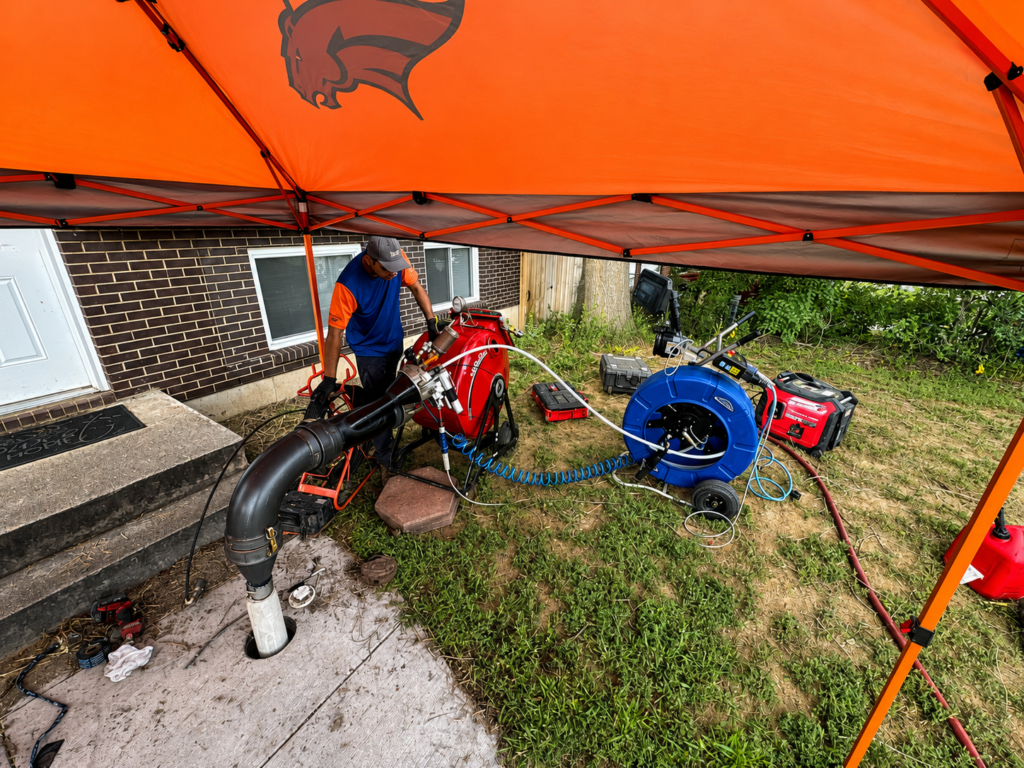

How Does Trenchless Sewer Pipe Lining Work?
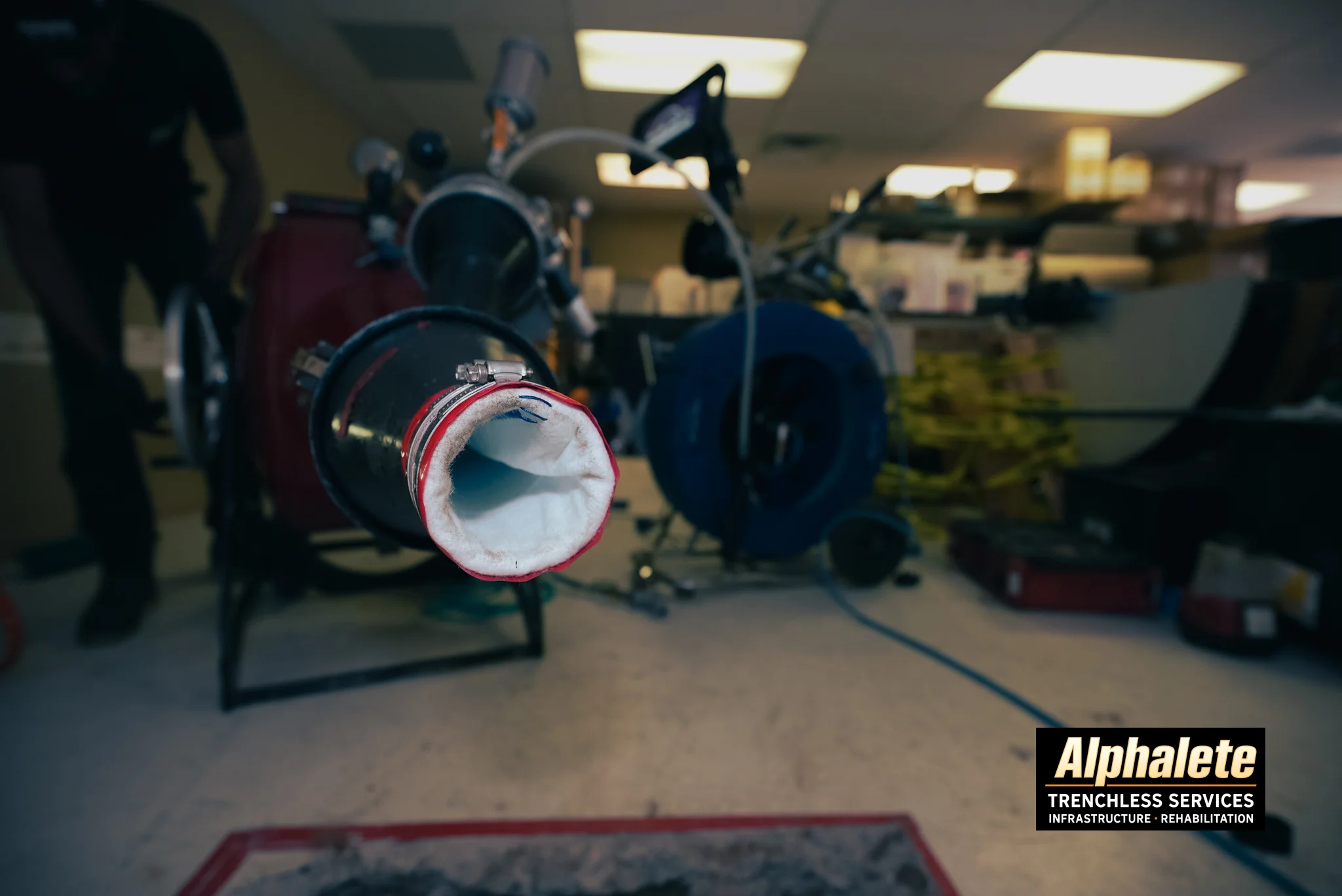
Trenchless sewer pipe lining installs a resin-saturated liner inside the existing sewer line through a cleanout or small access point, with no trench along the pipe. Traditional sewer replacement, by contrast, may require digging along the damaged pipe.
Once cured, the liner creates a new structural pipe wall inside the original line. This trenchless plumbing method can seal cracks, joints, and root entry points while reducing disruption to the surrounding property.
Learn more about what trenchless sewer repair is and how it works.
Is Your Sewer Line Suitable for Pipe Lining?
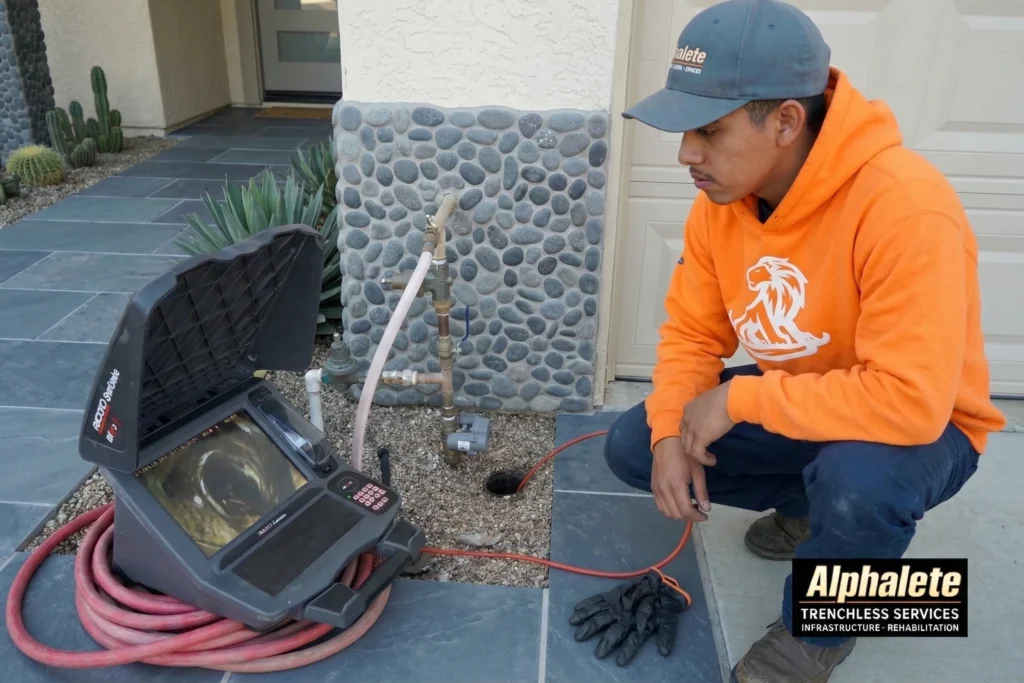
A sewer line can be lined when the pipe still holds its shape and has an open channel, and every project begins with a sewer camera inspection to confirm both. The inspection helps locate cracks, corrosion, root intrusion, offsets, buildup, bellies, and collapsed sections before a repair is recommended. A cracked pipe that still holds its shape may be suitable for CIPP lining. A fully collapsed pipe usually cannot support a liner and may require excavation, spot repair, or another method. Learn how to identify the difference between a cracked and collapsed sewer pipe. A liner requires an open pipe channel and enough remaining pipe shape to support installation and curing.
Three inspection points:
- Locate the sewer line damage
- Confirm whether the pipe can be lined
- Recommend the appropriate repair method
Is Trenchless Sewer Pipe Lining a Sewer Line Replacement?
Trenchless sewer pipe lining rebuilds a sewer line from the inside instead of removing it. A resin-saturated liner is installed through an access point and cured in place, forming a new, jointless pipe wall inside the original line. The finished liner works as a new pipe, while the old pipe stays in the ground as its host.
Lining does not fit every line. A collapsed section, a severe belly, or major misalignment usually needs that section replaced by excavation or another method, and a sewer camera inspection identifies those conditions before a repair is recommended.
CIPP is a long-established sewer rehabilitation method. The U.S. EPA has published a retrospective evaluation of CIPP used in municipal gravity sewers.
Which Older Sewer Pipes Can Be Lined?
Older homes may still drain through clay, cast iron, or Orangeburg sewer pipe. Each material fails differently, and each affects whether lining is the right repair.
- Clay: joints separate and let roots in. After cleaning, lining can seal qualifying joints. Read more about clay sewer pipe repair.
- Cast iron: corrodes and scales from the inside. Descaling comes first, then lining when enough pipe wall remains. See whether cast iron pipes can be relined.
- Orangeburg: fiber pipe that deforms under load. Deformed sections often need excavation before the rest can be lined. Learn more about Orangeburg sewer pipe.
What Sewer Problems Can CIPP Lining Fix?
CIPP lining fixes cracks, open joints, root intrusion, and corrosion in sewer pipes that still hold their shape. Common problems it repairs:
Cracks and Open Joints
The liner can seal qualifying cracks and open joints where wastewater escapes or roots enter the sewer line.
Root Intrusion
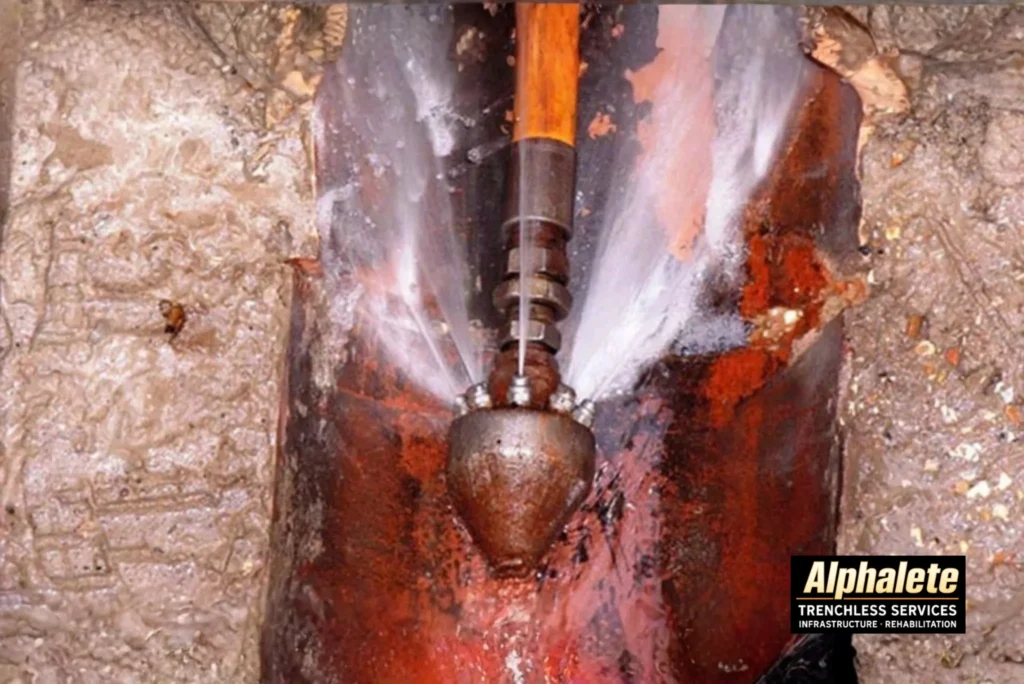
Cleaning removes roots and buildup before CIPP lining seals qualifying entry points inside the pipe.
Corrosion and Deterioration
CIPP can reinforce suitable aging clay, cast iron, and other sewer pipes by creating a new structural lining inside them.
Recurring Sewer Problems
Repeated backups, odors, and slow drains may indicate pipe damage located beyond the immediate blockage.
! CIPP Lining Is Not Suitable for Every Sewer Problem
Fully collapsed pipe sections, severe bellies, improper slope, or major misalignment may require a different sewer repair method.
A sewer camera inspection helps determine whether residential trenchless pipelining is appropriate for the condition of your existing pipe.
What Signs Point to a Damaged Sewer Line?
Several slow drains at once, repeat backups, sewer odors, and soggy ground over the line all point to damage in the main sewer line.
Multiple Slow Drains
When several fixtures drain slowly at the same time, the problem may be in the main sewer line.
Recurring Backups
A blockage that repeatedly returns after cleaning may indicate roots, damaged joints, or structural pipe deterioration.
Sewer Odors or Gurgling
Persistent odors and unusual plumbing sounds can indicate restricted flow or an opening in the sewer line.
Wet or Sunken Areas Outside
Unexplained soggy ground, unusually green grass, or soil movement may indicate an underground sewer problem.
How Does Pipe Lining Compare to Digging Up a Sewer Line?
| Factor | Trenchless Pipelining | Traditional Excavation |
|---|---|---|
| Excavation | Limited access points in qualifying projects | Trench opened along the damaged section |
| Property Impact | Helps preserve yards, driveways, patios, and landscaping | Surfaces above the sewer line may need removal |
| Pipe Condition | Requires a pipe that can support lining | Can replace collapsed or severely misaligned sections |
| Restoration | Usually requires less surface restoration | May require concrete, landscaping, or hardscape restoration |
| Repair Method | Restores the pipe from the inside | Removes and replaces the damaged pipe |
Neither method is right for every property. The repair decision should be based on camera findings, pipe condition, access, slope, and the location of the damage.
Read the complete comparison of trenchless vs. traditional sewer repair.
Why Choose Alphalete for Residential Pipe Lining?
Alphalete focuses on sewer inspection, pipe preparation, and CIPP rehabilitation for Colorado properties. Our team evaluates the pipe before recommending lining and explains when another repair option would be more appropriate.
Camera-based diagnosis before repair
Specialized trenchless sewer equipment
Clear repair recommendations
Residential and commercial pipe-lining experience
Learn more about Alphalete Trenchless.
Trenchless Sewer Pipe Lining at a Glance
- Every job starts with a sewer camera inspection to confirm the pipe can be lined.
- The liner cures into a new, jointless pipe wall inside the old pipe.
- Clay, cast iron, and Orangeburg pipe can be lined if the pipe still holds its shape.
- Collapsed sections, severe bellies, and major misalignment need a different repair.
- Access is usually through an existing cleanout or one small opening.
Trenchless Sewer Pipe Lining FAQ
Answers For Homeowners
How much does residential trenchless pipelining cost?
How long does the process take?
Will you need to dig up my yard?
How long does the liner last?
Do you offer a warranty?
What pipe sizes and materials can you line?
Who is responsible for the sewer line from the house to the street?
Request Your Free Quote

Residential Trenchless Sewer Repair Service Areas
Alphalete provides residential trenchless pipelining and sewer repair for homeowners in select Colorado communities.