Yes. In most cases where the pipe still has enough structure left, corroded cast iron sewer pipes can be relined with trenchless CIPP, short for cured-in-place pipe, which forms a new pipe inside the old one without digging. Lining is not an option only when the line has fully collapsed or is badly misaligned, since those cases need replacement. For the many Colorado Springs homes with aging but intact cast iron, cast iron pipe lining is often the ideal fix.
This post explains how it works and when it applies. It is part of our full guide to cast iron sewer pipe problems.
What CIPP lining is
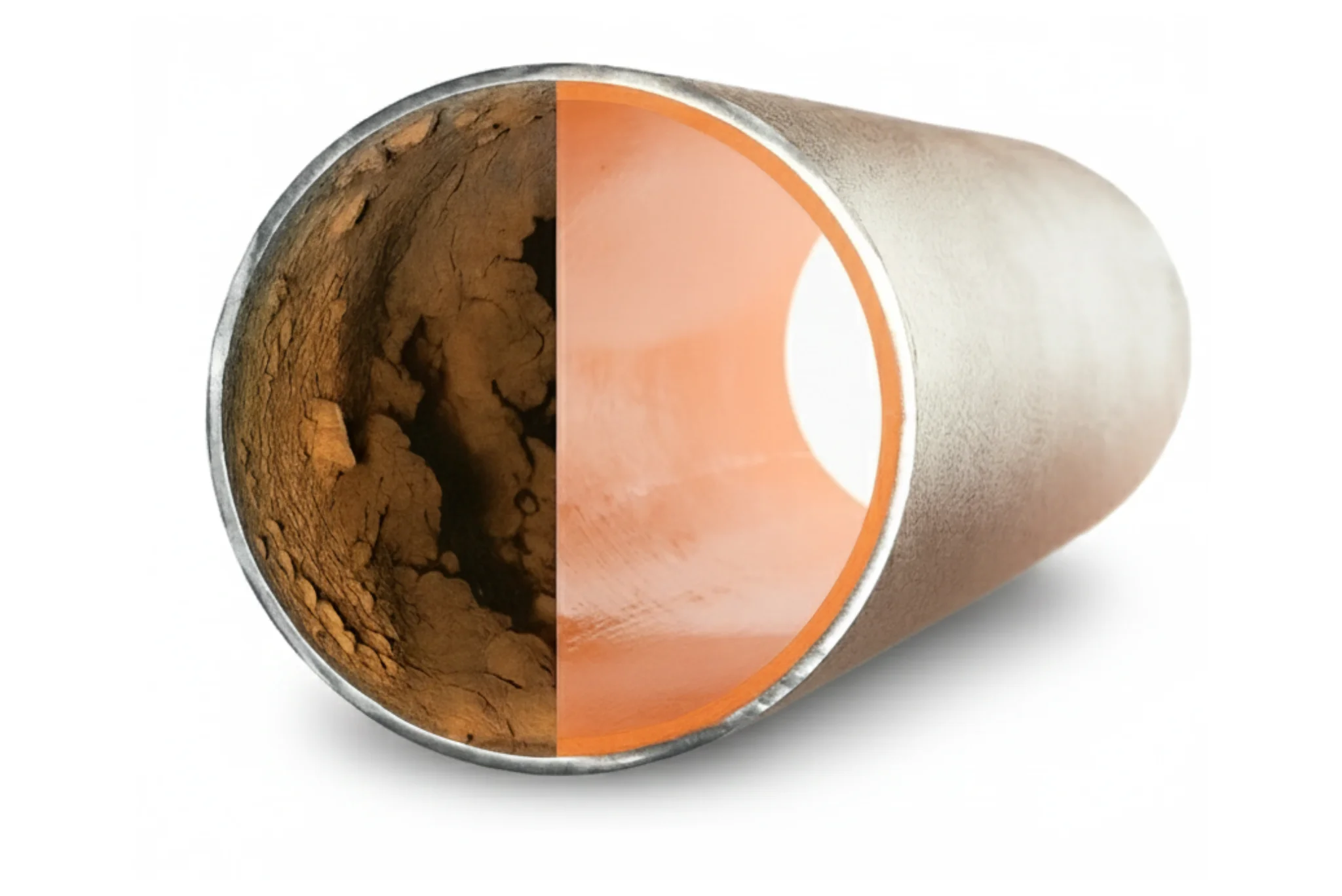
Cured-in-place pipe lining inserts a resin-saturated liner into the existing pipe and hardens it in place. According to the trenchless industry association NASSCO, the CIPP process creates a new, seamless structural pipe inside the deteriorated host pipe and can be used to rehabilitate all types of pipe materials. For cast iron, that means the corroded interior is sealed inside a smooth, jointless new pipe.
Does trenchless sewer repair work on cast iron pipe?
Yes. Trenchless sewer repair works on cast iron pipe as long as the line still holds its shape, and CIPP lining is the method used most often. Relining a cast iron pipe means installing a new liner inside the old line, so the cast iron becomes the outer shell and the liner becomes the pipe that carries the flow. Because the liner goes in through an existing cleanout or a small access point, the slab, floors, and yard above the pipe stay in place.
Cast iron is well suited to relining because its typical failures all happen inside a pipe that is otherwise still in position: interior scale, rust channels worn along the bottom of the pipe, hairline cracks, and roots pushing in at the joints. A cast iron sewer pipe liner covers those weak spots with one continuous surface from end to end. The real limits are the ones covered below, a line that has collapsed, separated at the joints, or lost too much wall to support a liner.
Why cast iron pipe lining works so well for corroded pipe
Cast iron’s problems are exactly what a liner solves. The new inner pipe:
- Seals the cracks and corroded sections that let in roots and let out sewer gas
- Blocks roots from re-entering, since there are no more open joints or gaps
- Smooths the rough, channeled interior so flow improves and debris stops catching
- Resists the corrosion that attacks bare iron
When cast iron can be lined, and when it cannot
Lining depends on having enough host pipe to line against. A camera inspection makes the call. Lining is usually a good candidate when the pipe is corroded, cracked, or leaking but still holding its shape. Lining is not suitable when the pipe has fully collapsed, has severely offset joints, or has lost so much wall that there is nothing to line against. In those cases, replacement or pipe bursting is the route. See how the methods compare in CIPP lining vs. pipe bursting.
How the process runs
- Inspect. A camera confirms the line is a lining candidate and locates the problem areas.
- Clean. The line is cleared, often with hydro jetting, to strip out scale, rust, and roots so the liner bonds properly.
- Line and cure. The resin-saturated liner is installed and cured in place, forming the new pipe.
- Re-inspect. A final camera pass confirms a smooth, sealed result.
Why lining is a strong fit for Colorado homes
Cast iron often runs under slabs, driveways, and mature landscaping. Lining works through small access points, so it avoids jackhammering the slab or trenching the yard, which matters given Colorado’s short growing season. Our residential trenchless pipelining service handles cast iron lining start to finish. For a plain-language primer, see what trenchless sewer repair is.
Frequently Asked Questions
Can cast iron sewer pipes really be relined without digging?
Yes, in most cases where the pipe still has structural integrity. A CIPP liner is installed inside the existing line through small access points and cured in place, so there is little to no excavation.
When can’t a cast iron pipe be lined?
When it has fully collapsed, has severely offset joints, or has corroded so far that there is not enough host pipe to line against. A camera inspection identifies these cases, which typically need replacement or pipe bursting.
How long does a cast iron pipe liner last?
A properly installed liner forms a durable, corrosion-resistant pipe engineered for a long service life. Confirm the warranty terms that apply to your line with your estimate.
Service Areas
Trenchless Sewer Repair Service Areas in Colorado
Alphalete restores damaged sewer lines without digging for homeowners across Colorado. See where we provide trenchless sewer repair near you.
Does the pipe need to be cleaned before lining?
Yes. The line is cleared first, often with hydro jetting, to remove scale, rust, and roots so the new liner bonds tightly to the host pipe.
Wondering if your cast iron line can be lined? A camera inspection gives you the answer. Contact Alphalete to schedule one, or learn about trenchless sewer repair in Colorado Springs.