Not every slow drain needs a professional. Some do, and knowing when to call a plumber for a clogged drain is most of the battle. Knowing the difference saves you money when the fix is simple – and saves you from making things worse when it’s not.
What You Can Handle Yourself
Slow Shower Drain
If your shower drain is slow, the cause is almost always hair and soap scum in or just below the drain cover. Remove the drain cover, pull out the hair buildup with a drain snake or a hair-removal tool (a Zip-It style tool works well), and run hot water. This is a DIY job that takes 10 minutes.
Slow Bathroom Sink
Bathroom sink clogs are typically in the P-trap or the drain stopper mechanism. Clean the stopper (it often collects hair and toothpaste) and check the P-trap. Most bathroom sink clogs are surface-level and fixable without professional help.
Toilet with a Single Backup
A toilet that backed up once from excess paper is a plunger job. Use a flange plunger (not a cup plunger) with good suction. If a few minutes of plunging resolves it, you’re done.
When to Call a Plumber for a Clogged Drain
Multiple Drains Slow or Backing Up at Once
When more than one drain is affected simultaneously, the problem is in the main sewer line – not an individual fixture. This is beyond DIY territory. A main line issue needs a camera inspection to diagnose and professional equipment to address.
The Same Drain Keeps Coming Back
A recurring clog in the same drain means the cause isn’t being addressed. A professional drain cleaning – particularly hydro jetting – clears the pipe walls, not just the immediate blockage. If the problem keeps coming back after professional cleaning, a structural issue (root intrusion, crack) is likely the cause.
Sewage Odors With the Slow Drain
Odors combined with drainage problems often indicate a damaged pipe or main line issue. This needs professional diagnosis – not a drain cleaner pour.
Water Backing Up Into Other Fixtures
If flushing the toilet causes water to come up in the shower, or running the washing machine backs up the kitchen sink, your main sewer line is compromised. Stop using water-intensive appliances and call immediately.
Floor Drain Backing Up
A basement floor drain that backs up – especially when other water is running in the house – is a main line signal. This is not a DIY fix.
Why Chemical Drain Cleaners Are Usually the Wrong Choice
Chemical drain cleaners (lye, sulfuric acid formulations) can clear some soft clogs, but they have real downsides:
- They don’t remove grease from pipe walls – they just dissolve a path through it
- They’re corrosive to older pipes, especially cast iron
- They’re ineffective against root intrusion or structural blockages
- They create hazardous fumes and are dangerous to handle
- Repeated use can damage plastic fittings and P-traps
For any clog that doesn’t clear with physical methods, call a professional rather than reaching for chemicals.
What Professional Drain Cleaning Actually Does
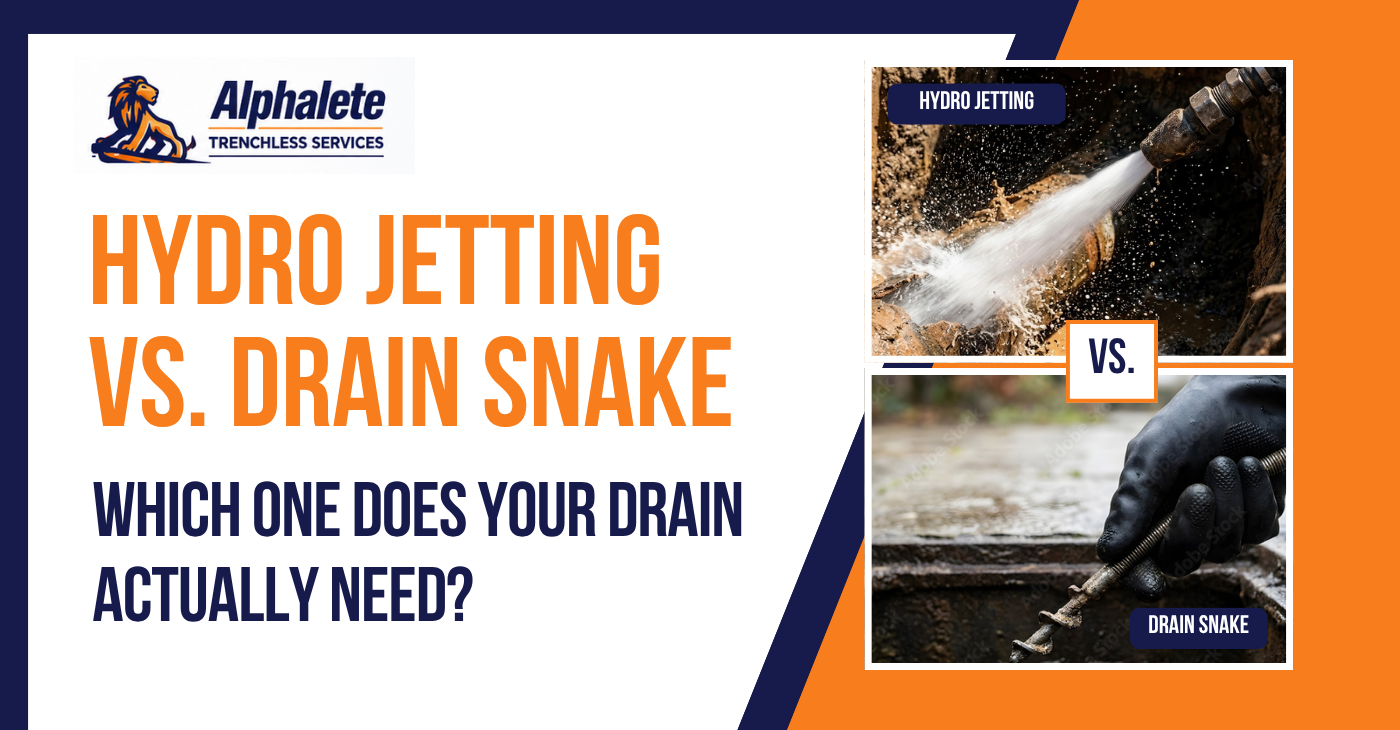
Hydro jetting – the professional standard – uses high-pressure water to scour the entire interior of the pipe. It removes grease coating from pipe walls, flushes root fragments, clears mineral scale, and restores full flow capacity. It’s a fundamentally more thorough result than any DIY method.
For main line issues, a camera inspection first identifies what’s causing the problem – so cleaning is targeted and any structural repairs are identified at the same time.
Frequently Asked Questions
Can a drain snake damage pipes?
Used correctly on accessible clogs, drain snakes are safe for pipes in good condition. Aggressive snaking of older, damaged pipes carries some risk of worsening existing cracks.
How much does professional drain cleaning cost vs. DIY?
DIY tools are inexpensive. Professional hydro jetting costs more but produces a much more complete clean. For recurring problems, professional service typically ends the cycle rather than delaying it.
Service Areas
Drain Cleaning Service Areas in Colorado
We handle slow and clogged drains for property owners throughout Colorado. Check local drain cleaning availability below.
What’s the difference between snaking and hydro jetting?
A snake punctures through a clog. Hydro jetting cleans the entire pipe wall with high-pressure water. For grease buildup and root fragments, hydro jetting is far more effective.
Not sure if your drain needs professional attention? Contact Alphalete Trenchless Pipelining for an honest assessment. Call (719) 787-7746.